
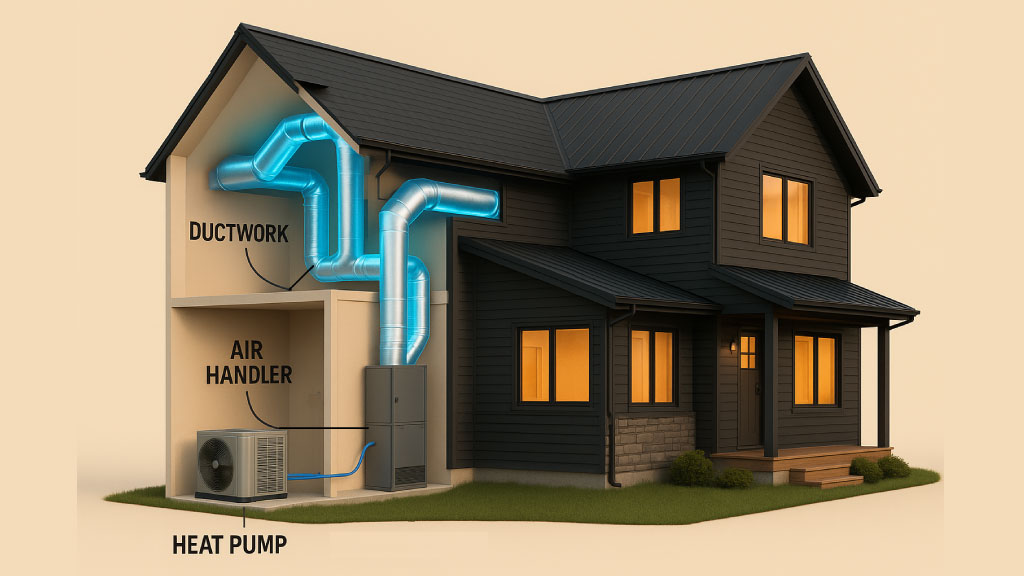
Your home's comfort, and even the quality of the air you breathe, depends on one system more than any other: the HVAC. Whether you rely on a gas furnace, an electric heat pump, or a mix of both, this system quietly shapes how your home feels every day. Let's dive into what every homeowner should know about keeping their HVAC system running efficiently.
What Does HVAC Actually Stand For?
HVAC stands for Heating, Ventilation, and Air Conditioning — three systems that work together to maintain your home's comfort and air quality.
- Heating: Keeps your home warm in the winter using a furnace, boiler, or heat pump.
- Ventilation: Moves and filters air, removing excess humidity, odors, and indoor pollutants.
- Air Conditioning: Removes heat and moisture from the air to keep indoor temperatures steady in summer.
When these three functions are balanced, you get stable comfort year-round and fewer surprises on your energy bill. Recording your system's model and key service dates in Spanr makes it easy to remember what type of HVAC you have, when it was installed, and when it's due for care.
Heat Pump vs. Gas Furnace: Which System Is Right for You?
Understanding the difference between these two heating systems is crucial when buying, upgrading, or maintaining your HVAC system. Here's what sets them apart:
Gas Furnace Systems
Gas furnaces have been the standard for decades, especially in colder climates. They burn natural gas to create heat, which is then distributed throughout your home via ductwork. These systems work best in regions with cold winters where temperatures regularly drop below 25°F, particularly in areas where natural gas is readily available and affordable. They're also ideal for situations requiring rapid heating in very cold conditions.
Gas furnaces offer several advantages. They heat homes quickly even in extreme cold, typically come with lower upfront installation costs in many markets, and deliver reliable performance in sub-zero temperatures. Some models can even work during power outages when equipped with battery backup ignition. However, they do require a natural gas line connection and produce carbon emissions during operation. Operating costs can be higher in areas where natural gas is expensive, and you'll need a separate air conditioning system for cooling since furnaces only provide heat.
Heat Pump Systems
Heat pumps are gaining popularity because they provide both heating and cooling using electricity alone. Instead of burning fuel, they move heat from one place to another, extracting warmth from outdoor air even in winter or pulling heat from inside during summer. These systems are particularly well-suited for moderate to mild climates where winters stay above 25°F most of the time. They're an excellent choice for homes with solar panels or access to renewable energy, households looking to reduce their carbon footprint, and new construction or whole-home HVAC replacements.
The efficiency of heat pumps is impressive. They provide both heating and cooling in one system and operate at two to three times the energy efficiency of gas furnaces. Because there's no combustion, there's no carbon monoxide risk, and many systems are eligible for federal tax credits and local rebates. In most climates, heat pumps deliver lower operating costs compared to traditional heating systems. The tradeoffs include higher upfront installation costs and somewhat reduced effectiveness in extreme cold, though modern cold-climate models now perform well down to negative 15°F. Since they require electricity, performance depends on power availability, and homes in very cold regions may need backup heating for the coldest days of the year.
Cost Comparison
The right choice often comes down to your climate and energy costs. In regions with mild winters and expensive natural gas, heat pumps typically save $300-$800 annually on energy bills. In colder areas with cheap natural gas, furnaces may cost less to operate. Use Spanr to track your energy bills over time and identify which system type would optimize your costs based on your actual usage patterns.
The Core Components of an HVAC System
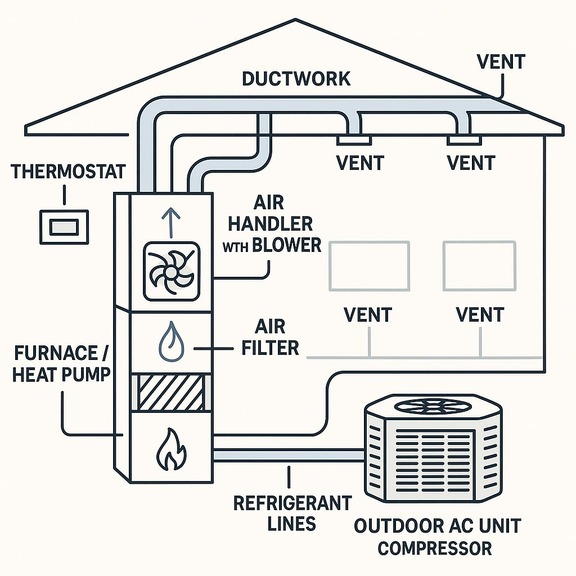
Your HVAC system is made up of several key parts, each with a specific job. Understanding what each one does helps you communicate with technicians and know what to look for during maintenance.
Thermostat
This is your control center. It reads the temperature in your home and tells the system when to turn on or off to maintain your desired comfort level. Modern programmable and smart thermostats can learn your schedule and adjust automatically, potentially saving 10-15% on energy costs.
Furnace or Heat Pump
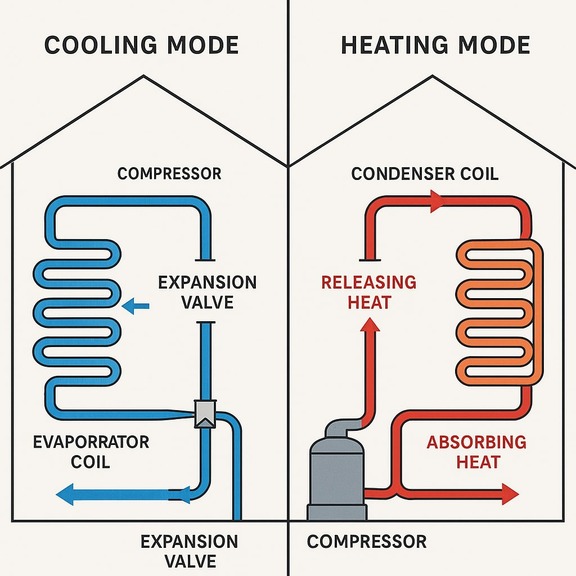
This is the heart of your heating system. A furnace burns fuel (usually natural gas) to create heat, while a heat pump uses electricity to move heat from outside into your home — even in cold weather. Heat pumps can also reverse this process to cool your home in summer.
Air Conditioner and Compressor
These work together to cool your home. The compressor pumps refrigerant through the system, which absorbs heat from inside your house and releases it outdoors. The air conditioner unit houses the coils where this heat exchange happens.
Air Handler and Blower
Think of this as the lungs of your system. The blower fan pushes air through your ducts and into your rooms. The air handler contains the blower along with heating or cooling coils that condition the air before it circulates.
Ductwork and Vents
These are the pathways that deliver conditioned air throughout your home. Ducts are the hidden tubes behind walls and ceilings, while vents are the visible grilles where air enters and exits each room. Leaky ducts can waste up to 30% of your heating and cooling energy.
Air Filter
This often-overlooked component traps dust, pollen, and other particles before they can circulate through your home or damage your equipment. It's typically located where air enters the system and needs regular replacement every 1-3 months depending on usage and air quality.
Refrigerant Lines
These copper tubes carry refrigerant between your indoor and outdoor units, making the cooling process possible. They're insulated to maintain efficiency and prevent condensation. Low refrigerant levels usually indicate a leak that requires professional repair.
Keeping track of these components — their manuals, warranty information, and service records — makes troubleshooting and maintenance far simpler. Many homeowners use Spanr to keep this information organized under one clear record for each HVAC unit, ensuring that when service time comes, every detail is already at hand.
How It All Works (Without Getting Too Technical)
At its core, your HVAC system is a cycle of moving air and heat. In winter, furnaces burn fuel to generate heat, while heat pumps extract warmth from outdoor air (even when it feels cold outside) and concentrate it indoors. Both systems then circulate this warm air through your vents.
In summer, the process reverses for cooling: heat is pulled from the air inside your home and released outdoors, while cooled air flows in to replace it. Refrigerants, the liquids that make cooling possible, absorb and release heat as they circulate between coils. Meanwhile, fans and blowers keep air moving through ductwork, balancing temperature and pressure from room to room.
Understanding this flow helps explain why maintenance matters so much. When airflow is restricted by a dirty filter, or refrigerant levels drop due to a leak, your system has to work harder to reach the same result. Over time, that strain adds up to higher bills and shorter equipment life. Keeping a record of how your system performs, when it was last serviced, and which technician handled it makes diagnosing issues much easier — something Spanr was designed to simplify by turning those details into part of your home's living record.
Energy Efficiency: What the Numbers Really Mean
Every HVAC unit comes with efficiency ratings that tell you how much heating or cooling you get for each dollar spent on energy:
SEER (Seasonal Energy Efficiency Ratio): Measures air-conditioning efficiency. Higher is better. Modern systems range from 14–25 SEER, with 16+ considered high efficiency.
AFUE (Annual Fuel Utilization Efficiency): Measures furnace efficiency as a percentage. A 95% AFUE furnace converts 95% of fuel to heat. Look for 90%+ for high efficiency.
HSPF (Heating Seasonal Performance Factor): Measures heat-pump heating efficiency. Modern systems range from 8–13 HSPF, with 9+ considered high efficiency.
Higher numbers mean lower operating costs, but only if your system is properly sized and maintained. An oversized system cycles on and off too frequently, wasting energy and reducing comfort. An undersized system runs constantly and never quite reaches your desired temperature.
Average HVAC Operating Costs by System Type
Estimated annual costs for a 2,000 sq ft home (moderate climate)
Assumptions: Based on 2,000 sq ft home in moderate climate (e.g., mid-Atlantic region). Electricity at $0.14/kWh, natural gas at $1.20/therm, heating oil at $3.50/gallon.
Watch your energy bills for unexpected spikes. A sudden increase without a change in weather or habits often points to a dirty filter, duct leak, or malfunctioning sensor. Logging your monthly energy data alongside HVAC service history in Spanr helps spot those patterns before they become expensive surprises.
Care Plans: What You Can Do Yourself
Not every HVAC task requires a professional. The most impactful thing you can do on a regular basis is replace or clean your air filters every one to three months depending on usage, pets, and allergies. This single task can improve efficiency by five to fifteen percent and is the most important thing you can do for your system. While you're thinking about monthly tasks, take a moment to check your thermostat settings to ensure they match your schedule and the season.
As seasons change in spring and fall, a few additional steps help keep your system running smoothly. Clear debris from outdoor units by removing leaves, grass clippings, and branches within two feet of the unit. Inspect vents and registers throughout your home, dusting them and ensuring furniture or drapes aren't blocking airflow. Test your system before peak season arrives by running heating before winter and cooling before summer to catch issues early. Listen for unusual sounds or odors when the system starts up, as these might indicate needed repairs.
Once a year, consider inspecting visible ductwork in your basement or attic for gaps, loose connections, or damage. Clean your condensate drain line to prevent clogs that can cause water damage. This is usually a small tube near your indoor unit and can be flushed with a vinegar solution or specialized cleaning tablets.
With Spanr, homeowners can log each of these tasks or set recurring reminders, turning good intentions into habits. Over time, that kind of consistency extends the life of your system and keeps comfort steady year-round.
Choosing or Upgrading Your HVAC System
Replacing or upgrading an HVAC system is one of the biggest decisions homeowners make, typically costing five thousand to twelve thousand dollars for a complete system. The right choice depends on several factors that are unique to your home and situation.
Your climate plays a major role in determining the best system type. If you live in an area with cold winters where temperatures regularly drop below 25°F, a gas furnace or cold-climate heat pump with backup heat typically makes the most sense. In moderate climates, a standard heat pump can handle both heating and cooling efficiently throughout the year. For regions with hot, humid summers, you'll want to focus on high-SEER air conditioning paired with good dehumidification capabilities.
Take time to evaluate your current system before making a decision. Consider its age, since most systems last fifteen to twenty years. Look at repair frequency as well. If repair costs exceed fifty percent of what a replacement would cost, it's usually time to upgrade. Compare your system's energy efficiency to modern standards, and think about any comfort issues you've been experiencing, such as uneven temperatures or humidity problems that never quite get resolved.
Modern systems offer several upgrade options worth considering. Variable-speed compressors adjust their output continuously rather than simply turning on and off, providing better efficiency and more consistent comfort. Smart thermostats learn your patterns and can be controlled remotely from your phone. Zoned systems allow you to set different temperatures in different areas of your home, which is particularly useful for multi-story houses or homes with rooms that get more sun. Heat pump technology has improved dramatically for cold climates in recent years, with some models now working efficiently in temperatures well below zero. Ductless mini-splits are another option that works well for home additions or houses without existing ductwork.
From a financial standpoint, there are several incentives available that can significantly reduce the net cost of a new system. Federal tax credits offer up to two thousand dollars for high-efficiency heat pumps installed in 2024 and 2025. State and local rebates often add another five hundred to two thousand dollars on top of that. Many utility companies provide their own incentives for upgrading to efficient systems. When you factor in the long-term energy savings, higher upfront costs for efficient equipment often pay for themselves within five to ten years.
Tracking your current system's performance helps make upgrade decisions based on data rather than guesswork. Pay attention to how often it needs service, how much energy it uses each month, and how well it maintains comfortable temperatures throughout your home. Homeowners using Spanr can compare new models, save documentation for rebate or warranty claims, and preserve these records for future buyers, helping maintain a home's value and transparency over time.
Average HVAC Installation Costs by System Type
Complete installation including equipment, labor, and materials
Assumptions: Costs vary based on home size and layout, existing ductwork condition, system efficiency rating, brand and warranty, and local labor rates. Federal tax credits up to $2,000, state and local rebates, and utility company incentives may be available to reduce net installation costs.
Frequently Asked Questions
How long does an HVAC system last? Most systems last 15-20 years with proper maintenance. Heat pumps typically last 15 years, while furnaces can last 20-25 years. Air conditioning units average 15-20 years.
How much does it cost to run an HVAC system? This varies widely by climate, system efficiency, and energy costs. Average households spend $1,200-$2,000 annually on heating and cooling, representing about 40-50% of total energy bills.
Can I install a smart thermostat on any HVAC system? Most systems are compatible with smart thermostats, but some older systems or specialized setups may require additional wiring or adapters. Check compatibility before purchasing.
Should I close vents in unused rooms to save energy? No — this is a common misconception. Closing vents can actually reduce efficiency by creating pressure imbalances and making your system work harder.
What temperature should I set my thermostat to? For energy efficiency, aim for 68°F in winter and 78°F in summer when home. Each degree beyond these points increases energy use by about 3-5%.
Keeping Your Home Comfortable, Effortlessly
HVAC care isn't about mastering mechanics — it's about keeping small routines consistent. Clean filters, regular tune-ups, and attention to performance all add up to comfort that lasts and energy bills that don't surprise you.
With Spanr, homeowners can treat these routines as part of their home's digital record, a simple ongoing way to ensure the system that keeps your home livable gets the same care it quietly gives every day. From tracking filter changes to storing warranty documents and scheduling professional maintenance, everything stays organized in one place so you can focus on what matters: enjoying a comfortable home.