
Single-Basket vs Dual-Basket Air Fryers (2026): Meal Timing, Capacity, and Footprint
Single vs Dual Basket Air Fryers
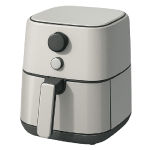
This comparison page helps resolve the biggest buyer fork in the road. Decide platform first, then compare specific models.
3 Key factors for Single-Basket vs Dual-Basket Air Fryers
1Meal Timing and Programming Versatility
Why it matters
This determines how you manage meal complexity. Dual-basket models feature “Sync” technology to stagger start times so different foods finish together. Single baskets excel at “sheet-pan style” roasting where everything shares the same temperature.
Single-Basket — Choose this if
- You primarily cook sheet-pan style roasting or layered nachos where ingredients share the same heat.
- You don’t mind keeping your main protein warm while you quickly air-fry a side dish in a second batch.
- You want the absolute fastest preheat and concentrated airflow for single-item snacks.
Dual-Basket — Choose this if
- You want to serve a complete, hot meal (like fish and chips) without using your main oven for the sides.
- You need to cook for people with different dietary needs (e.g., meat in one side, vegetarian in the other) without cross-contamination.
- You value the flexibility of running just one small 4-quart side when you’re alone.
2Basket Geometry and Item Capacity
Why it matters
Total quart capacity is misleading if the geometry doesn’t match your food. Baskets are shaped differently, affecting what actually fits inside.
Single-Basket — Choose this if
- You frequently roast standard 4–5 lb grocery store chickens or large pork loins.
- You prefer spreading food out in a single wide layer for maximum crispiness; wider baskets offer more surface area for wings.
- Alternative: If you regularly cook large pizzas or whole chickens, consider a Toaster Oven-style Air Fryer for even better horizontal clearance.
Dual-Basket — Choose this if
- You prioritize variety over item size; you’d rather have 4-quarts of wings and 4-quarts of cauliflower simultaneously.
- You are comfortable cutting steaks or fish fillets into smaller portions to fit into narrower drawers.
- You primarily cook ‘fractionable’ foods like nuggets, tater tots, and chopped vegetables.
3Coating Durability and Counter Footprint
Why it matters
Practicality involves counter space and long-term maintenance. Dual-basket models have more mechanical parts and twice the non-stick coating to maintain.
Single-Basket — Choose this if
- You have a small kitchen; single units are typically narrower and easier to store in a pantry.
- You want a lighter drawer that is easier to shake vigorously with one hand during cooking.
- You want to minimize the risk of coating failure, as there is only one basket to baby with non-metal utensils.
Dual-Basket — Choose this if
- You have at least 15-18 inches of horizontal counter space for the wider footprint.
- You want to extend the life of your appliance by choosing a model with ceramic coatings, which are often more scratch-resistant than basic PTFE.
- You are looking for a ‘double-stack’ model that goes vertical to save width while still offering two zones.
Key Decision Factors
| Factor | Price Impact | Importance | Deal Breaker |
|---|---|---|---|
| Meal Timing and Programming Versatility | $40-$80 more | Critical | Yes |
| Basket Geometry and Item Capacity | $20-$50 more | High | No |
| Coating Durability and Counter Footprint | $10-$30 more | Medium | No |
Common Mistakes
- THE POWER SPLIT: Avoid dual-basket units with less than 1500W total power. For optimal crisping, look for at least 200W per quart of total capacity (e.g., 1600W+ for an 8-quart unit).
- NARROW DRAWER LIMITS: Dual-basket volume is split vertically. If you need to cook a standard 12-inch pizza or a large rack of ribs, you must use a large single-basket or a toaster oven-style air fryer.