
HEPA vs. Ionic vs. PECO Air Purifiers (2026): Performance, Safety, and Maintenance
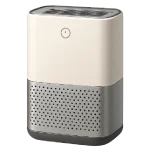
This guide compares the three primary air purification platforms to help you decide which technology fits your home’s environmental needs.
3 Key Factors for HEPA vs. Ionic vs. PECO
1Filtration Mechanism and Performance
Why it matters
The filtration technology determines what pollutants are removed or destroyed. True HEPA is a physical net that captures 99.97% of particles as small as 0.3 microns (US standard). Ionic technology “weights” particles down so they settle on surfaces. PECO (Photoelectrochemical Oxidation) claims to break down pollutants at a molecular level; however, buyers should verify claims against independent third-party testing, as this technology has less independent validation than HEPA.
True HEPA — Choose this if
- You have severe allergies or asthma and need verified removal of pollen, dander, and dust.
- You want a reliable, “physical” barrier that has been the industry benchmark for decades.
- You want consistent performance that doesn’t depend on proprietary chemical reactions.
PECO — Choose this if
- Your primary concern is viruses, bacteria, or toxic gases (VOCs) that PECO is specifically designed to neutralize.
- You are comfortable with a technology that claims to destroy pollutants rather than just trapping them on a filter.
- You want a premium device with advanced air quality monitoring.
Ionic — Choose this if
- You want completely silent operation, as many ionic units function without heavy fans.
- You are looking for a low-cost, supplementary device for small rooms or desk areas.
- You want to reduce very fine smoke or odors without buying expensive replacement filters.
2Maintenance and Recurring Costs
Why it matters
Maintenance costs and frequency define the total cost of ownership. HEPA and PECO both require regular filter changes, while Ionic units are often more “hands-on” with cleaning but significantly cheaper long-term.
True HEPA — Choose this if
- You are comfortable with an annual cost of $40–$100 for filter replacements.
- You want a “low-interaction” system—just swap the filter once or twice a year.
- You prefer using standardized filters that are widely available across multiple brands.
PECO — Choose this if
- You can budget for $100–$250 annually for proprietary filters.
- You will follow guidance to replace the photo filter every 6 months and the pre-filter annually to maintain efficacy.
- You want an app-connected system that notifies you of precise filter life based on actual usage.
Ionic — Choose this if
- You want zero recurring filter costs and are willing to wash the collection plates every few weeks.
- You want a simple device that never becomes obsolete due to unavailable filter sizes.
3Safety and By-product Risks
Why it matters
By-products like ozone can be a significant health risk. True HEPA is strictly mechanical and remains the most established option for particle filtration. Ionic technology carries a higher risk of ozone emissions, while PECO is designed to be ozone-free.
True HEPA — Choose this if
- You need the safest possible air for a nursery or bedroom.
- You want to avoid any possibility of electronic emissions or chemical by-products.
PECO — Choose this if
- You want a technology marketed as ozone-free and supported by clear third-party safety documentation.
- You are looking for a scientifically modern way to address biological contaminants safely.
Ionic — Choose this if
- You have verified the unit is CARB-certified, ensuring ozone levels do not exceed the 0.050 ppm safety limit.
- You are using the device in a well-ventilated space where minor by-products are easily dispersed.
Key Decision Factors
| Factor | Price Impact | Importance | Deal Breaker |
|---|---|---|---|
| Filtration Mechanism and Performance | $100-$300 variation | Critical | Yes |
| Maintenance and Recurring Costs | $40-$250 per year | High | No |
| Safety and By-product Risks | $0 (Health focus) | Medium | Yes |
Common Mistakes
- OZONE PRODUCTION: Some ionic purifiers produce ozone, a lung irritant; verify 'CARB certification' to ensure the device does not exceed the 0.050 ppm safety limit.
- UNVERIFIED HEPA: 'HEPA-style' or 'HEPA-like' labels do not guarantee the 99.97% efficiency standard; look for 'True HEPA' or DOE-certified labels.
- MOLECULAR CLAIMS: PECO technology has faced scrutiny; buyers should verify claims against independent third-party testing, as it has less independent validation than HEPA.