
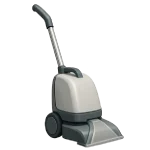
If you find your Carpet Cleaner Not Working during a deep clean, the culprit is often a simple mechanical blockage or a sealing error. These machines rely on a precise balance of fluid pressure and vacuum suction. This guide ranks the most common causes to help you troubleshoot efficiently in 2026.
4 Common Causes for Carpet Cleaner Not Working
1Tank Gasket or Seating Issue
A loss of suction is most frequently caused by the dirty water tank not being perfectly airtight. If the tank is slightly tilted or the rubber gasket is pinched, the vacuum motor will pull “outside air” rather than drawing water up from the carpet.
Symptoms
- The motor sounds higher-pitched than usual (racing).
- The floor is left soaking wet with no water entering the recovery tank.
Care Plan
- Remove the dirty water tank and inspect the black rubber gasket for cracks or debris.
- Wipe the gasket and the mating surface on the machine with a damp cloth to ensure a clean seal.
- Reinstall the tank, ensuring it “clicks” firmly into place and sits flush against the housing.
- Check the “float stack” inside the dirty tank; if it is stuck in the UP position, it will block suction.
- Ensure the clear nozzle cover on the front of the floor path is snapped tight and not cracked.
Common Mistakes
- Assuming the motor is weak when the tank lid is simply not latched correctly.
- Overlooking a small crack in the recovery tank, which ruins the vacuum seal.
2Clogged Spray Nozzles or Tips
If the machine won’t dispense water or solution, the spray nozzles are likely blocked. In 2026, many concentrated cleaning solutions can dry into a “waxy” buildup if the machine is stored with solution still in the lines, or hard water minerals may have calcified in the tips.
Symptoms
- The pump is humming, but no liquid comes out of the bottom.
- The spray pattern is uneven or only sprays from one side.
Care Plan
- Check that the clean water tank is fully seated and the valve at the bottom is opening.
- Remove the floor nozzle or spray tips (if your model allows) and soak them in hot water.
- Use a thin sewing needle or a safety pin to gently clear the tiny holes in the spray bar.
- Run a solution of 1 part white vinegar to 3–4 parts warm water through the machine to descale internal lines.
- Rinse the system with plain warm water after descaling to remove vinegar acidity.
Common Mistakes
- Pushing a needle too far into the nozzle and damaging the internal check valve.
- Using boiling water, which can warp the plastic spray components.
3Air Lock in the Pump
An air lock occurs when a bubble of air gets trapped in the pump’s intake, preventing it from pulling solution from the tank. This is common if the machine was run until the tank was completely dry or if it has been sitting in storage for a long period.
Symptoms
- The clean tank is full, but the machine won’t spray.
- The pump makes a faint vibrating noise but no fluid moves.
Care Plan
- Ensure the clean water tank is pushed down firmly to engage the “Auto-Load” plunger.
- With the machine turned off, remove the clean tank and manually press the small plunger valve at the bottom to ensure fluid flows.
- Reinstall the tank and hold the spray trigger for 60 seconds to allow the pump to prime.
- If priming fails, consult your model’s manual for the specific priming procedure, as force-injecting water into intake ports can damage internal valves.
- Tilt the machine slightly back while holding the trigger to help the air bubble move through.
Common Mistakes
- Thinking the pump is “burnt out” when it just needs to be primed with water.
- Running the pump dry for several minutes, which can cause it to overheat.
4Broken Brush Roll Belt
The brush roll is responsible for agitating the carpet fibers to release dirt. On many upright models, the brushes are driven by a rubber belt. If this belt snaps or slips, the motor will run, but the brushes will remain stationary, resulting in poor cleaning performance.
Symptoms
- The machine has suction and sprays, but doesn’t “scrub” the carpet.
- You hear a high-pitched squealing or smell burning rubber.
Care Plan
- Unplug the machine and turn it over to inspect the brush roll.
- Remove any tangled hair, string, or carpet fibers that may be stalling the brush.
- Open the belt access panel (usually held by 2-4 screws) and check the rubber belt.
- If the belt is snapped or has “burnt” flat spots, replace it with a new OEM belt.
- Ensure the belt is looped correctly around the motor spindle and the brush roll pulley before reassembling.
Common Mistakes
- Buying a “universal” belt that doesn’t match the OEM dimensions — a belt that is too long will slip, while one that is too short will snap prematurely.
- Not cleaning the brush roll bearings, which causes friction that eventually snaps the belt.