
Ceiling Fan Buying Guide 2026: 5 Things to Know Before You Buy
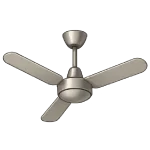
This overview page is your quick-start decision layer. Use it to prioritize what matters most, then open the dedicated best-of and comparison guides before purchase
5 Key Factors When Buying a Ceiling Fan
1Motor Technology (AC vs. DC)
Why it matters
The motor determines the fan’s noise level and energy footprint. Traditional AC motors are reliable but limited in speed control and prone to electrical humming. DC motors typically offer more speed settings, operate with near-total silence, and often use about 30-50% less electricity than comparable AC models, making them a strong choice for bedrooms.
What to look for
- Speed Granularity: DC fans typically offer 6 or more speeds compared to the 3 standard on basic AC models.
- Energy Star Label: Verification of the motor’s efficiency and airflow-to-wattage ratio.
- Inverter Technology: High-quality DC fans use internal inverters to manage power silently.
Expert Take
If your fan will be used in a bedroom or home office, prioritize a DC motor; the absence of the ‘60-cycle hum’ found in AC motors is the single biggest factor in sleep quality.
2Blade Span & Room Sizing
Why it matters
Choosing a fan that is too small for a room results in poor air circulation, while a fan that is too large can feel overwhelming. Matching the blade span to your square footage is the first step in ensuring the fan actually cools the occupants.
What to look for
- Small Rooms (<75 sq ft): 29–36 inch blade span.
- Medium Rooms (76–144 sq ft): 36–42 inch blade span.
- Standard/Large Rooms (145–225 sq ft): 44–50 inch blade span.
- Great Rooms (>225 sq ft): 52–60+ inch blade span.
Expert Take
For ‘L-shaped’ or extra-long rooms, two medium-sized fans are significantly more effective at eliminating dead air zones than one oversized fan in the center.
3Airflow (CFM) & Mounting Height
Why it matters
CFM (Cubic Feet per Minute) measures the volume of air moved. However, raw CFM must be balanced with safety; blades must stay at least 7 feet above the floor. For the most comfortable ‘breeze’ effect, the optimal blade height is between 8 and 9 feet from the floor.
What to look for
- Airflow Target: Use the manufacturer room-size chart and compare CFM ratings directly; for many home rooms, a practical target is roughly 15-30 CFM per square foot, then adjust by comfort and ceiling height.
- Mounting Type: Use ‘Flush Mount’ (Hugger) for 8ft ceilings to maintain the 7ft safety clearance.
- Downrods: For ceilings 10ft or higher, ensure you purchase a downrod to keep the fan in the 8–9ft ‘sweet spot’.
Expert Take
Don’t be fooled by high CFM alone; a fan mounted too high (over 10 feet) without a downrod loses most of its cooling effect before the air reaches you.
4Blade Pitch & Material Durability
Why it matters
The blade pitch—the angle at which the blade is set—works alongside motor torque to move air. While a 12-to-15 degree pitch is standard for efficiency, the material of the blade determines how long the fan stays balanced. Plywood and ABS plastic resist warping better than MDF.
What to look for
- Blade Pitch: Look for a minimum of 12 degrees for standard cooling; 14+ degrees for high-performance airflow.
- Material Integrity: Look for UV-resistant ABS for outdoor/bright areas and multi-layered plywood for indoor stability.
Expert Take
If you want the look of wood outdoors, choose ABS plastic with a wood-grain print; real wood blades (even sealed ones) eventually check and crack when exposed to shifting humidity.
5Control & Smart Integration
Why it matters
Modern fans are increasingly integrated into home ecosystems. If you are replacing a fan that was controlled by a wall switch, you need to ensure the new fan’s receiver is compatible with your existing wiring or provides a reliable wireless alternative.
What to look for
- Control Type: RF (Radio Frequency) remotes are better than IR (Infrared) because they don’t require line-of-sight.
- Smart Protocols: Look for ‘Matter’ or ‘Thread’ compatibility for the most future-proof smart home integration.
- Wall Control: Check if the manufacturer offers a dedicated wall-switch remote to avoid losing a handheld unit.
Expert Take
If buying a ‘Smart Fan,’ ensure it has a physical remote backup; if your WiFi goes down, you don’t want to lose the ability to turn off a high-speed fan at 2 AM.
Key Decision Factors
| Factor | Price Impact | Importance | Deal Breaker |
|---|---|---|---|
| Motor Technology (AC vs. DC) | $40-$120 more | Critical | Yes |
| Blade Span & Room Sizing | $20-$100 more | Critical | Yes |
| Airflow (CFM) & Mounting Height | $30-$70 more | High | Yes |
| Blade Pitch & Material Durability | $20-$50 more | High | No |
| Control & Smart Integration | $30-$80 more | Medium | No |
Common Mistakes
- Environmental Rating Mismatch: Never install a 'Dry-Rated' fan in a bathroom or covered porch; 'Damp-Rated' is required for humidity, while 'Wet-Rated' is mandatory for direct rain exposure.
- MDF Blade Construction: Avoid Medium Density Fiberboard (MDF) blades in non-climate-controlled areas; they absorb moisture, sag, and cause permanent wobbling compared to plywood or ABS plastic.