
Fan Buying Guide 2026: 5 Things to Know Before You Buy
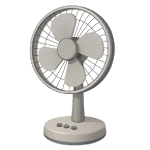
This overview page is your quick-start decision layer. Use it to prioritize what matters most, then open the dedicated best-of and comparison guides before purchase.
5 Key Factors When Buying a Fan
1Motor Efficiency (AC vs. DC)
Why it matters
The motor determines power consumption and speed flexibility. AC motors are standard and reliable but typically offer only 3 speeds. DC motors are significantly more energy-efficient, with some models using up to 70% less power at low speeds. They also stay cooler during long runtimes and allow for “stepless” speed control.
What to look for
- Speed Range: DC motor fans often feature 10 to 32 speed increments compared to the 3 speeds found on AC models.
- Energy Costs: If you run a fan 24/7 during summer months, the lower wattage of a DC motor can lead to noticeable utility savings over time.
Expert Take
Choose a DC motor if the fan is for a bedroom. The ability to fine-tune the speed allows you to find the exact balance between airflow and noise that doesn’t exist on traditional 3-speed fans.
2Configuration & Oscillation Range
Why it matters
Tower fans have a small footprint for corners but typically offer a limited 90-degree oscillation. Pedestal fans are height-adjustable and often provide a wider oscillation range—sometimes up to 180 degrees—making them better for large, multi-person rooms. Air Circulators (like Vornado) are designed to stay stationary and move air throughout the entire room via a focused vortex.
What to look for
- Oscillation Width: Check the degrees of rotation; wider is better for large living rooms, while narrower is fine for a single bedside.
- Vertical Tilt: Pedestal fans and circulators offer significant vertical adjustment, whereas tower fans are usually fixed.
Expert Take
If you have high beds or want to feel air over a desk, a pedestal fan is superior to a tower fan, which mostly circulates air at knee-to-waist height.
3Airflow (CFM) & Manufacturer Specs
Why it matters
Cubic Feet per Minute (CFM) is the manufacturer-reported measurement of how much air the fan moves. However, because there is no uniform industry testing methodology, CFM figures are approximate and vary wildly between brands. Velocity (the speed of that air) is what determines if you can feel the breeze from across a room.
What to look for
- Reported CFM: Use these as a loose guideline; generally, higher is better for large spaces, but don’t treat them as absolute scientific data.
- Blade Diameter: Larger blades (16–18 inches on pedestals) generally move more air with less noise than smaller, faster-spinning blades.
Expert Take
If the manufacturer doesn’t list the CFM at all, it’s a red flag that the fan is likely underpowered for anything beyond personal, close-range use.
4Noise Levels (dB) & Bedroom Modes
Why it matters
Noise is measured in decibels (dB). For bedroom use, a rating below 40 dB is ideal. While some European models carry a “Quiet Mark” certification, this is less common in the U.S. market, where you should rely on the dB rating provided in the technical specifications.
What to look for
- dB Rating at Low vs. High: Many fans claim to be “ultra-quiet” but only achieve that status on the lowest setting.
- Nature/Sleep Modes: These vary the fan speed to create a fluctuating breeze, which can be less distracting than a constant mechanical hum.
Expert Take
Look for “Brushless DC” motors if silence is your priority; they eliminate the mechanical friction noise found in standard AC motors.
5Cleaning Access & Filtration
Why it matters
Dust buildup on fan blades reduces airflow and circulates allergens. Some tower fans include basic mesh or activated carbon pre-filters to trap large dust bunnies, but they are not true HEPA air purifiers. Easy access to the blades for periodic cleaning is the most important maintenance factor.
What to look for
- Tool-Free Cleaning: Look for grilles that use clips or single-screw designs so you can easily wipe down the blades.
- Filter Access: If the fan has a pre-filter, ensure it is washable or cheap to replace.
Expert Take
Avoid tower fans with very narrow, deep slats that cannot be opened. These eventually become “dust traps” that are nearly impossible to clean, significantly reducing the fan’s performance over time.
Key Decision Factors
| Factor | Price Impact | Importance | Deal Breaker |
|---|---|---|---|
| Motor Efficiency (AC vs. DC) | $30-$80 more | High | No |
| Configuration & Oscillation Range | $20-$100 more | Critical | Yes |
| Airflow (CFM) & Manufacturer Specs | $10-$40 more | High | Yes |
| Noise Levels (dB) & Bedroom Modes | $20-$50 more | High | No |
| Cleaning Access & Filtration | $0-$20 more | Medium | No |
Common Mistakes
- Missing Safety Listing: Avoid fans that do not carry a UL (Underwriters Laboratories) or ETL (Intertek) safety mark on the box or unit, as these have not been independently tested for electrical and fire safety.
- Non-Removable Grilles: Avoid fans where the front grille cannot be easily unscrewed or clipped off; dust buildup on blades significantly reduces airflow and strains the motor.