
Bowl-Feed vs. Continuous-Feed Food Processors (2026): Volume, Footprint, and Cleanup
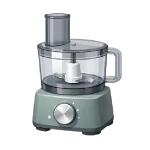
This comparison page helps resolve the biggest buyer fork in the road. Decide platform first, then compare specific models.
3 Key factors for Bowl-Feed vs. Continuous-Feed Food Processors
1Capacity, Motor Power, and Workflow
Why it matters
This is the most constraining decision because it dictates how you work. A bowl-feed model requires you to stop and empty the container once it reaches capacity, whereas a continuous-feed model allows you to process large, uninterrupted quantities into an external bin without stopping to empty a bowl. Motor wattage (ranging from 400W to 1,200W) determines how long the unit can run before thermal cutout.
Bowl-Feed — Choose this if
- You typically process 12 cups of ingredients or less at a single time.
- You need the machine to handle liquids, sauces, and wet purees without leaking.
- You prefer a self-contained unit that doesn’t require extra external bowls on the counter.
- You are comfortable with mid-range wattage (600W–800W) for standard household prep.
Continuous-Feed — Choose this if
- You are processing massive quantities for canning, dehydrating, or large gatherings.
- You want to slice 20 lbs of potatoes or carrots without the downtime of manual emptying.
- You have ample counter space to place a large receiving bin at the end of the discharge chute.
- You prioritize high-wattage AC motors (900W+) designed for longer duty cycles.
2Versatility and Footprint
Why it matters
The platform choice impacts what tasks the machine can actually perform and where it will live in your kitchen. Bowl-feed units are generalists, while continuous-feed units are specialized slicing/grating powerhouses.
Bowl-Feed — Choose this if
- You need a machine that can knead bread dough or thick pizza dough reliably.
- You want the smallest possible footprint for easy storage in standard cabinets.
- You frequently make hummus, nut butters, or emulsified dressings.
- You value a multi-purpose tool that replaces a blender for thick mixtures.
Continuous-Feed — Choose this if
- You rarely use your processor for dough or purees and focus on produce prep.
- You have high-clearance countertops that can accommodate a taller motor base and chute.
- You primarily use the processor as a mechanical mandoline or grater.
- You want the convenience of direct-to-bowl serving for salads and slaws.
3Maintenance, Cleanup, and Safety
Why it matters
Cleanup and safety are critical considerations, especially regarding blade handling. Continuous-feed models have more components to wash, while bowl-feed models are prone to wear at the center spindle seal. Both platforms require careful assessment of how sharp discs are stored and handled to prevent injury.
Bowl-Feed — Choose this if
- You want fewer parts to clean (typically just the bowl, lid, and one blade).
- You prefer dishwasher-safe components that fit easily on the top rack.
- You want a simpler mechanical design with fewer areas for food particles to hide.
- You prioritize models that include integrated blade storage within the bowl.
Continuous-Feed — Choose this if
- You don’t mind washing the extra discharge plate and the external receiving bin.
- You want a motor designed for longer duty cycles (less frequent starting/stopping).
- You seek models with specialized ‘safe-grip’ removal tools for large-diameter slicing discs.
- You have a dedicated drawer or case for the additional chute attachments.
Key Decision Factors
| Factor | Price Impact | Importance | Deal Breaker |
|---|---|---|---|
| Capacity, Motor Power, and Workflow | $50-$150 more | Critical | Yes |
| Versatility and Footprint | $0-$40 more | High | No |
| Maintenance, Cleanup, and Safety | $10-$30 more | Medium | No |
Common Mistakes
- CHUTE CLOGGING: Be wary of continuous-feed models with narrow exit ramps; soft cheeses or leafy greens can backup and overheat the motor.
- EXPOSED BLADE HANDLING: Avoid platforms that do not offer dedicated storage cases or 'safe-grip' hubs for slicing discs, as these are high-risk laceration hazards during assembly.