
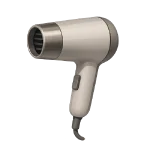
Identify the hair dryer burning smell early to prevent a minor nuisance from becoming a fire hazard. In 2026, most hair dryers include thermal cut-outs, but these are secondary to proper maintenance. This guide ranks solutions from most likely to least likely to help you diagnose the issue efficiently.
5 Common Causes for Hair Dryer Smells
1Clogged Intake Filter (Dust/Lint)
The intake filter at the back of the dryer pulls in air—and with it, dust and lint. When airflow is restricted, the internal temperature spikes, singeing the trapped debris on the heating coils.
Symptoms
- A “dusty” or “musty” burning smell.
- The hair dryer feels hotter than usual or shuts off automatically after a few minutes.
Care Plan
- Unplug the dryer and let it cool completely.
- Locate the intake grill at the rear. Many 2026 models feature a twist-off cap.
- Use an old toothbrush or a small vacuum attachment to remove all visible lint.
- If the filter is mesh, rinse it under warm water (if removable) and dry it 100% before reinstalling.
- Plug in and run on the “Cool” setting for one minute to blow out any loosened particles.
Common Mistakes
- Using the dryer with a damp filter. This pulls moisture into the electrical components, causing a short-circuit risk.
- Poking sharp objects through the mesh, which can puncture internal fan blades.
2Trapped Hair on Heating Element
Long hair can be sucked into the rear intake. Once hair reaches the nichrome heating coils, it burns instantly, producing a pungent “sulfur” odor.
Symptoms
- A sharp, unmistakable smell of burnt hair.
- You may see a small puff of smoke inside the nozzle.
Care Plan
- Unplug the unit. Always disconnect before extraction; even if the power is off, a faulty switch could cause the unit to activate while you are working.
- Peer into the nozzle with a flashlight to see if any strands are wrapped around the coils.
- Use a pair of tweezers to carefully extract visible hair.
- Use compressed air to blow through the rear intake to push debris out through the front nozzle.
Common Mistakes
- Blowing air into the front nozzle. This can push burning debris or hair fragments deeper into the motor housing.
- Ignoring the smell. Burnt hair can coat the heating element, creating a “hot spot” that eventually causes the coil to snap.
3Failing Motor (Brushed Models)
Older or budget hair dryers use “brushed” motors. As the carbon brushes wear down, they produce small sparks and a “burnt ozone” smell. Note that most premium 2026 models use brushless digital motors where this does not apply.
Symptoms
- A metallic, electrical odor.
- Consistent blue or orange sparking visible through the rear of the casing.
Care Plan
- Unplug the unit and let it sit for 30 minutes.
- If you are comfortable with electronics, open the housing to check for black carbon dust around the motor.
- If the motor smells strongly of burnt copper, the windings are failing.
- In most 2026 consumer models, these motors are not serviceable and require a unit replacement.
Common Mistakes
- Confusing motor sparks with dust sparks. A few tiny yellow sparks are often just dust; consistent blue sparking with a slowing fan speed is motor failure.
4Damaged Heating Element (Hot Spots)
The heating element is a delicate coil of wire. If it becomes bent or coated in debris, it can develop “hot spots” where the metal begins to melt or oxidize prematurely.
Symptoms
- You can see a specific section of the coils glowing bright orange or red.
- The smell is metallic and very intense.
Care Plan
- Unplug the dryer immediately.
- Allow it to cool for 30 minutes.
- Inspect the front grill. If the coils are sagging or touching each other, the unit is a fire hazard.
- Safety Warning: Damaged heating elements are rarely worth repairing. If coils are physically broken, replace the unit.
Common Mistakes
- Tapping the dryer to try and “unstick” a glowing coil. This usually causes the brittle wire to snap, potentially causing a shower of sparks.
5Internal Wiring / Cord Short
Constant twisting and pulling can break the copper strands inside the power cord, leading to “arcing” (electricity jumping the gap).
Symptoms
- The burning smell is coming from the handle or the base of the cord.
- The cord feels uncomfortably hot to the touch near the plug or the dryer.
Care Plan
- Unplug the unit.
- Run your hand down the cord to feel for “soft spots” or bulges.
- Inspect the plug for any signs of melting or discoloration.
- If the cord is damaged, do not use the dryer.
- Cord replacement should be handled by a professional using secure strain-relief connections according to the manufacturer’s specified method.
Common Mistakes
- Wrapping the cord tightly around the dryer for storage. This is the leading cause of internal wire breakage.
- Using electrical tape to cover a warm or melted spot. Tape does not fix the underlying arcing issue.