
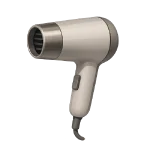
If your hair dryer is not blowing air, you are likely dealing with a physical obstruction or a safety shut-off. In 2026, air-path sensors are common, but they can’t always tell the difference between a clog and a component failure. This guide ranks solutions from most likely to least likely to help you diagnose the issue efficiently.
5 Common Causes for Hair Dryer Airflow Issues
1Blocked Air Intake (Lint/Debris)
The most common reason for no airflow is a simple lack of intake. If the rear filter is covered in dust or your hand is blocking the vents while styling, the fan cannot move any air through the nozzle.
Symptoms
- The motor sounds strained or higher-pitched than usual.
- The hair dryer gets uncomfortably hot within seconds.
Care Plan
- Unplug the unit.
- Check the rear intake grill for a thick layer of grey lint or dust.
- Use a soft brush or a vacuum to clear the grill.
- Ensure you aren’t holding the dryer in a way that covers the intake vents with your palm or fingers.
Common Mistakes
- Blowing through the front. This pushes dust deeper into the motor and heating element. Always clean from the rear intake outward.
2Jammed Fan Impeller (Hair Wrap)
Strands of hair often get sucked into the intake and wrap tightly around the motor shaft behind the fan blades. Eventually, the hair creates enough friction to stop the fan from spinning entirely.
Symptoms
- A loud “humming” or “buzzing” sound, but no air is moving.
- You may smell a faint burning hair odor.
Care Plan
- Unplug the unit and allow it to cool completely.
- Shine a flashlight through the rear grill to see if hair is visible on the shaft.
- If your model has a removable rear cap, use tweezers to carefully unwind the hair.
- Warning: Accessing the impeller usually requires opening the housing, which exposes mains-voltage wiring. This should only be attempted by those comfortable with electronics; ensure the unit remains unplugged.
Common Mistakes
- Attempting to spin the fan with a tool while the unit is plugged in. This can damage the fragile plastic blades or cause a dangerous short circuit.
3Tripped Thermal Cut-Out
When airflow is restricted, the internal temperature rises rapidly. To prevent a fire, a thermal cut-out switch trips and cuts all power to the unit until it reaches a safe temperature.
Symptoms
- The dryer suddenly stops blowing and will not turn back on.
- The unit feels very hot to the touch.
Care Plan
- Unplug the dryer immediately.
- Let it sit undisturbed for at least 30 minutes.
- While waiting, clean the filters as described in Cause 1.
- Plug it back in and test on the “Low/Cool” setting first.
Common Mistakes
- Trying to “force” a restart. Repeatedly clicking the switch while the unit is still hot can damage the thermal switch, making it fail permanently.
4Broken Fan Blade (Impeller)
The fan (impeller) is made of lightweight plastic. If a large piece of debris enters the intake, or if the dryer is dropped, a blade can snap off and jam the entire mechanism.
Symptoms
- A sudden “pop” or grinding noise followed by no airflow.
- The unit vibrates violently if any air is moving.
Care Plan
- Unplug the unit.
- Shake the dryer gently; if you hear plastic pieces rattling inside, a blade has broken.
- Safety Note: For most consumer dryers, a broken impeller requires a full unit replacement. Fans are press-fitted onto the motor shaft; a DIY repair is a safety risk as an incorrectly seated impeller can fail at high speeds.
Common Mistakes
- Continuing to use a rattling dryer. A broken blade fragment can hit the heating element, causing an electrical fire or sending plastic shards out the nozzle.
5Failed DC Motor (Brushed Models)
In older or budget “brushed” motor models, the motor eventually wears out or the internal windings fail. Note that premium 2026 brushless models are significantly more durable and rarely suffer this type of failure.
Symptoms
- No sound at all when the switch is flipped, or a very weak, slow rotation of the fan.
- Visible sparking through the rear of the casing.
Care Plan
- Test the outlet with another device to ensure the bathroom GFCI or breaker hasn’t tripped.
- If the outlet is live and the dryer is silent (and cool), the motor or the internal power switch has failed.
- Decision Point: In 2026, consumer-grade hair dryer motors are typically not serviceable. If the motor is dead, it is safer and more cost-effective to replace the unit.
Common Mistakes
- Assuming a dead motor when it is actually just a tripped GFCI outlet. Always check the “Reset” button on your wall outlet first.