
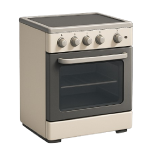
A gas oven that won’t ignite in 2026 is one of the most common kitchen appliance complaints, and the good news is that most causes are diagnosable without special tools. Some fixes take under 20 minutes; others involve gas connections that should be handled by a licensed technician. This guide ranks the five most likely culprits by likelihood — from the component that fails most often to the one checked least — so you can work through them in the right order.
5 Common Causes for an Oven Not Igniting
1Failed Oven Igniter
The igniter is the single most common reason a gas oven stops lighting. Over time — typically after eight to twelve years of use — the igniter element degrades and can no longer draw enough electrical current to open the gas safety valve, even though it may still glow faintly orange. The result is a glowing igniter, a distinct click or hum, and no flame.
Symptoms
- Igniter glows orange or red but no flame appears after 60–90 seconds
- Oven takes much longer than usual to reach temperature, then stops lighting entirely
- You can smell a faint trace of gas briefly, then nothing (the safety valve is not opening)
Care Plan
- Cut power and gas. Turn off the oven’s circuit breaker and close the appliance gas shut-off valve before touching anything inside the oven.
- Remove the oven floor panel. Take out the oven racks, then unscrew and lift out the oven floor panel to expose the burner and igniter assembly beneath it. The wiring harness connector for the igniter is located under this panel on most models — it is not accessible without removing the floor first.
- Disconnect the igniter from the wiring harness. The igniter plugs into a two-wire harness connector. Unplug it fully before taking any measurements — probing a connected igniter will route current through the circuit board and give a false reading.
- Perform a current draw check (preferred method). Reconnect the igniter to the harness and use a clamp meter (a tool that reads amperage by clamping around a single wire without cutting the circuit — this is a different tool from a standard multimeter) to measure current draw when the oven is powered on and calling for heat. A healthy igniter draws at least 3.2 amps; a weak or failed igniter draws less and cannot open the safety valve. Note: The correct amperage threshold varies by model and valve manufacturer — consult your oven’s service manual or the safety valve spec sheet for the exact figure for your unit. Some valves open at ~2.5A; others require higher.
- Supplementary resistance check (optional, not definitive). With the igniter unplugged, set a multimeter to the ohms (Ω) setting and probe the two terminals of the igniter connector. A healthy igniter typically reads in the range of 40–400 ohms depending on model. A reading of near 0 ohms indicates a short circuit (also a failure); an open circuit (OL on the display) confirms a broken element. Important: a plausible-looking resistance reading does not guarantee the igniter is good — a degraded igniter can pass a resistance test and still fail to draw sufficient current under load. Use this as a supplementary check only.
- Replace the igniter if it fails either test. Order a replacement igniter matched to your oven’s model number. Install it in reverse order, reconnect the harness, replace the floor panel, restore gas and power, and test. If the oven still fails to light after a confirmed igniter replacement, move on to checking the burner ports (Cause 2) before assuming the safety valve has failed.
Common Mistakes
- Relying solely on a resistance reading to condemn or pass an igniter — always confirm with a current draw test under load conditions.
- Probing the igniter connector while it is still plugged into the wiring harness, which routes the meter through the control circuit and produces a meaningless reading.
2Clogged Burner Ports
Oven burner ports are small holes drilled around the burner tube through which gas exits and ignites. Over time, baked-on grease, food debris, and cleaning product residue can partially or fully block these ports, causing weak, uneven, or absent ignition even when the igniter is working correctly. This is one of the quickest and cheapest fixes in this list.
Symptoms
- Igniter sparks or glows normally but flame is absent, very uneven, or only lights on one side of the burner
- Visible dark discoloration, grease buildup, or crust around the burner port openings
- Oven lit normally after a thorough cleaning but problems returned gradually
Care Plan
- Cut power and gas. Turn off the circuit breaker and close the appliance gas shut-off valve.
- Remove the oven floor panel and burner cover (if present). Expose the burner tube fully. On most gas ovens the burner is a curved or straight tube running across the oven floor.
- Inspect each port opening. Use a flashlight to look for blocked or partially blocked holes around the burner tube. Grease blockages often appear as dark, hardened residue sitting in or directly over a port.
- Clear blocked ports carefully. Use a straightened piece of brass or copper wire (preferred over steel to avoid scratching or enlarging the port opening) or a straightened paper clip to gently dislodge debris from each port. Insert straight in, do not wiggle or ream. Do not use a drill bit, toothpick, or wooden skewer — drill bits enlarge the port and alter the gas-to-air ratio; toothpicks can snap and leave fragments lodged inside the port. Oven burner port diameters are larger than cooktop burners but still precise — do not force anything wider than the port.
- Wipe down the burner with a damp cloth and allow it to dry completely before reassembling. Restore gas and power and test. If ignition is still absent or irregular after all ports are visibly clear, move on to Cause 3 (safety valve) — a blocked port is unlikely to be the sole cause at that point.
Common Mistakes
- Using a drill bit to clear ports — this permanently enlarges the opening and disrupts the combustion mixture.
- Reassembling while the burner is still damp — residual moisture in a port can cause delayed or uneven ignition on the first few uses.
3Faulty Gas Safety Valve
The gas safety valve is a thermally actuated valve that sits in the gas supply path to the oven burner. It only opens when the igniter draws sufficient current — consult your oven’s service manual or the valve manufacturer’s spec sheet for the correct amperage threshold for your specific model (common values range from approximately 2.5 to 3.6 amps, but this varies). A safety valve can fail mechanically (stuck closed), or its internal bimetal can degrade so it no longer responds to the igniter’s heat and current even when the igniter itself is functioning correctly.
Symptoms
- Igniter has confirmed good current draw (tested with a clamp meter) but oven still does not light
- You can verify the igniter is reaching full brightness/heat but no gas releases
- No gas odor at all during ignition cycle (gas is not reaching the burner)
Care Plan
- Cut power and gas. Turn off the circuit breaker and close the appliance gas shut-off valve.
- Bleed residual gas from the supply line. After closing the shut-off valve, turn on a surface burner briefly (if the stovetop shares the same supply line) to bleed residual pressure between the valve and the fitting. Confirm the burner goes out and there is no gas odor before proceeding. Never loosen a gas fitting on a line that has not been bled.
- Check local code and permit requirements. Before loosening any gas fitting, confirm whether your jurisdiction requires a permit or licensed contractor for this work. Do not proceed if local code prohibits unlicensed gas line work.
- Disconnect the gas supply fitting. Using an adjustable wrench, carefully loosen the gas fitting on the supply side of the safety valve. Work slowly and confirm no gas is present. Have a partner present.
- Remove the safety valve. Disconnect the electrical leads (photograph or label them first), then unscrew the valve from the burner tube. Bring the old valve to an appliance parts supplier to confirm an exact match — safety valves are not universally interchangeable.
- Install the replacement valve. Thread the new valve onto the burner tube by hand first to ensure it is not cross-threaded, then tighten with a wrench until snug. Reconnect the gas supply line and the electrical leads as photographed in Step 5.
- Leak Test (Critical): Before restoring power or lighting the oven, turn the gas supply valve back to the ON position. Apply a commercial gas leak detector solution or thick soapy water to the new fittings. If bubbles form, shut off the gas immediately and tighten the connection. Never use a flame to check for gas leaks. Once confirmed leak-free, restore power and test the oven.
Common Mistakes
- Overtightening gas fittings. Applying excessive force can crack the soft brass fittings or the safety valve body, creating a dangerous leak that is difficult to seal.
- Replacing the valve before testing the igniter. 90% of “bad valves” are actually just weak igniters. Always perform the current draw test (Cause 1) before buying an expensive safety valve.
4Failed Spark Module or Control Board
While older gas ovens use a glowing igniter, some modern 2026 models use a “spark ignition” system similar to a stovetop. In these units, a spark module or the main electronic control board sends a high-voltage pulse to a spark electrode to light the gas. If the module or a relay on the control board fails, you will hear no “clicking” sound and no spark will be visible.
Symptoms
- You hear no clicking sound when you turn the oven to “Bake.”
- No spark is visible at the burner electrode.
- The stovetop burners spark normally (indicating the issue is isolated to the oven circuit).
Care Plan
- Check for Power. Ensure the oven is plugged in and the breaker hasn’t tripped. If the display is blank, start at the electrical panel.
- Inspect the Electrode. Unplug the oven and look at the spark electrode near the burner. If the ceramic is cracked or the tip is covered in heavy grease, it cannot spark. Clean it with a cotton swab and rubbing alcohol.
- Test the Spark Module. On many models, the spark module is located behind the lower kick plate or the rear access panel. Check for loose wires or visible burn marks on the module.
- Replace the Control Board. If the module is fine but isn’t receiving a signal from the oven, the main control board’s relay has likely failed. Photograph the wiring and swap the board for an OEM-spec replacement.
Common Mistakes
- Assuming a bad electrode. Electrodes rarely fail; the wiring leading to them or the module itself is a much more common failure point.
- Touching the electrode during a test. The spark module generates thousands of volts. Never attempt to test the spark while the unit is plugged in.
5Gas Supply Problem
It sounds obvious, but a gas oven won’t ignite if there is no gas. This can be caused by a closed manual shut-off valve, a tripped excess-flow valve, or a problem with the house’s main regulator.
Symptoms
- Neither the oven nor the stovetop burners will light.
- You hear the igniter clicking or see it glowing, but there is zero smell of gas even after 2 minutes.
Care Plan
- Check the Shut-off Valve. Ensure the handle on the gas line behind the oven is parallel to the pipe (ON).
- Reset the Excess-Flow Valve. If the gas was recently turned on too quickly, a safety device called an EFV may have “snapped” shut. Turn the gas off at the wall, wait 30 seconds, and turn it back on very slowly.
- Check Other Appliances. If your gas water heater or furnace is also out, the problem is with your main meter or utility supply. Call your gas company.
- Air in the Lines. If the gas was recently serviced, there may be air in the pipes. Hold a stovetop burner on for 30 seconds (using a manual lighter for safety) to bleed the air out until you smell gas.
Common Mistakes
- Leaving the gas on. If you suspect a supply issue but smell gas, do not troubleshoot. Leave the house and call the utility company from a safe distance.