
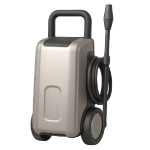
A pressure washer making noise is one of the most common complaints homeowners encounter, and the fix can range from adjusting a garden hose to replacing internal pump components. This guide ranks the four most likely causes from easiest to most complex so you can diagnose and resolve the issue efficiently.
4 Common Causes for a Pressure Washer Making Noise
1Cavitation (Starved Water Supply)
Cavitation occurs when the pump demands more water volume than the supply can deliver, causing it to draw in air alongside water. The rapid collapse of those air bubbles inside the pump head produces the characteristic knocking, rattling, or rapid ticking sound. This is the single most common cause of pressure washer noise and the first thing to rule out before touching any components.
Symptoms
- Rapid knocking or rattling sound that begins immediately at startup and persists under load
- Pulsating or inconsistent spray pressure at the nozzle
- Noise worsens when the trigger is pulled and the pump is under demand
Care Plan
- Turn off the pressure washer completely. For electric units, unplug from the wall outlet. For gas units, shut off the engine and allow it to cool briefly.
- Squeeze the trigger gun to release any residual pressure in the hose and wand before disconnecting anything.
- Check the inlet (garden) hose for kinks, tight bends, or partial closures along its entire length. Straighten and secure it away from pinch points.
- Confirm the supply spigot is turned fully open — a half-open valve is a common oversight that significantly restricts flow.
- Check your owner’s manual for the minimum inlet hose diameter required for your specific model. A 5/8-inch inner diameter hose is standard for most gas-powered units drawing 2.0 GPM or more; lighter-duty electric models may specify 1/2-inch ID. If your hose is undersized or longer than 50 feet, replace it with a shorter, correctly sized hose. Before restarting, place the inlet hose in the water source, turn on the supply, and allow water to flow freely through the trigger gun for 20–30 seconds to purge all air from the pump and hose — this priming step is critical and must not be skipped. If noise persists after correcting supply conditions, proceed to Cause 4 (inlet filter blockage) before moving to pump-internal causes.
Common Mistakes
- Starting the engine before water is fully flowing through the system and out of the gun — even a few seconds of dry running causes rapid seal and piston wear inside the pump.
- Using a long or undersized inlet hose and assuming it is adequate because “water is coming out” — the pump requires a specific volume per minute, not just the presence of water.
2Worn Pump Bearings or Bearing Assembly
Consumer pressure washer pumps are either axial cam (wobble plate) or triplex plunger designs. Both designs rely on a bearing assembly — often called the main bearing or pump bearing — to support the rotating cam plate or crankshaft and allow smooth, low-friction operation. Over time, these bearings wear from heat, water contamination, or insufficient pump oil, producing audible grinding or whining. Note that exact component names vary significantly by model; always consult your unit’s parts diagram for the correct terminology before ordering parts.
Symptoms
- Grinding, whining, or metallic scraping sound that changes pitch with engine RPM
- Milky-colored pump oil when you remove the oil check plug — pump oil should normally appear clear to amber; a white or cloudy appearance means water has entered the pump and contaminated the oil
- Excessive vibration felt at the pump housing during operation
Care Plan
- Turn off the engine or unplug the unit and allow it to cool. Release residual pressure through the trigger gun. Wear safety glasses before proceeding.
- Locate the pump oil drain plug (refer to your owner’s manual — typically on the underside of the pump head). Place a drain pan underneath and remove the plug to drain the pump oil. Examine the oil color: milky or cloudy oil confirms water intrusion and bearing damage.
- Refill with fresh pump oil to the specified level and run the unit briefly to confirm whether the noise improves. If the noise disappears, water contamination was the issue and you may have caught it early — monitor closely on next use and replace seals if the problem recurs.
- If the noise persists after an oil change, the bearing assembly itself is mechanically worn. Locate your model’s parts diagram (available from the manufacturer’s website or a small engine parts supplier) and identify the specific bearing kit for your pump model. Bearing kit parts typically cost $20–$80 depending on the pump brand and model.
- Important: Removing and replacing internal pump bearings requires a bearing puller, bearing press, and in many cases snap-ring pliers for retaining clips. Attempting this repair without these tools risks damaging the pump housing or injuring your hands. If you do not have access to these tools, this is the appropriate point to bring the unit to the pump manufacturer’s authorized service center or a small engine repair shop experienced with pressure washer pumps. If the pump itself requires full replacement rather than a bearing kit, pump replacement costs are significantly higher — typically $80–$300 or more depending on the model — and professional labor will apply on top of that.
Common Mistakes
- Ignoring milky pump oil and continuing to operate the unit — water-contaminated oil provides almost no lubrication and will destroy the bearing assembly within a short period of use.
- Ordering a bearing kit by generic size rather than by model-specific part number — pressure washer pump bearings must match the exact pump assembly; consult the manufacturer’s parts diagram before purchasing.
3Faulty or Stuck Unloader Valve
The unloader valve is a spring-loaded pressure relief component that diverts water into bypass circulation when the trigger gun is released, preventing the pump from building dangerous pressure. When the unloader valve spring weakens, the valve seat wears, or debris lodges in the cartridge, the valve chatters, sticks open, or cycles rapidly — creating a buzzing, chattering, or surging noise. This is the correct failure mode when noise occurs primarily in the no-trigger or bypass state.
Symptoms
- Chattering, buzzing, or rapid pulsing noise that is most pronounced when the trigger gun is not being pulled
- Pressure surging at the nozzle — alternating between high and low pressure — during operation
- Unit builds pressure slowly or not at all when the trigger is pulled
Care Plan
- Turn off the engine or unplug the unit. Squeeze the trigger gun fully and hold it for 5–10 seconds to release all residual pressure from the hose, wand, and pump head. Do not skip this step.
- Locate the unloader valve on your pump — it is typically a cylindrical cartridge threaded into the pump head, often with an adjustment knob or locknut on top. Refer to your model’s parts diagram if you are unsure of the location.
- Before breaking the threaded connection: Even after squeezing the trigger gun, some pump heads can retain small amounts of trapped pressure. Confirm the system has fully de-pressurized, then begin unthreading the unloader valve slowly — no more than a half-turn at a time. Stand to the side (not directly in front of the valve) and allow any remaining pressure to vent safely before completing removal. Do not fully unthread the valve in one quick motion.
- Once removed, inspect the valve cartridge: check the spring for set or collapse, inspect the o-rings for cracking or flattening, and examine the valve seat for scoring or debris. Clean the valve body and seat using a non-chlorinated, o-ring-safe parts cleaner or isopropyl alcohol — avoid chlorinated solvents such as brake cleaner, which degrade rubber o-rings and plastic components.
- If the spring is weak, the seat is scored, or the o-rings are damaged, replace the unloader valve cartridge with an OEM-matched replacement (typically $15–$60). When reinstalling, use the sealing method specified in your service manual — some valves seal via o-ring compression alone, others use a copper or fiber washer, and only some use thread sealant. Applying thread sealant to an o-ring-sealed valve can contaminate the seat and cause a new leak. Torque to the specification in your manual. If noise continues after replacement, contact the pump manufacturer’s authorized service center, as the issue may involve the pump check valves or pump head.
Common Mistakes
- Removing the unloader valve quickly in a single motion without confirming zero system pressure — residual trapped pressure can cause the cartridge to eject forcefully, causing hand or eye injury.
- Applying PTFE tape or liquid thread sealant to a valve that seals with an o-ring — this can prevent proper o-ring seating and introduce contaminants into the valve seat.
4Debris or Blockage in the Inlet Filter
The inlet filter (also called the inlet screen or water inlet strainer) is a fine mesh screen located where the garden hose connects to the pump. Its job is to catch sediment, grit, and debris before they enter the pump. When this screen becomes partially or fully clogged, it restricts water flow into the pump — effectively creating the same starved-supply condition as cavitation, but with a localized, fixable cause. This is distinct from Cause 1 because the supply hose and source may be perfectly adequate; the blockage is at the machine itself.
Symptoms
- Rattling or knocking noise similar to cavitation, but persists even after confirming the supply hose and spigot are fully open and correctly sized
- Visible sediment, mineral scale, or debris on or around the inlet fitting
- Reduced or pulsating spray pressure with no other obvious cause
Care Plan
- Turn off the engine or motor and unplug the unit. Squeeze the trigger to release all residual pressure.
- Disconnect the garden hose from the water inlet on the pressure washer.
- Locate the inlet filter screen inside the threaded water inlet connection. Using a pair of needle-nose pliers, gently grasp the center tab of the screen and pull it straight out.
- Rinse the screen under a faucet, using a soft-bristle brush to remove stubborn grit or mineral deposits. If the screen is torn or cannot be fully cleaned, replace it with a new one ($5–$20).
- Inspect the inlet port for any debris that may have bypassed the screen. Flush the port with a small amount of clean water before reinstalling the filter and reconnecting the hose.
Common Mistakes
- Operating the machine without the filter screen. Removing a clogged screen and running the unit “naked” allows grit to enter the pump valves, causing permanent internal damage that costs $100+ to repair.
- Cleaning with a sharp tool. Poking the screen with a screwdriver can create holes, allowing debris to pass through. Always use a soft brush or water pressure.