
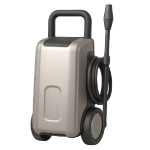
A pressure washer not building pressure is one of the most frustrating outdoor tool problems — the machine starts fine but the cleaning power just isn’t there. In 2026, most cases come down to five fixable causes, ranked below from most to least likely so you can stop guessing and start solving.
5 Common Causes for a Pressure Washer Not Building Pressure
1Clogged or Wrong Spray Nozzle
The spray nozzle is the single most common reason a pressure washer loses cleaning power, and it is also the cheapest and fastest fix. Mineral deposits, dirt, and debris accumulate in the tiny orifice over time, partially blocking flow and reducing output pressure noticeably. Using the wrong color-coded nozzle tip — for example, a wide-angle 40° white tip when the job calls for a 15° yellow tip — produces the same weak-spray symptom even when the machine is functioning perfectly.
Symptoms
- Weak, wispy, or fanned-out spray pattern instead of a focused, high-pressure stream
- Spray pattern is distorted, off-center, or split into two streams
- Pressure appears consistently low from the first trigger pull (not a drop-off after a few seconds)
Care Plan
- Shut down and depressurize. Turn off the engine or unplug the power cord from the wall outlet. Squeeze the trigger gun for 3–5 seconds to release all residual line pressure. Put on safety glasses and gloves before handling the nozzle.
- Remove the nozzle tip. On quick-connect wands, pull the collar back, slide the tip out, and set it aside. On threaded tips, unscrew counterclockwise.
- Inspect the orifice. Hold the tip up to a light source and look through it. A fully blocked orifice will show no light; a partially blocked one will show an irregular opening. Using a nozzle-cleaning pin (included with most machines, or available for under $5), insert the pin into the spray tip opening — the narrow outlet end — and push debris back toward the wider inlet end of the nozzle. Never insert the pin from the inlet end, as doing so compacts debris further into the orifice.
- Backflush with water. Run water backward through the tip (from outlet end toward inlet end) using a garden hose to flush loosened debris out completely. Re-inspect through the tip before reinstalling.
- Replace if damaged or install the correct tip. If the orifice is visibly enlarged, eroded, or the tip is cracked, replace it. Individual nozzle tips cost $3–$20 depending on brand; a universal 5-tip set runs $10–$20. Confirm the color-coded angle matches your intended task. If pressure is still low after a confirmed-clean correct-angle tip is installed, move to Cause 2.
Common Mistakes
- Inserting the cleaning pin from the inlet (wide) end of the nozzle, which packs debris tighter into the orifice instead of clearing it — always insert from the outlet/tip end.
- Installing the correct-looking tip without verifying the orifice size stamp matches the pressure washer’s GPM rating — an undersized orifice strains the unloader valve and an oversized one reduces pressure.
2Faulty or Maladjusted Unloader Valve
The unloader valve is a spring-loaded bypass valve that diverts water back to the pump inlet when you release the trigger, protecting the pump from pressure buildup. When the spring weakens, the valve seat wears, or the valve is maladjusted, it bleeds pressure continuously — even while you are actively spraying. This is one of the most common mechanical causes of low pressure on machines that are 2–5 years old. A critical safety note: after any unloader valve repair or replacement, always verify output pressure with an inline pressure gauge before resuming normal use — an incorrectly set or mismatched valve can cause the machine to operate above its rated PSI, risking hose failure or fitting ejection.
Symptoms
- Pressure starts normal for a moment, then drops off within seconds of holding the trigger — a drop-off pattern rather than a consistently weak spray
- Water leaks from around the pump head fitting or the bypass port continuously
- Machine builds pressure at rest (trigger released) but pressure collapses immediately when the trigger is held open
Care Plan
- Shut down and depressurize. Turn off the engine or unplug the power cord from the wall outlet. Squeeze the trigger for 5 seconds to release all residual pressure. Put on safety glasses and gloves.
- Locate the unloader valve. On most consumer gas and electric machines, the unloader valve is a knob or threaded brass fitting located on the top of or adjacent to the pump head. On some models — particularly those with Annovi Reverberi (AR) or similar OEM axial pumps — the unloader is integrated inside the pump head and is not accessible as a standalone external fitting. If you cannot find an external valve, check your model’s service manual; internal unloader valves require pump head disassembly or professional service.
- Check the adjustment first. If your unloader valve has an external adjustment knob, try turning it clockwise in small ¼-turn increments (this increases spring tension and raises bypass pressure). Test pressure after each increment. Do not exceed the machine’s rated PSI.
- Rebuild or replace if adjustment fails. Purchase an unloader valve rebuild kit ($15–$35) or a complete replacement valve ($25–$60). Before purchasing, verify the replacement valve’s PSI rating and GPM flow rating against your pump’s specification label — not just the brand name. Installing a valve with the wrong pressure rating, even from the same manufacturer, can cause dangerous over-pressurization or continued low pressure. Never operate the machine after an unloader valve replacement without first checking output pressure with an inline gauge rated above the machine’s maximum PSI.
- Reassemble and test with a gauge. Reinstall the valve, restore the water supply, start the machine, and measure output pressure with an inline gauge. If pressure remains low or the valve leaks after replacement with a correctly-rated part, the pump head itself may be damaged — consult a small-engine repair technician ($85–$175 in labor; prices vary by region).
Common Mistakes
- Installing a universal unloader valve without verifying that its PSI and GPM ratings match the pump’s spec plate — a mismatched valve can cause dangerous over-pressurization. Always confirm the pressure and flow rating, then verify output with a gauge before resuming work.
- Over-tightening the adjustment knob past the machine’s rated PSI, which accelerates wear on seals and hoses downstream.
3Restricted Water Supply or Clogged Inlet Filter
A pressure washer pump is not a self-priming vacuum — it requires a consistent, gravity-fed or pressurized water supply that meets its minimum GPM (gallons per minute) demand. When the garden hose has a kink, the shutoff valve is partially closed, the supply hose is too long or too narrow, or the inlet filter screen is clogged with sediment, the pump starves for water. A starved pump cannot build full pressure, runs hot, and will begin to cavitate — producing a rapid chattering or knocking sound similar to gravel rattling in the pump head — which causes accelerated wear on internal valves and seals if left unaddressed.
Symptoms
- Pressure is consistently low and fluctuates in an irregular, pulsing pattern
- Pump produces a rapid chattering or knocking sound (cavitation noise — distinct from normal pump operation, it sounds like loose gravel or marbles inside the pump head)
- Pressure drops when a second water source is used nearby, suggesting low supply flow
Care Plan
- Shut down and depressurize. Turn off the engine or unplug the power cord from the wall outlet. Squeeze the trigger for 5 seconds. Put on safety glasses and gloves.
- Check the supply hose. Straighten all kinks, confirm the source shutoff valve is fully open, and verify the hose inner diameter is at least ⅝ inch. Hoses longer than 100 feet lose meaningful flow at typical residential supply pressure.
- Test supply flow rate. Disconnect the supply hose from the machine, place the open end into a 5-gallon bucket, and time how long it takes to fill. Most consumer pressure washers require a minimum of 1.5–2 GPM — check your unit’s specification label for the exact requirement. At 2 GPM minimum, the bucket should fill in 2.5 minutes or less; at a 1.5 GPM minimum, in 3.5 minutes or less. If your supply is below these thresholds, try a different spigot or a shorter, wider hose.
- Inspect the inlet filter screen. Disconnect the garden hose from the water inlet on the pump. Use needle-nose pliers to gently pull the screen out of the inlet fitting. Rinse it under a faucet to remove sand, grit, or mineral scale. If the screen is torn or damaged, replace it ($5–$15) — never run the machine without this filter, as even small particles will destroy the pump’s internal check valves.
- Flush the pump. With the screen cleaned and the hose reattached, turn the water on but leave the engine off. Squeeze the trigger for 30 seconds to flush all air and loose sediment out of the system before starting. If pressure remains low, proceed to Cause 4.
Common Mistakes
- Using a “pocket” or collapsible hose. These hoses are notorious for restricting flow under the suction of a pressure washer pump. Always use a standard, rigid-wall garden hose.
- Assuming a leak at the hose connection is “just a leak.” A leak at the inlet can allow air to be sucked into the pump, leading to cavitation and low pressure even if the supply volume is high.
4Worn or Damaged Pump Seals and Valves
Inside the pump head, high-pressure seals surround ceramic or stainless steel plungers, while one-way check valves direct the flow. If these seals are worn (often from being left in “bypass mode” too long, which overheats the water) or the check valve springs are broken, the pump cannot create the seal required to build pressure.
Symptoms
- Water is leaking from the bottom of the pump manifold.
- The pump oil looks milky white or cloudy (indicating water has leaked past the seals into the crankcase).
- Pressure is low and the high-pressure hose vibrates or pulsates violently.
Care Plan
- Check for Leaks: With the machine running, inspect the pump head for visible drips. Any external leak is an internal pressure loss.
- Inspect Check Valves: Unplug the unit or disconnect the spark plug. Unscrew the large hex caps on the pump manifold. Remove the check valve assemblies and look for debris, pebbles, or broken springs. Clean or replace as needed ($25–$80 for a kit).
- Replace Seals: If the valves are good, the high-pressure seals are likely worn. A seal kit typically costs $30–$100. Note: Rebuilding a pump head is a “High” difficulty task. If the plungers are scored or the manifold is pitted, a complete replacement pump ($80–$250) is often more economical.
Common Mistakes
- Replacing seals without checking the plungers. If the ceramic plungers are cracked or scratched, they will shred new seals in minutes. Always inspect the plungers for smoothness before installing a seal kit.
5Air Lock in the Pump
An air lock occurs when a large bubble of air is trapped inside the pump head or the high-pressure hose. Because air is compressible and water is not, the pump cannot generate enough force to push the air out against the resistance of the nozzle, resulting in a machine that runs but produces zero pressure.
Symptoms
- The machine was just started after being stored or after the water was turned off.
- The engine or motor sounds “light” or unstrained when you pull the trigger.
- Water barely trickles out of the wand even though the supply is on.
Care Plan
- Bleed the System: Turn off the engine/motor. Keep the garden hose turned ON.
- Trigger Open: Remove the spray nozzle from the end of the wand.
- Flush: Squeeze the trigger for 1–2 minutes, allowing water to flow through the machine at garden-hose pressure until all “spitting” and air bubbles stop.
- Restart: Once a steady stream is achieved, restart the engine and then reinstall the nozzle.
Common Mistakes
- Fighting the pressure. Trying to start a gas pressure washer with air in the lines makes the pull-cord very difficult to pull. Always bleed the air first to make starting easier and protect the pump.