
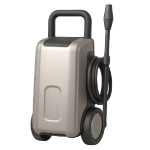
A pressure washer not starting is one of the most common — and most fixable — small-engine problems a homeowner faces, especially in 2026 after a long winter storage period. Some causes take under 20 minutes to resolve; others require component-level diagnosis. This guide ranks fixes from most to least likely so you spend time where it counts.
4 Common Causes for a Pressure Washer Not Starting
1Stale or Contaminated Fuel
Gasoline begins to oxidize and degrade within 30 days without a stabilizer additive, and within 60–90 days it can form gummy varnish deposits that restrict fuel flow through the system. This is the single most common reason a pressure washer fails to start after sitting through an off-season, and it is also the cheapest and fastest fix to attempt first.
Symptoms
- Engine cranks normally but never fires, even with full choke
- Fuel in the tank appears dark, cloudy, or has a sour smell distinct from fresh gasoline
- Machine ran fine at the end of last season but will not start now
Care Plan
- Move the pressure washer outdoors or into a well-ventilated space away from any pilot lights, running engines, or other ignition sources. Disconnect the spark plug wire before touching the fuel system.
- Fire & Inhalation Hazard: Gasoline is highly flammable and its vapors are heavier than air. Work outdoors with strong cross-ventilation. Keep all ignition sources at least 25 feet away. Wear nitrile gloves and avoid prolonged vapor inhalation. Drain the tank completely into a sealed, approved gasoline container — use a red ANSI-approved fuel can with a proper cap, not an open bucket or repurposed container.
- Old fuel must not be poured down a drain or into the trash. Search Earth911.com or your county’s public works website to locate the nearest household hazardous waste drop-off site.
- Refill the tank with fresh, ethanol-free gasoline (91 octane or as specified in your owner’s manual). Add a fuel stabilizer such as Sta-Bil to this fresh fuel if you anticipate storage longer than 30 days — stabilizer is most effective when mixed into fresh fuel, not added after degradation has already occurred.
- Reconnect the spark plug wire, engage the choke, and attempt to start the machine. If the engine still does not fire after 5–6 pulls, proceed to Cause 2.
Common Mistakes
- Topping off old degraded fuel with fresh fuel rather than draining fully — the varnish deposits remain and will continue to restrict flow.
- Storing the machine with untreated fuel over winter, then adding stabilizer in spring — stabilizer cannot reverse degradation that has already occurred. Add it at the end of the season before storage.
2Fouled or Failed Spark Plug
The spark plug ignites the compressed air-fuel mixture inside the cylinder. Over time, carbon deposits build up on the electrode, the ceramic insulator can crack, or the electrode gap widens beyond specification — all of which prevent the plug from producing a reliable spark. At $5–$15 for a replacement, this is the second check to make and takes under 15 minutes.
Symptoms
- Engine cranks but produces no ignition sound — no pop or attempt to fire
- Visible carbon fouling, oil coating, or physical damage on the plug when removed
- Machine starts occasionally but misfires or runs rough before dying
Care Plan
- Disconnect the spark plug wire and use a spark plug wrench (typically 5/8” or 13/16” — check your owner’s manual) to remove the plug.
- Inspect the electrode end carefully. A light tan or gray deposit is normal. Heavy black sooty deposits indicate an overly fuel-rich mixture (too much fuel, not enough air) or oil fouling. A white or blistered electrode indicates overheating. A cracked ceramic insulator or physically damaged electrode means the plug must be replaced.
- If the plug looks borderline, use a feeler gauge to check the electrode gap against the specification in your owner’s manual (commonly 0.030”–0.035” for small engines, but always verify for your specific model).
- Try cleaning a lightly fouled plug with a wire brush and reinstalling — but if the plug is more than 2 seasons old or shows any physical damage, replace it outright.
- Install the new plug by hand first to avoid cross-threading, then torque to your engine manufacturer’s specification — typically 8–15 ft-lbs depending on plug thread size (consult your owner’s manual; never estimate). Reconnect the wire and test. If the machine still won’t start, proceed to Cause 3.
Common Mistakes
- Over-tightening the spark plug. This is a particular risk in aluminum cylinder heads — follow the manufacturer’s torque specification exactly, as the blog’s own warning about stripping threads is real and the fix is expensive.
- Installing a plug with the wrong heat range. Always match the plug number specified in your owner’s manual, not just a physically similar plug from the parts drawer.
3Clogged Carburetor
The carburetor mixes air and fuel in the precise ratio the engine needs to run. When stale fuel leaves varnish deposits inside the carburetor’s tiny jet passages, fuel cannot flow properly and the engine either refuses to start or dies immediately when the choke is opened. This is a highly reliable indicator of fuel degradation that wasn’t caught in Cause 1’s basic drain-and-refill.
Note that needing the choke to start a cold engine is completely normal — the red flag here is that the engine dies immediately when you open the choke to the run position, which it should not do on a warm or warmed-up engine. That symptom specifically points to fuel starvation from a clogged jet.
Symptoms
- Engine starts only with the choke fully closed but dies as soon as the choke is opened to the run position on a warmed-up engine
- Engine sputters, surges, or hesitates at partial throttle even after fresh fuel is added
- Visible varnish residue (tan or brownish film) inside the carburetor bowl when removed
Care Plan
- Wear safety glasses or goggles and nitrile gloves before proceeding. Aerosol carburetor cleaner is typically acetone- or xylene-based — it can ricochet off internal surfaces and cause chemical burns to eyes and skin irritation with repeated contact.
- Turn the fuel shutoff valve to OFF. Remove the air filter and air filter housing to expose the carburetor. Place a rag under the carburetor to catch fuel drips, then disconnect the fuel line and remove the carburetor bowl bolt. Carefully remove the bowl and float assembly, noting the orientation of all parts.
- Spray carburetor cleaner directly into the carburetor throat and through all visible passages using the thin straw applicator. Let it soak for 5 minutes to soften varnish deposits.
- Use only a carburetor cleaning needle or the correct-size jet drill bit to clear blocked jet holes — never a random wire strand, which can enlarge the precision-sized jet orifice, permanently alter the fuel-air mixture ratio, and ruin the jet beyond repair.
- Reassemble the carburetor, reconnect the fuel line, open the fuel shutoff, and test. If cleaning does not restore proper function, replace the carburetor. Aftermarket replacement carburetors from reputable suppliers (not true OEM units from the engine manufacturer) typically cost $15–$40 and are functionally equivalent for most residential machines. True OEM carburetors from Briggs & Stratton, Honda, or Kohler may cost $50–$120+. If the machine still won’t start after a confirmed clean or replaced carburetor, proceed to Cause 4.
Common Mistakes
- Using a wire strand to clear jet orifices — jets are precision-sized components and enlarging the hole even slightly will cause a fuel-rich or uncontrollable engine condition requiring a full replacement.
- Skipping the carburetor rebuild kit when reinstalling a cleaned carburetor. A $5–$10 kit includes fresh gaskets and an o-ring that prevent air leaks that will cause the same starvation symptoms you just fixed.
4Failed Ignition Coil
The ignition coil converts the energy generated by your engine’s ignition system into the high-voltage pulse that fires the spark plug. Most gas pressure washers use a magneto-based ignition system — a self-contained system where spinning flywheel magnets generate electricity to power the ignition — rather than a battery-powered ignition. When the coil fails, the engine receives no spark regardless of how good the plug is. Coil failures are less common than the first three causes but become more likely on machines over 5 years old.
Always verify the air gap specification in your engine’s service manual — 0.010” is a common value but is not universal across all engine brands or coil designs.
Symptoms
- Engine has strong compression and fresh fuel, but produces zero spark at the plug (confirmed with a tester)
- Spark is intermittent — machine starts when cold but dies as it warms up and won’t restart until it cools
- No spark even after installing a confirmed good spark plug
Care Plan
- Use an inline spark tester (available for under $10): clip one end to the spark plug wire boot and clip the other end to the engine block ground. Crank the engine and observe the tester window — a strong blue spark indicates the coil is functioning; a weak orange spark or no spark indicates coil failure. This method is safer and more reliable than placing a loose plug against the block, which can produce a false-negative result.
- If no spark is confirmed, disconnect the spark plug wire and locate the ignition coil — it is mounted near the flywheel, typically under a side cover or recoil starter housing. Consult your owner’s manual for its exact location.
- Disconnect the kill switch wire from the coil. Measure the resistance across the coil’s primary and secondary terminals with a multimeter and compare to your engine manufacturer’s specification. A reading of OL (open loop/infinite resistance) on the secondary winding almost always confirms coil failure.
- Remove the two coil mounting bolts. Before installing the new coil, rotate the flywheel so the magnets are positioned away from the coil. Install the coil loosely, then rotate the flywheel back so the magnets are adjacent to the coil. Set the air gap using a feeler gauge to your engine manufacturer’s specification (commonly 0.010”, but always verify in your engine’s service manual — Kohler and Honda engines frequently specify different values). Tighten the mounting bolts while holding the feeler gauge in place, then remove the gauge.
- Reconnect and Test: Reattach the kill switch wire and the spark plug boot. Attempt to start the engine. If a confirmed spark is present but the engine still fails to fire, the issue likely lies with the flywheel key (timing) or internal engine compression, which requires professional diagnosis.
Common Mistakes
- Setting the air gap with a random object. While a business card is a common “field hack,” it is typically around 0.014”. If your engine specifically requires 0.010”, using a card can result in a weak spark. Always use a precision feeler gauge when possible.
- Replacing the coil without checking the kill wire. A “no spark” condition is often just a frayed kill wire shorting out against the engine block. Inspect the length of the thin wire for bare spots before buying a new coil.