
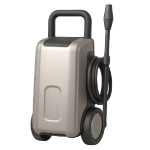
A pressure washer that won’t stay running is almost always a fuel delivery, air supply, or load-management problem — and in 2026, most of these fixes are within reach for a homeowner with basic tools. This guide ranks the five most common causes from most to least likely, so you can diagnose the issue efficiently and get back to work.
5 Common Causes for a Pressure Washer That Won’t Stay Running
1Clogged Carburetor
The carburetor is the single most common reason a pressure washer starts but refuses to keep running. When gasoline sits in the fuel system for extended periods, it breaks down and leaves behind a sticky varnish residue that coats and partially or fully blocks the small internal passages — particularly the main jet — that meter fuel into the engine. The result is an engine that can pull just enough fuel to fire briefly but starves out under any sustained load.
Symptoms
- Engine starts for a few seconds then dies, often requiring repeated choke cycling to restart
- Engine surges or “hunts” (speeds up and slows down repeatedly) before shutting off
- Black or sooty exhaust smoke suggesting an erratic fuel-to-air mixture
Care Plan
- Prepare safely: Ensure the engine is completely cold. Turn the fuel shutoff valve to OFF, then disconnect the spark plug wire and tuck it away from the plug terminal. Put on safety glasses and nitrile gloves before proceeding — you will be handling fuel and carburetor cleaner throughout this procedure.
- Remove the air filter housing and locate the carburetor: Unscrew or unclip the air filter cover, set the filter aside (inspect it per Cause 3 while it is out), and locate the carburetor — typically a small metal assembly directly behind the air filter on the engine.
- Remove the carburetor bowl: Place a small container underneath to catch residual fuel. Unscrew the bolt at the base of the carburetor bowl and carefully lower the bowl away. Inspect the inside for brownish varnish deposits, sediment, or water — these confirm fuel degradation as the root cause.
- Clean all passages with carburetor cleaner and compressed air: Spray carburetor cleaner generously through all visible ports and passages in the carburetor body and the bowl. Do not use a wire or any probe to clear the main jet orifice — the jet is precision-sized and any physical intrusion can permanently enlarge it, causing the engine to run incorrectly. Instead, direct carburetor cleaner spray directly into the jet orifice and follow immediately with short bursts of compressed air to blow the obstruction clear. If the jet cannot be cleared with cleaner and air alone, replace it — jets are inexpensive and available at most hardware stores. Important safety note for this step: Carburetor cleaner is highly flammable — confirm the engine is cold, work outdoors or in a well-ventilated area, and keep all ignition sources away before spraying.
- Reassemble and test: Reinstall the carburetor bowl, tighten the bowl bolt firmly but without overtorquing (consult your owner’s manual for the specified torque if available). Reinstall the air filter, reconnect the spark plug wire, open the fuel valve, and attempt to start. If the engine still surges or shuts off after a thorough cleaning, the carburetor may need a full rebuild kit or replacement — at that point, a small engine technician is the efficient next step.
Common Mistakes
- Using a wire, needle, or pin to probe the main jet orifice — this permanently enlarges the precision-calibrated opening and ruins the jet, making the problem worse.
- Reinstalling the carburetor bowl without verifying the bowl gasket or O-ring is properly seated, which causes a fuel leak at the base.
2Stale or Contaminated Fuel
Gasoline begins to degrade within 30–60 days without a fuel stabilizer. Ethanol-blended fuel (E10 or higher, which is the most common fuel sold at US pumps) degrades faster than ethanol-free fuel, particularly in a vented small engine fuel tank exposed to temperature swings — the ethanol absorbs atmospheric moisture, leading to phase separation, where the ethanol and water separate from the gasoline and sink to the bottom of the tank. When this water-ethanol layer is drawn into the carburetor, the engine cannot sustain combustion and shuts down. For long-term storage applications, ethanol-free fuel is strongly preferred where available.
Symptoms
- Engine starts normally on choke but dies when choke is opened or load is applied
- Fuel in the tank appears dark, cloudy, or has a sour or varnish-like smell
- Engine ran fine last season but struggles after sitting unused through winter or summer storage
Care Plan
- Prepare safely: Turn the fuel valve to OFF and disconnect the spark plug wire. Put on safety glasses and nitrile gloves before handling fuel.
- Drain the fuel tank completely: Place an approved fuel container beneath the tank drain or disconnect the fuel line at the base of the tank to allow all old fuel to drain into a sealed, approved container. Do not pour old gasoline down a drain, on the ground, or into household trash — take it to a local hazardous waste disposal facility or an auto parts retailer that accepts used fuel for recycling (AutoZone and O’Reilly Auto Parts locations in the US commonly offer this service; check your municipality’s website for periodic hazardous waste drop-off events in your area).
- Rinse the tank with a small amount of fresh fuel: Pour approximately one cup (8 oz) of fresh gasoline into the empty tank, swirl it to coat all interior surfaces and dislodge any remaining sediment, then drain this rinse fuel into the same sealed container. This step flushes residual contaminated fuel from the tank walls and fuel pickup without wasting a full tank of fresh gasoline.
- Refill with fresh fuel: Use fresh gasoline — ethanol-free where available — and add a fuel stabilizer if the machine may sit again for more than 30 days.
- Check for fuel leaks before starting: Before reconnecting the spark plug wire, visually inspect all fuel line connections for tightness and check for any fuel seepage around fittings and the base of the carburetor. Only reconnect the spark plug wire and attempt to start once you have confirmed no fuel is leaking. Ensure you are working in a well-ventilated outdoor area away from any ignition sources. If the machine still shuts off after fresh fuel is added, the stale fuel has likely left varnish deposits in the carburetor that require cleaning per Cause 1.
Common Mistakes
- Topping off an old tank of degraded fuel with fresh fuel rather than draining it first — diluting bad fuel does not remove the water-ethanol layer or varnish deposits already present.
- Storing the pressure washer with a full tank of untreated fuel, then troubleshooting a stale fuel problem while adding more untreated fuel.
3Dirty or Clogged Air Filter
The air filter prevents dust and debris from entering the engine’s combustion chamber. When it becomes clogged — which happens faster in dusty outdoor environments — airflow is restricted and the engine runs rich (too much fuel relative to air), which causes it to bog down, surge, and eventually stall under load. This is one of the simplest and fastest fixes on this list, and it should be checked routinely as part of seasonal maintenance.
Symptoms
- Engine runs roughly, surges, or produces black smoke (indicating a rich mixture)
- Engine loses power progressively during use rather than shutting off immediately
- Filter is visibly grey, brown, or clogged with debris when removed
Care Plan
- Prepare safely: Disconnect the spark plug wire and allow the engine to cool before opening the air filter housing.
- Remove the air filter: Unscrew or unclip the air filter cover and slide the filter out. Note the filter type — most small pressure washer engines use either a pleated paper filter or a foam filter.
- Inspect and clean the filter by type:
- Paper/pleated filter: Tap it firmly against a hard surface to knock loose debris free. Inspect the pleats by holding the filter up to light — if it is uniformly grey or brown with embedded dust and light cannot pass through, it needs replacement. Do not wash paper filters with water or solvent.
- Foam filter: Wash in warm, soapy water, rinse thoroughly, and allow to dry completely before reinstalling. Once fully dry, apply only a few drops of clean 30-weight motor oil or manufacturer-specified foam filter oil — spread the oil evenly across the foam by squeezing it gently (do not wring or twist the foam, as this can tear it). The foam should be lightly tacky, not dripping with oil.
- Reassemble and test: Reinstall the clean or new filter, secure the cover, reconnect the spark plug wire, and test. If the engine still shuts off, proceed to Cause 4.
Common Mistakes
- Running the engine without a filter. Never operate the machine with the filter removed, even for a few minutes; dust sucked into the intake will rapidly score the cylinder walls and destroy the engine.
- Over-oiling a foam filter. Excessive oil will be sucked into the carburetor, clogging the jets and causing the exact stalling issue you are trying to fix.
4Faulty Unloader Valve
The unloader valve is a pressure-relief component that diverts water into a bypass loop when the trigger is released. If this valve sticks or its internal spring weakens, it may fail to transition out of bypass mode correctly, or it may create excessive back-pressure that physically stalls the engine the moment you pull the trigger.
Symptoms
- The engine runs fine at idle but stalls immediately when you squeeze the trigger.
- The starter rope is extremely hard to pull (due to trapped water pressure).
- You hear a high-pitched squealing or chattering sound from the pump just before the engine dies.
Care Plan
- Release system pressure: Turn off the engine and the water supply. Squeeze the trigger to bleed all line pressure.
- Locate the valve: The unloader is typically a brass bolt-like component with a large spring, located on the pump manifold.
- Inspect and grease: Remove the unloader valve. Check the O-rings for cracks and the piston for mineral scale. Clean with a soft brush and apply a thin coat of waterproof silicone grease to the O-rings.
- Adjust or Replace: If the valve is physically pitted or the spring is broken, replace the entire unloader assembly ($20–$60). Reinstall and adjust the pressure setting according to your manual.
Common Mistakes
- Overtightening the unloader. This can crack the brass housing or the pump manifold. Tighten only to the manufacturer’s torque spec.
- Ignoring the “Bypass” limit. Never let the engine run for more than 2 minutes without pulling the trigger; the water in the pump will overheat and warp the unloader valve.
5Fouled or Worn Spark Plug
The spark plug provides the ignition spark for the engine. Over time, carbon deposits (fouling) or an eroded electrode gap can result in a weak spark that is easily “snuffed out” when the engine is placed under the heavy load of the high-pressure pump.
Symptoms
- The engine is difficult to start and dies as soon as it gets warm.
- The engine misfires or “pops” before shutting down.
- The spark plug tip is covered in black soot or oily residue.
Care Plan
- Remove the plug: Use a spark plug socket (typically 5/8” or 13/16”) to unscrew the plug.
- Inspect: If the ceramic is cracked or the electrode is rounded off, replace it.
- Check the gap: Use a feeler gauge to set the gap to the exact spec in your manual (e.g., 0.030”).
- Replace: At $5, it is always worth installing a fresh plug once a year. Reinstall finger-tight, then snug with a wrench.
Common Mistakes
- Using the wrong plug. Not all plugs are created equal. Using a plug with the wrong “heat range” can cause pre-ignition or continued fouling.
- Cross-threading. Always start the plug by hand to ensure it is threading correctly into the aluminum engine head.