
Pressure Washer Buying Guide 2026: 5 Things to Know Before You Buy
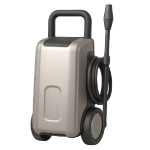
This overview page is your quick-start decision layer. Use it to prioritize what matters most, then open the dedicated best-of and comparison guides before purchase.
5 Key Factors When Buying a Pressure Washer
1Total Cleaning Power (PSI × GPM)
Why it matters
Most buyers focus only on PSI (Pounds per Square Inch), which is just the ‘stripping’ force. Without sufficient GPM (Gallons Per Minute), you will move dirt around without actually washing it away. High PSI combined with low GPM makes for a very slow cleaning process on large surfaces.
What to look for
- Multiply PSI by GPM to get ‘Cleaning Units’ (e.g., 3000 PSI × 2.0 GPM = 6000 CU).
- Residential units should target at least 4,000–5,000 CU for efficient concrete work.
- Look for the CETA CPC-1000 certification label to ensure ratings are verified.
Expert Take
A higher GPM is almost always more useful than a higher PSI for residential tasks; it’s the volume of water that actually moves the debris once the pressure has lifted it.
2Pump Construction (Axial vs. Triplex)
Why it matters
The pump is the heart of the machine. Cheap ‘Axial’ pumps are sealed units designed for a 60–100 hour total lifespan and cannot be repaired. ‘Triplex’ pumps are found on premium machines and can be serviced, rebuilt, and last thousands of hours.
What to look for
- ‘Triplex’ or ‘Crankshaft’ pump listed in the specs for machines over $400.
- Brass pump heads rather than aluminum or plastic.
- Accessible oil fill/drain plugs on the pump itself.
Expert Take
If you buy an Axial pump machine, treat it as a ‘disposable’ appliance; if the pump fails after the warranty, the replacement cost usually exceeds the value of the machine.
3Standard Nozzle System & Attachments
Why it matters
The spray tip determines the angle and impact of the water. Most units use a color-coded system: Red (0°) for localized pinpoint stripping, Yellow (15°) for heavy-duty, Green (25°) for general cleaning, and White (40°) for fragile surfaces.
What to look for
- A set of at least 4 interchangeable nozzles (avoid ‘all-in-one’ adjustable nozzles which are prone to failure).
- Compatibility with a ‘Surface Cleaner’ attachment, which is 5x faster for driveways than a standard wand.
- Polyurethane or steel-braided rubber hoses that lie flat without kinking.
Expert Take
Larger diameter hoses (5/16-inch or 3/8-inch) reduce the pressure drop on long runs with high-GPM gas machines, ensuring the power reaches the nozzle instead of being lost to friction.
4Engine/Motor Duty Cycle
Why it matters
Gas engines offer mobility and raw power but require oil changes and fuel stabilization. Most standard residential electric models top out at 2000–2500 PSI, though high-end electric units can reach 3000+ PSI if they use brushless motors and higher-amperage components.
What to look for
- Induction motors (in electric models) last significantly longer than cheaper ‘universal’ motors.
- Honda or Kohler engines (in gas models) have the best parts availability.
- Never use a pressure washer on wood siding, older mortar, or window screens, as it can cause permanent structural damage.
Expert Take
If your project is more than 50 feet from a power outlet, go gas. Using a standard extension cord with an electric pressure washer can starve the motor of voltage and burn it out.
5Thermal Relief & Safety Features
Why it matters
When you release the trigger but leave the engine running, the water inside the pump begins to heat rapidly from friction. Pump seals can fail rapidly—often within a few minutes—without adequate thermal protection to release that hot water.
What to look for
- A visible ‘Thermal Relief Valve’ (usually a small brass plug that drips water when hot).
- ‘Total Stop System’ (TSS) on electric models, which kills the motor when the trigger is released.
- Low-oil shutdown sensors on gas engines to prevent catastrophic engine failure.
Expert Take
Never leave a gas pressure washer running ‘idle’ for more than 2 minutes without pulling the trigger; even with a relief valve, the heat cycle eventually weakens the pump’s lifespan.
Key Decision Factors
| Factor | Price Impact | Importance | Deal Breaker |
|---|---|---|---|
| Total Cleaning Power (PSI × GPM) | $100-$250 more | Critical | Yes |
| Pump Construction (Axial vs. Triplex) | $150-$300 more | High | Yes |
| Standard Nozzle System & Attachments | $40-$100 more | High | No |
| Engine/Motor Duty Cycle | $50-$150 more | Medium | No |
| Thermal Relief & Safety Features | $20-$40 more | High | Yes |
Common Mistakes
- PLASTIC HOSE FITTINGS: If the intake or high-pressure outlets are plastic, they will likely cross-thread or crack under the machine's own vibration within the first season.
- 0-DEGREE (RED) NOZZLE MISUSE: Be wary of any guide or manual that suggests using the red nozzle on home surfaces; it is a pinpoint laser that can etch concrete and cut through skin instantly.