
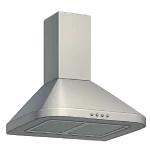
If your Range Hood Not Working problem showed up gradually, grease buildup and airflow restrictions are often involved long before the motor actually fails. This guide ranks causes from most common to less common to help you diagnose the issue efficiently in 2026.
4 Common Causes for Range Hood Not Working
1Blown Thermal Fuse or Tripped Breaker
Range hoods often share circuits or have internal thermal fuses that sacrifice themselves if the motor overheats. Modern smart panels can also trip a breaker if a jammed fan creates a significant overcurrent condition that exceeds safety limits.
Symptoms
- Neither the fan nor the lights turn on.
- The unit worked for a few minutes and then went completely dead.
Care Plan
- Check the main electrical panel for a tripped breaker.
- If the lights work but the fan doesn’t, locate the thermal fuse inside the motor assembly.
- With power off, use a multimeter to check for continuity across the fuse.
- Replace the fuse if it reads “OL” (Over Limit), indicating an open circuit with no continuity.
- Ensure the fan blade spins freely; if it’s jammed, it will blow the new fuse immediately.
Common Mistakes
- Overlooking the “Reset” button on a GFCI outlet that the hood might be plugged into.
- Replacing the fuse without cleaning the grease that caused the motor to overheat.
2Clogged Grease Filters
Grease is the primary enemy of ventilation. Over time, metal mesh or baffle filters become so saturated with oils that airflow is physically blocked. This makes it seem like the “Range Hood Not Working” because it no longer clears smoke.
Symptoms
- The fan is loud but smoke stays in the kitchen.
- Visible grease is dripping from the underside of the unit.
Care Plan
- Remove the metal filters by sliding the latch or removing the thumb screws.
- Soak the filters in a sink with hot water and heavy-duty degreasing dish soap.
- For heavy buildup, run the filters through a dishwasher cycle on the “High Temp” setting.
- Wipe down the interior of the hood and the fan blades (impeller) with a degreaser.
- Reinstall once completely dry and test the suction with a single sheet of paper.
Common Mistakes
- Using abrasive steel wool on stainless steel baffles, which causes permanent scratching.
- Forgetting to replace charcoal filters in non-ducted (recirculating) models every 3–6 months depending on cooking frequency.
3Faulty Fan Switch or Control Board
The switches (buttons) or the electronic control board manage power distribution. In the humid, greasy environment of a kitchen, contacts can corrode or the board’s solder joints can fail, leading to intermittent operation.
Symptoms
- The fan only works on certain speeds (e.g., High works, but Low doesn’t).
- The buttons feel “sticky” or don’t click when pressed.
Care Plan
- Disconnect the power and remove the front control panel or shroud.
- Inspect the back of the switches for burnt wires or loose terminal connectors.
- Clean mechanical switches with electrical contact cleaner to remove grease.
- For electronic boards, look for scorched components or “blown” capacitors.
- If the switch shows no continuity when depressed, order a model-specific replacement.
Common Mistakes
- Spraying liquid cleaners directly into the buttons while the unit is powered.
- Ordering a control board without verifying the exact version number on the sticker.
4Fan Motor Failure
The fan motor is the heart of the unit. If the bearings dry out or the internal windings short, the motor will fail. This is common in hoods where the filters haven’t been cleaned, forcing the motor to pull against high resistance.
Symptoms
- A loud grinding, squealing, or humming noise.
- The fan blade is hard to turn by hand even with the power off.
Care Plan
- Remove the filters and the protective motor cover (if applicable).
- Spin the fan blade; it should spin smoothly for several seconds after a flick.
- If it stops immediately, the motor bearings are seized; the motor must be replaced.
- Unplug the motor’s wire harness and remove the mounting bracket screws.
- Swap in the new motor and ensure the fan blade is perfectly centered to avoid vibration.
Common Mistakes
- Trying to oil “permanently lubricated” sealed bearings, which only attracts more dust.
- Continuing to run a humming motor, which can lead to a localized electrical fire.