
Induction vs Gas Ranges (2026): Infrastructure, Cooking Control, and Long-Term Value
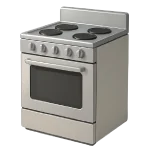
This comparison page helps resolve the biggest buyer fork in the road. Decide platform first, then compare specific models.
3 Key factors for Induction vs Gas Ranges
1Installation and Utility Compatibility
Why it matters
The “hidden” cost of a new range is rarely the sticker price; it is the infrastructure behind the wall. Switching from gas to induction requires a dedicated 240-volt electrical circuit, while switching from electric to gas requires a licensed professional (plumber, gas fitter, or contractor depending on local code) to run a gas line.
Induction — Choose this if
- You already have a 40-amp or 50-amp, 240V NEMA 14-50 outlet behind your stove.
- You have verified your existing cookware is magnetic or you are prepared to budget for a compatible set.
- Your home is powered by solar or you live in an area with high gas utility connection fees.
Gas — Choose this if
- Your kitchen is already piped for natural gas or propane and lacks high-voltage wiring.
- You want to avoid the high cost of upgrading an older electrical panel to handle high-amperage appliances.
- You live in an area prone to power outages and want a cooktop that can be lit manually with a match.
2Cooking Performance and Precision
Why it matters
How you interact with heat defines your cooking style. Gas offers visual feedback through a flame, while induction uses electromagnetism to turn the pan itself into the heat source, offering a level of responsiveness that traditional radiant heating cannot match.
Induction — Choose this if
- You want frequently faster boil times than comparable gas burners.
- You require ultra-low temperature precision for melting chocolate or simmering delicate sauces without a double boiler.
- You prefer a kitchen that stays cool, as induction doesn’t waste heat into the surrounding air.
Gas — Choose this if
- You use specialized techniques like charring peppers directly on the grate or using a round-bottomed wok.
- You prefer visual confirmation of the heat level (seeing the flame height) rather than digital percentages.
- You use heavy-duty cookware techniques (like aggressive pan-shaking) that might scratch or crack a glass-ceramic surface.
3Maintenance, Safety, and Longevity
Why it matters
The ownership experience involves daily cleaning, household safety, and long-term serviceability. While glass surfaces are easier to wipe, the complexity of the internal electronics determines how easily a range can be repaired a decade from now.
Induction — Choose this if
- You want to spend less than 30 seconds cleaning; the surface doesn’t get hot, so spills don’t bake on.
- You have children or pets and want a cooktop that remains cool to the touch and turns off automatically when a pan is removed.
- You want to eliminate indoor combustion byproducts like nitrogen dioxide (NO₂) and carbon monoxide (CO) from your living space.
Gas — Choose this if
- You prefer a product with simpler, more serviceable mechanical components (common in basic gas ranges) compared to high-end electronic control boards.
- You have a high-capacity ventilation system already installed to manage combustion byproducts and moisture.
- You find the “hum” or “clicking” sounds of induction electronics distracting or annoying.
Key Decision Factors
| Factor | Price Impact | Importance | Deal Breaker |
|---|---|---|---|
| Installation and Utility Compatibility | $400-$1,500 more | Critical | Yes |
| Cooking Performance and Precision | $200-$800 more | High | No |
| Maintenance, Safety, and Longevity | $100-$300 more | Medium | No |
Common Mistakes
- ELECTRICAL DEFICIT: Many older homes have 100-amp main panels; switching to induction may require a full panel upgrade ($2,000+) to handle the 40-50 amp draw.
- VENTILATION MISMATCH: High-BTU gas ranges produce significant indoor moisture and combustion byproducts, requiring a much more powerful (and expensive) CFM-rated hood than induction.