
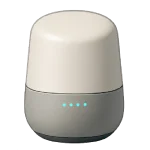
Dealing with a Smart Speaker Not Working can break the convenience of your automated home. These devices are essentially “ears” for the cloud, and most failures occur in the network handshake or the physical microphone path. This guide ranks the top fixes to get your Alexa, Google, or HomePod responding again in 2026.
5 Common Causes for Smart Speaker Not Working
1Network Disconnection or Congestion
Smart speakers require a stable internet connection for cloud-based voice processing (local wake-word detection happens on-device, but commands route to cloud). In 2026, with the rise of dozens of Matter-enabled devices in the average home, 2.4GHz network congestion is the leading cause of “I’m having trouble connecting to the internet” errors. Most 2026 smart speakers (Echo, Nest, HomePod mini) remain 2.4GHz-only for maximum range and IoT compatibility; HomePod (2nd Gen) supports dual-band Wi-Fi 6 (2.4/5GHz) with Thread/Matter, but still defaults to 2.4GHz in congested environments.
Symptoms
- Responses like ‘I’m having trouble connecting to the internet’ (Alexa), ‘Something went wrong’ (Google), or ‘No internet connection’ (HomePod/Siri).
- The device appears as “Offline” in the Alexa, Google Home, or Apple Home app.
Care Plan
- Power cycle your router and the speaker by unplugging them for 60 seconds.
- Check if your speaker is too close to “noisy” electronics like microwaves or baby monitors.
- If your model supports 5GHz (e.g., HomePod 2nd Gen or select Echo Show/Echo Studio), try that band for less congestion; most Echo Dot/Nest Audio models are 2.4GHz-only—separate SSIDs if router merges bands to force compatibility.
- Ensure your router’s “Smart Connect” isn’t constantly switching the speaker between bands, causing a drop.
- In the app, “Forget” the network and re-run the setup process to refresh the DHCP lease.
Common Mistakes
- Placing the speaker inside a cabinet or behind a TV, which acts as a Faraday cage for Wi-Fi signals.
- Assuming the speaker is broken when your internet service provider (ISP) is having a localized DNS outage.
2Physical Microphone Mute or Obstruction
Sometimes the simplest solution is the most overlooked. Almost all smart speakers have a physical mute button or toggle for privacy. If this is engaged, the device’s “brain” is effectively cut off from the room.
Symptoms
- Solid red ring (Alexa mute on), red/orange LED (Google mute), or orange spinning light (HomePod privacy mode).
- The device does not respond to the “Wake Word” but works when you press the action button.
Care Plan
- Locate the physical mute switch (often a slider on the back or a button with a microphone icon).
- Toggle the switch OFF; the speaker should announce “Microphone is on” or the red light should disappear.
- Inspect the tiny microphone holes on the top or sides for dust or lint. Microphone ports are typically 4–8 small pinholes around the top edge; avoid inserting anything (e.g., toothpick) directly into holes to prevent damage to the MEMS microphones.
- Use a can of low-pressure compressed air to gently blow across (not directly into) the microphone ports.
- If the speaker is near a loud fan or AC vent, move it; the constant ambient noise may be drowning out your voice.
Common Mistakes
- Thinking the speaker is “deaf” when the volume is simply turned down to zero (so you can’t hear the response).
- Covering the top of the speaker with decorative cloths that block the microphone array.
3Firmware Hang or Boot Loop
Firmware updates can cause temporary hangs or boot loops if interrupted or corrupted; full ‘bricking’ is rare in 2026 models due to dual-partition recovery. If the power was interrupted during a write cycle, the speaker may get stuck in a boot loop.
Symptoms
- The speaker is stuck on a spinning light pattern for hours.
- The device reboots randomly every few minutes.
Care Plan
- Perform a “Hard Factory Reset.” This usually involves holding a specific button combination. Reset sequences vary: Echo – hold Action + Mic Off buttons 20–25 seconds; Google Nest – hold mic mute for 15 seconds or use app reset; HomePod – unplug, wait 5 seconds, plug back while holding top touch surface until white spinning light → remove finger when Siri speaks.
- Check the manufacturer’s app for a “System Update” notification; if one is pending, stay near the device until it completes.
- For 2026 models, ensure your “Matter” hub is online, as some speakers now offload processing to a local bridge.
- Recovery via PC/USB-C is limited: some Echo models support it via Amazon tools; Google Nest and HomePod generally do not—factory reset via hardware buttons or app is primary method.
- After a reset, you must re-add the speaker to your home group and re-link your music services.
Common Mistakes
- Unplugging the speaker while the lights are pulsing during an update.
- Doing a factory reset without knowing your Wi-Fi password for the re-setup.
4Power Adapter or Port Failure
While these devices stay plugged in 24/7, the power cables and ports are susceptible to damage from surges or physical stress. In 2026, most speakers use USB-C, but older proprietary barrels can fail if the internal pins are bent.
Symptoms
- The speaker has no lights and does not respond to any buttons.
- No power/lights at all, or intermittent power when cable is moved (common loose USB-C connection or damaged cable).
Care Plan
- Test the outlet with a lamp to ensure a breaker hasn’t tripped.
- Inspect the USB-C or barrel port on the speaker for lint, dust, or bent pins.
- Try a different power cable of the same specification. Echo and Nest use 15–30W USB-C (5V/3A or higher PD); HomePod uses proprietary 20W+ USB-C—always match wattage/voltage from original adapter label to avoid under-powering (causes boot failure or Wi-Fi instability).
- If using a “Battery Base” attachment, remove it and plug the speaker directly into the wall.
- Ensure the plug is pushed firmly into the recessed cavity of the speaker base.
Common Mistakes
- Using under-powered chargers (e




