
Smart Thermostat Buying Guide 2026: 5 Things to Know Before You Buy
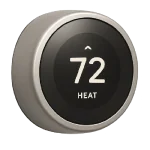
This overview page is your quick-start decision layer. Use it to prioritize what matters most, then open the dedicated best-of and comparison guides before purchase.
5 Key Factors When Buying a Smart Thermostat
1Remote Sensing & Occupancy Logic
Why it matters
Hallway thermostats are notorious for being inaccurate to your living experience. Remote sensors allow the system to average the temperature between a cold bedroom and a warm kitchen. In 2026, premium models go beyond temperature to include occupancy sensors that tell the HVAC to ignore empty rooms entirely.
What to look for
- Check the manufacturer’s range: Wireless performance varies by construction (drywall vs. brick); check if the protocol (Zigbee/Bluetooth/Proprietary) fits your home’s layout.
- Averaging vs. Following: Ensure the app allows you to choose whether to ‘average’ all sensors or have the temperature ‘follow’ you based on movement.
Expert Take
If you have a two-story home with a single HVAC zone, sensors are mandatory to prevent the ‘hot upstairs’ effect without needing to constantly fiddle with manual vents.
2Power Requirements (C-Wire)
Why it matters
Smart thermostats require constant power for Wi-Fi and backlit screens. This power usually comes from a ‘C’ (Common) wire. Without it, some thermostats ‘power steal’ from your furnace, which can lead to unresponsive apps or system clicking.
What to look for
- Power Extender Kits (PEK): Many brands (like Ecobee) include these to convert a 4-wire system into a powered 5-wire setup.
- Plug-in Transformers: Ideal for renters or those with no C-wire, these plug into a standard wall outlet and run a wire to the thermostat.
Expert Take
Pop off your current cover and look at the labels (R, W, G, Y, C). If there is no wire in the ‘C’ terminal, prioritize a model that explicitly includes a power adapter kit in the box.
3HVAC Type: Heat Pumps & Aux Heat
Why it matters
The ‘Learning’ philosophy (famously pioneered by Nest) automates your schedule by watching your behavior. Other models use ‘Guided Scheduling,’ which prompts you for your routine during setup. Most importantly, for heat pump owners, the thermostat must manage Auxiliary Heat—an expensive electric backup that should only run in extreme cold.
What to look for
- Heat Pump Balance: A feature that lets you set the ‘lockout’ temperature for when the electric backup kicks in.
- Geofencing: Uses your phone’s GPS to drop the temp when you are 5+ miles away.
Expert Take
If you have a heat pump, incorrect wiring can turn your ‘efficient’ home into an ‘electric furnace.’ If you see a ‘W2’ or ‘OB’ wire, ensure the model you buy has dedicated terminals for multi-stage heating.
4Whole-Home IAQ Integration
Why it matters
Modern smart thermostats are becoming the ‘brain’ of the home’s air. Several 2026 models integrate directly with whole-home humidifiers, dehumidifiers, and air purifiers. Without this integration, these systems run independently, often fighting each other (e.g., the AC dehumidifying while the humidifier is running).
What to look for
- Humidifier/Dehumidifier Terminals: Look for ‘ACC’ or ‘U’ terminals on the backplate.
- IAQ Sensors: Some premium thermostats now monitor VOCs, CO2, and PM2.5 levels directly on the wall unit.
Expert Take
Integrating humidity control into your thermostat can make 72°F feel like 68°F in the summer, potentially saving more energy than temperature scheduling alone.
5Data Privacy & Utility Clauses
Why it matters
In 2026, privacy is a functional spec. Many homeowners are wary of manufacturers sharing energy data or utilities having ‘override’ control. Additionally, the Matter standard is now the baseline for ensuring your thermostat can talk to other smart devices (lights, blinds, etc.) regardless of brand.
What to look for
- Matter/Thread Support: The universal ‘language’ that prevents your thermostat from becoming an isolated gadget.
- Data Privacy Toggles: Look for brands that process automation ‘at the edge’ (on the device) rather than in the cloud.
Expert Take
Seven in ten homeowners now report they would switch brands for better data protection. If privacy is your priority, look for models that work with Apple HomeKit or local-only protocols that don’t require an active cloud account for basic functions.
Key Decision Factors
| Factor | Price Impact | Importance | Deal Breaker |
|---|---|---|---|
| Remote Sensing & Occupancy Logic | $30-$50 per sensor | High | No |
| Power Requirements (C-Wire) | $25-$150 (adapter or wiring) | Critical | Yes |
| HVAC Type: Heat Pumps & Aux Heat | $50-$100 more for multi-stage | Critical | Yes |
| Whole-Home IAQ Integration | $40-$100 more | Medium | No |
| Data Privacy & Utility Clauses | $0 (Standard) to $50 (Premium Privacy) | Medium | No |
Common Mistakes
- MILLIVOLT INCOMPATIBILITY: Standard smart thermostats will not work with millivolt systems (older gas fireplaces or floor furnaces) without an external 24V transformer and relay kit.
- UTILITY DATA SHARING: Be cautious of 'rebate' programs from energy providers; these often include 'Demand Response' clauses that allow the utility to override your temperature settings during peak grid stress.