
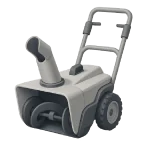
If your snow blower is not throwing far, the engine might be roaring, but the mechanical system is failing to move the snow. In 2026, many machines use high-speed impellers, but even the best tech fails when maintenance is neglected. This guide ranks the fixes to get your discharge distance back to normal.
5 Reasons Your Snow Blower Has Weak Discharge
1Slipping or Stretched Auger Belt
The auger belt is the most common failure point. Over time, heat and friction cause the rubber to stretch or “glaze” (become smooth and shiny). A glazed belt might turn the auger in the air, but it will slip as soon as it hits a heavy pile of snow.
Symptoms
- The engine doesn’t bog down, but the snow just falls out of the chute.
- You smell burning rubber when the auger is engaged.
Care Plan
- Unplug the spark plug wire.
- Remove the plastic belt cover (usually between the engine and the chute).
- Inspect the belt for cracks, fraying, or a shiny, glazed inner surface.
- Replace with an OEM-spec belt. Pro Tip: Avoid generic “automotive” belts; they aren’t designed for the constant clutching of a snow blower.
Common Mistakes
- Overtightening a worn belt. This puts extreme pressure on the engine’s crankshaft bearings and will eventually snap the belt anyway.
2Clogged Discharge Chute
Wet, heavy snow sticks to the cold plastic or metal of the discharge chute. As it builds up, it narrows the opening, creating friction that kills the “throwing” momentum.
Symptoms
- The throwing distance starts out fine but gets shorter the longer you work.
- Snow is visibly packed into the chute or the impeller area.
Care Plan
- Shut off the engine and wait for all parts to stop completely.
- Use a clean-out tool (never your hands!) to remove the blockage.
- Once the chute is clear and the engine has fully cooled, spray the inside with a specialized non-stick snow wax or a silicone spray.
Common Mistakes
- Clearing the chute while the engine is idling. Even with the auger disengaged, a mechanical failure or accidental handle squeeze could trigger the blades.
3Broken Shear Pins
Shear pins are designed to break if the auger hits a solid object (like a frozen rock). This protects the expensive gearbox. If one pin breaks, only half of your auger system will be pulling in snow, leading to very weak discharge.
Symptoms
- One side of the auger spins while the other stays still when it hits snow.
- The machine pulls to one side while clearing.
Care Plan
- Inspect the auger shaft for the bolts that connect the blades to the center shaft.
- If a bolt is missing or snapped, replace it with an identical shear pin.
- Lubrication: If your model has a grease fitting (zerk) on the auger shaft, lubricate it now; check your manual if unsure. This ensures the auger can spin freely on the shaft once the pin is replaced.
Common Mistakes
- Using a standard Grade-8 bolt. A standard bolt won’t “shear,” meaning the next rock you hit will shatter your gearbox instead.
4Loose Auger Cable Tension
The cable connecting your handle to the belt tensioner can stretch over time. If the cable is too loose, the pulley won’t press the belt tightly enough against the engine drive, leading to slipping.
Symptoms
- You have to squeeze the handle extremely hard to get any snow movement.
- There is a lot of “play” or slack in the handle before you feel resistance.
Care Plan
- Unplug the spark plug wire.
- Locate the threaded adjuster on the auger cable (usually near the handle).
- Lengthen the adjuster to take up the slack.
- Test: With the handle engaged, try to turn the belt by hand. It should feel firmly engaged with the pulley and difficult to turn.
Common Mistakes
- Adjusting it too tight. If there’s no slack at all, the auger may continue to spin even when you release the handle, which is a massive safety hazard.
5Worn Auger Paddles (Single-Stage)
On single-stage (paddle) snow blowers, the rubber paddles actually touch the ground to scoop and throw the snow. As these wear down, the gap between the paddle and the housing increases, and the machine loses its “scooping” power.
Symptoms
- You can see a significant gap between the rubber and the metal housing.
- The machine no longer “pulls” itself forward into the snow.
Care Plan
- Inspect the rubber paddles. Most have a wear indicator hole; if the rubber is worn down to that hole, replace them.
- Replace the paddle set and the wear strip (the scraper bar on the bottom).
- Check the internal housing for “rounding”—if the metal is worn thin, new paddles won’t restore full power.
Common Mistakes
- Replacing only one paddle. This creates an unbalanced load on the drive system and leads to excessive vibration and premature wear.