
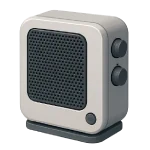
In 2026, space heaters are designed with aggressive safety protocols. If yours keeps turning off, it’s usually either doing its job (reaching a temperature) or preventing a hazard. Follow these 5 steps to keep the heat flowing.
5 Ways to Fix a Space Heater That Keeps Turning Off
1Thermostat Cycling (Normal Operation)
Most modern heaters use a digital thermostat. Once the air around the unit reaches the set temperature, it shuts off the heating element to prevent wasting power.
Symptoms
- The heater shuts off, but the display or power light stays on.
- It turns back on after the room cools down slightly.
Care Plan
- Check the target temperature on the display.
- Set the thermostat to the maximum setting available to see if it stays on.
- Ensure the heater isn’t placed in a “heat pocket” (like under a desk or near a sunny window) where the air warms up much faster than the rest of the room.
Common Mistakes
- Mistaking a “cycling” heater for a “broken” one; if the room is comfortable, the heater is likely operating correctly.
2Overheating (Internal Thermal Trip)
Internal thermal protection is designed to kill the power if the unit gets too hot. While some units use auto-resetting thermostats, others use one-time thermal fuses that require physical replacement once triggered.
Symptoms
- The heater shuts off completely (lights and all).
- It takes 15–30 minutes before it can be turned back on, or it never turns back on.
Care Plan
- Unplug the heater immediately and check for a physical Reset Button.
- Leave it unplugged for at least 30 minutes to allow internal safety components to cool.
- Important: If the heater remains dead after a full cooling period, it likely has a one-time thermal fuse that has blown. This part must be replaced by a technician.
Common Mistakes
- Placing the heater too close to furniture. This restricts airflow, causing heat to build up inside the unit until the safety switch trips.
3Sensitive Tip-Over Switch
Heaters feature a tip-over switch (usually a physical peg on the bottom). If this switch isn’t fully depressed, the unit will cut power intermittently.
Symptoms
- The heater shuts off if you walk past it or if it’s bumped slightly.
- It works on the kitchen tile but keeps cutting out in the bedroom.
Care Plan
- Move the heater to a hard, flat, level surface.
- If the floor is uneven, you may use a heat-resistant ceramic tile or specialized heater pad underneath. Do not use thin wood or flammable boards.
- Inspect the peg on the bottom to ensure it isn’t jammed with pet hair or debris.
Common Mistakes
- Using the heater on a high-pile rug. The “squish” of the rug allows the heater to tilt just enough to disengage the safety switch.
4Clogged Air Filter or Intake
Heaters move air to stay cool. If the intake vents are clogged, the unit will quickly overheat and trigger a safety shutdown.
Symptoms
- The air coming out feels extremely hot but the fan seems weak.
- You can see visible dust buildup on the intake grille.
Care Plan
- Unplug the unit and vacuum the intake and exhaust grilles.
- If your heater has a removable filter, wash it with warm water.
- Safety Warning: You must let the filter dry completely overnight before reinstalling. Reinstalling a damp filter near high-voltage heating elements can cause an immediate fire.
Common Mistakes
- Cleaning only the front grille; the intake (usually on the back) is actually more critical for preventing overheat shutdowns.
5Electrical Circuit Overload
A 1500W heater pulls 12.5 Amps. If your home uses AFCI (Arc Fault) breakers, the heater may trip the circuit if there is even a minor “arc” caused by a loose plug.
Symptoms
- The heater shuts off AND the lights in the room go out.
- You have to reset the breaker at the main panel.
Care Plan
- Ensure the plug is pushed firmly into the wall; a loose connection creates sparks (arcs) that trip modern AFCI breakers.
- If the plug feels “loose” or the outlet shows signs of heat damage (discoloration), hire a licensed electrician to replace the wall outlet immediately. Do not attempt DIY replacement of high-load outlets unless you are professionally trained.
Common Mistakes
- Using the heater on the same circuit as another high-power device like a hair dryer or coffee maker. The combined load will exceed the circuit’s capacity.