
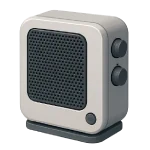
In 2026, space heaters are equipped with sensitive safety sensors designed to shut down the heating element at the slightest hint of trouble. If your heater is blowing cold air, follow these 5 fixes.
5 Ways to Fix a Space Heater Not Blowing Hot Air
1Tripped Thermal Cut-Off (Overheat)
If the internal temperature exceeds a safe limit, a thermal cut-off switch will disconnect the heating element. Most modern units use a resettable bimetallic strip, but some also include one-time thermal fuses.
Symptoms
- The fan blows, but the air is cold.
- The heater shut off suddenly after being obstructed or placed on a thick rug.
Care Plan
- Unplug the heater immediately and check for a physical Reset Button.
- If no button exists, leave the unit unplugged for 20 minutes to allow the internal strip to cool and snap back into place.
- Note: If the heat does not return after a full cooling period, the unit may have a one-time thermal fuse that requires physical replacement by a technician.
Common Mistakes
- Plugging the heater back in before it has fully cooled; the safety switch will remain in the “off” position until the temperature drops sufficiently.
2Blocked Air Intake (Dust Buildup)
Heaters require constant fresh air to move heat away from the element. If the intake vents are clogged with pet hair or dust, the heater will throttle output to prevent a fire.
Symptoms
- The air is barely lukewarm.
- The unit feels hot to the touch, but air movement is weak.
Care Plan
- Unplug the unit and vacuum the intake vents and output grille with a brush attachment.
- If the unit has a removable filter, wash it with warm water.
- Safety Warning: Allow the filter to dry for several hours or overnight before reinstalling. Reinstalling a damp filter near a heating element is a significant fire risk.
Common Mistakes
- Running the heater in a dusty environment without weekly cleaning; dust can “insulate” the element and drastically reduce efficiency.
3Faulty Tip-Over Sensor
Most modern 2026 heaters use a spring-loaded mechanical button on the base. If the heater isn’t level or the switch is stuck, the element won’t engage. Some older units may use a “gravity ball” sensor.
Symptoms
- The heater only works when tilted or held in a specific position.
- The unit was recently knocked over.
Care Plan
- Place the heater on a hard, flat surface. Thick carpet can prevent the safety button on the bottom from being fully depressed.
- Unplug the unit and inspect the base switch for jammed carpet fibers or debris.
- If the sensor appears broken or the internal gravity ball (in older models) is permanently stuck, contact the manufacturer for repair.
Common Mistakes
- Attempting to bypass the tip-over switch with tape; this removes a primary safety feature and creates a severe fire hazard if the unit falls while unattended.
4Thermostat Calibration Error
Modern smart heaters use digital thermostats. If the sensor is blocked or miscalibrated, the heater may think the room has already reached the target temperature.
Symptoms
- The heater turns on briefly and then shuts off.
- The digital display shows an inaccurate room temperature.
Care Plan
- Ensure the heater is not placed near other heat sources (windows, electronics).
- Set the thermostat to the maximum setting available on your unit to see if the element kicks on.
- If your heater has an Eco Mode, remember that it will often shut the element off once the room is within 2 degrees of the target, even if the air still feels cool.
Common Mistakes
- Placing the heater’s temperature sensor (often a small wire bead) too close to the hot body of the heater, causing “false” high readings.
5Burnt-Out Heating Element
The heating element (ceramic plate or nichrome wire) can crack or burn out due to age or electrical stress.
Symptoms
- Visible breaks in the wire coils or cracks in the ceramic.
- A metallic “burnt” smell occurred right before the heat stopped.
Care Plan
- This is a hardware failure. Use a multimeter to check for continuity across the element terminals.
- If the circuit is “Open,” the element is dead and must be replaced.
- Threshold: Replacing the element is generally only cost-effective for high-end models. If the replacement part costs more than 50–60% of a new unit, replacement is advised for safety and efficiency.
Common Mistakes
- Attempting to twist broken heating wires back together. This creates a high-resistance point that will glow red-hot and likely start a fire.