
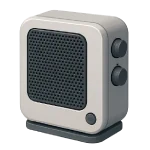
In 2026, space heaters use advanced thermal sensors to monitor internal temperatures. If your heater keeps shutting down or smells like it’s “cooking,” follow these 5 steps to ensure safe operation.
5 Ways to Fix a Space Heater Overheating
1Improper Clearance/Placement
Space heaters require a constant supply of air to keep internal elements from exceeding safe limits. Confined spaces restrict convective airflow, which is the primary way the unit stays cool.
Symptoms
- The heater runs for 5–10 minutes and then clicks off.
- The unit is tucked under a desk or placed too close to curtains.
Care Plan
- Maintain at least 3 feet (0.9 meters) of clearance on all sides.
- Move the heater off the carpet and onto a hard, flat surface. Carpet fibers can block bottom-mounted intake vents.
- Ensure the unit is not in a tight corner where heat can “pool.” Confined areas prevent cool air from reaching the intake.
Common Mistakes
- Thinking a heater is safe just because it isn’t touching furniture; restricted airflow in small alcoves can still trigger a safety shut-off.
2Internal Dust Accumulation
Even a thin layer of dust on the heating element acts as insulation. This prevents heat from escaping into the room, causing the internal temperature of the unit to spike.
Symptoms
- A “burnt dust” smell when the heater is running.
- Visible “fuzz” or pet hair inside the grille.
Care Plan
- Unplug the heater and wait 30 minutes for it to cool.
- Use compressed air to blow out the heating elements from the front.
- Vacuum the intake grilles thoroughly.
- Safety Note: If your heater has a filter, wash it and let it dry overnight before reinstalling. Reinstalling a damp filter near live heating coils is a fire hazard.
Common Mistakes
- Using a wet cloth to clean the heating elements; moisture can damage the components or cause an electrical short.
3Failing Fan Motor (Low Airflow)
If the fan isn’t spinning at full speed, it cannot move the hot air away from the element fast enough. This leads to rapid internal heat buildup.
Symptoms
- The fan sounds “labored,” squeaky, or slower than usual.
- The unit vibrates excessively.
Care Plan
- Unplug the unit and check for obstructions (like hair or thread) wrapped around the fan axle.
- If the motor has accessible oil ports, a drop of sewing machine oil may revive dry bearings.
- Note: Most modern motors are sealed and require replacement if they fail; if a sealed motor is slow or noisy, it must be replaced.
Common Mistakes
- Ignoring a “squeak.” A slow fan is the fastest way to burn out an element or trip a one-time thermal fuse.
4Sensitive Thermal Limit Switch
Thermal limit switches are safety devices that “pop” when it gets too hot. Over time, these can become overly sensitive, tripping even when the heater is within a safe temperature range.
Symptoms
- The heater shuts off even when airflow is perfect and the unit is clean.
- Resettable bimetallic switches typically restart within 15–30 minutes. If it takes much longer or won’t reset at all, the unit likely has a one-time thermal fuse that has blown and requires replacement.
Care Plan
- Ensure you are not running the heater near another heat source (radiator or sunny window).
- If the switch trips repeatedly under normal conditions, it may need replacement with an OEM part rated for the exact same temperature.
- Safety Note: Never bypass this switch to stop the tripping.
Common Mistakes
- Assuming a heater is broken when it’s actually just performing a “slow reset” to protect the housing from melting.
5Voltage Drop/Extension Cord Use
Plugging a heater into an extension cord or a loose wall outlet creates electrical resistance. This generates heat at the plug, which can travel into the heater and trigger an overheat sensor.
Symptoms
- The plug prongs are hot or discolored.
- The heater’s cord feels warm to the touch.
Care Plan
- Always plug directly into the wall. 2. If an extension is absolutely required for a temporary fix, use only a 12-gauge or heavier rated cord. Standard house cords are only 16 or 14-gauge and will overheat.
- Check the wall outlet. If the plug feels “loose” when inserted, the outlet is worn and creating heat. Replace the outlet immediately.
Common Mistakes
- Using a standard orange “shop” extension cord. Many are only 14-gauge, which is insufficient for the 12.5 Amp draw of a 1500W heater.