
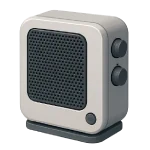
When a space heater trips the breaker, the usual causes are too much load on the circuit, a weak connection at the outlet, or a fault inside the heater itself. If your heat keeps cutting the power, follow these 5 diagnostic steps.
5 Ways to Fix a Space Heater Tripping the Breaker
1Simple Circuit Overload
A standard 1500W heater draws roughly 12.5 Amps. On older or standard 15-Amp residential wiring, you only have 2.5 Amps of “headroom” left before the breaker trips.
Symptoms
- The breaker trips the moment you turn the heater to “High.”
- Lights dim significantly when the heater kicks on.
Care Plan
- Identify all devices on the circuit by checking what lost power.
- Move high-draw items (gaming PCs, vacuums, hair dryers) to a different circuit.
- Switch the heater to the 750W or “Eco” setting to reduce the draw to approx. 6 Amps.
Common Mistakes
- Assuming different outlets in one room are on different circuits; typically, one breaker controls an entire room’s outlets.
2AFCI/GFCI Nuisance Tripping
Some AFCI or GFCI breakers trip because they detect arcing, leakage, or unstable current at the plug, outlet, or inside the heater. While nuisance trips do happen, repeated trips can also point to a real wiring or appliance problem.
Symptoms
- The breaker has a “Test” button (indicating it is an AFCI/GFCI).
- The breaker trips randomly, even if the heater is the only device plugged in.
Care Plan
- Ensure the plug is seated firmly; a loose plug creates micro-arcs that trigger AFCI breakers.
- If tripping persists, contact the heater manufacturer about compatibility or consult an electrician about AFCI sensitivity.
Common Mistakes
- Swapping an AFCI for a standard breaker to stop “nuisance” trips; this is a safety risk and a building code violation.
3Loose Wall Outlet Terminal
Space heaters pull heavy current. If wires inside the wall outlet are loose, that current creates heat. This can cause the breaker to trip or melt the outlet itself.
Symptoms
- The outlet feels hot or you smell a fishy/plastic odor (associated with overheating flame retardants).
Care Plan
- Unplug the heater immediately.
- If inspecting the outlet: Turn off the breaker and verify the power is off with a non-contact voltage tester before touching any wiring.
- If the outlet is discolored, it must be replaced by a professional.
Common Mistakes
- Ignoring a “hot” smell because the heater still works; this is a primary cause of electrical fires.
4Heater Internal Short Circuit
If a heater is dropped or aged, internal coils may touch the metal casing or each other, creating a “Short Circuit.”
Symptoms
- The breaker trips instantly when the heater is turned on.
- You see visible sparks inside the heater unit.
Care Plan
- Test the heater on a known 20-Amp circuit elsewhere in the home.
- If it trips that breaker instantly, the heater is internally damaged.
- Do not attempt to repair heating coils; replace the unit entirely.
Common Mistakes
- Shaking or “tapping” the heater to fix a rattle, which can worsen an internal short.
5Worn-Out Circuit Breaker
Circuit breakers are mechanical. A breaker that has tripped repeatedly over its lifetime may weaken and trip at a lower amperage than its rating.
Symptoms
- The breaker feels “loose” when reset.
- The heater trips this specific breaker but works fine on other identical 15-Amp circuits.
Care Plan
- Have an electrician replace the worn breaker.
- Ask them to check the torque on the busbar connection. A loose connection increases resistance and generates excess heat at the panel.
Common Mistakes
- Resetting a weak breaker dozens of times; eventually, it may fail to trip at all during a real emergency.