
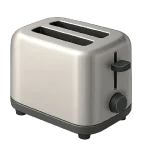
A Toaster Not Popping Up is more than just an inconvenience—it’s a potential fire hazard as the heating elements may stay engaged. While the problem often stems from simple debris, it can occasionally involve the electronic latching system. This 2026 guide ranks the most likely causes and provides a path to safely restore your morning routine.
4 Common Causes for Toaster Not Popping Up
1Crumbs in the Slide Rails
The most frequent culprit is the humble breadcrumb. Over time, crumbs migrate into the vertical slide rails or accumulate in the latching mechanism at the bottom of the toaster, creating enough friction to overcome the upward force of the release springs.
Symptoms
- The lever feels “gritty” when moved manually.
- The toaster works fine occasionally but sticks most of the time.
Care Plan
- Unplug the toaster and remove the crumb tray.
- Hold the toaster upside down over a trash can and shake firmly to dislodge trapped debris.
- Use a soft, dry pastry brush or a can of compressed air to clean the vertical rails.
- Move the lever up and down manually while the unit is unplugged to ensure smooth travel.
- Wipe the crumb tray clean and reinsert.
Common Mistakes
- Shaking the toaster too violently, which can damage the delicate internal heating filaments.
- Using a damp cloth inside the slots, which can cause electrical shorts later.
2Jammed Food or Warped Bread
Thick-cut bagels, artisan breads, or frozen waffles often expand during the toasting cycle. If the food wedges against the heating element guards, the carriage spring won’t have enough power to lift the food back out of the slot.
Symptoms
- The lever is stuck in the downward position, but you can hear the “click” of the timer ending.
- Visible smoke or the smell of burning bread as the food remains near the elements.
Care Plan
- Safety Note: If there is active smoke, skip waiting for the unit to cool and remove the food immediately using wooden tongs.
- Otherwise, unplug the unit and wait for it to cool completely.
- Use wooden tongs or a wooden chopstick to gently compress the bread away from the sides.
- Lift the carriage lever manually while guiding the food upward.
- Trim oversized bread slices before the next use.
Common Mistakes
- Using a metal knife to pry out bread, which carries a high risk of electric shock and element damage.
- Forcing the lever up, which can snap the plastic handle or the internal spring.
3Bent Carriage Lever or Slide Rods
The carriage assembly consists of a metal frame sliding on vertical rods. If the toaster was dropped or the lever was pressed too hard, these rods can bend. Additionally, the casing may be held together by proprietary clips, rivets, or Torx screws, making DIY access model-specific.
Symptoms
- The lever consistently catches at the same point during its ascent.
- Visible misalignment of the carriage inside the slots.
Care Plan
- Unplug the unit and consult your manufacturer’s service manual for specific disassembly instructions.
- Once the casing is removed, inspect the vertical slide rods for any slight bends or sticky residue.
- Clean the rods with a dry cloth; if slightly bent, very gently apply pressure to straighten them.
- Check the plastic handle for cracks that might be catching on the toaster’s shell.
- Reassemble and test the movement while the unit is still unplugged.
Common Mistakes
- Applying heavy grease to the rods, which will smoke and smell when the toaster gets hot.
- Stripping proprietary screws by using the wrong screwdriver bit.
4Electromagnet or Return Spring Failure
Modern toasters use a combination of an electromagnet (solenoid) and a return spring. If the solenoid fails, the toaster won’t stay down; if the return spring breaks or unhooks, the carriage won’t pop up even after the magnet releases.
Symptoms
- Sharp electrical or ozone smell from the internal housing.
- The toaster stays down even after the power is disconnected (indicates spring failure).
Care Plan
- Unplug the toaster and open the side panel containing the electronics.
- For Spring Failure: Inspect the large coil spring; if it is unhooked, re-attach it with needle-nose pliers. If snapped, it must be replaced.
- For Solenoid Maintenance: If the magnet is failing to release, use a cotton swab with a tiny amount of rubbing alcohol to clean the metal contact plate.
- Important: Allow the alcohol to evaporate completely for at least 10 minutes before reassembling and plugging in.
- Inspect the wiring for signs of charring. If the circuit board is scorched, replace the unit.
Common Mistakes
- Attempting to bypass the electromagnet, which prevents the toaster from ever turning off automatically.
- Reassembling the unit while internal components are still damp with cleaning agents.