
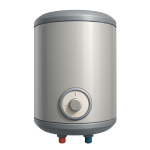
A leaking water heater is one of the most common — and most urgent — home plumbing problems homeowners face in 2026. While some causes are simple $15 valve swaps you can finish in under an hour, others signal the end of the tank’s useful life. This guide ranks the four most likely causes from easiest to most serious so you can diagnose the source and act efficiently.
4 Common Causes for a Water Heater Leaking
1Faulty Drain Valve
The drain valve sits at the very base of the tank and is used for flushing sediment during routine maintenance. These valves — often plastic on lower-cost units, brass on better models — are the single most common source of water heater leaks. The valve body can crack over time, the stem packing can dry out and weep, or the valve can fail to seal fully after the last time it was opened. Because it sits at the lowest point of the tank and is always under full system pressure, even a pinhole failure produces a steady drip that worsens quickly.
Symptoms
- Water pooling directly at the base of the heater, directly beneath or around the drain valve spigot
- Visible mineral deposits or white crust around the valve stem or cap, indicating a slow chronic weep
- The valve drips even when the handle or cap is fully closed and tightened
Care Plan
- Cut power and water. Turn the water heater off at the breaker (electric) or set the gas valve to “pilot.” Close the cold water supply inlet valve.
- Confirm the source. Dry the area completely with a towel, wait 10 minutes, and observe where water reappears. Confirm the leak originates at the drain valve and not from condensation or an overhead connection.
- Attempt a temporary stop. If the valve has a threaded cap, remove it, wrap the threads with PTFE tape clockwise in the direction of the threading, and replace the cap firmly. If the leak is from the valve stem, this will not hold — proceed to full replacement.
- Drain the tank completely. Connect a garden hose to the valve and run it to a floor drain or outside to a gravel area (not directly onto a lawn). The water exiting the hose will be very hot — allow the tank to cool for at least 1–2 hours before draining, wear closed-toe shoes, and keep children and pets away from the drain area. Open a hot water faucet inside the house to break the vacuum and allow the tank to drain freely.
- Replace the valve. Unscrew the old valve counterclockwise. Thread in a new brass 3/4” drain valve by hand first, then tighten with a wrench until snug and leak-free — stop when you feel firm resistance and do not apply additional force, as over-tightening into the tank port can crack the tank boss or strip threads. Before re-energizing the heater, open a hot water faucet inside the house and let water run until it flows in a steady, air-free stream. Then relight or switch the heater on.
Common Mistakes
- Over-tightening the replacement valve. Applying more than snug torque to a threaded brass fitting in a soft brass or plastic tank port can crack the port or strip threads, creating a far worse leak.
- Energizing the heater before purging air. Turning on an electric heater before the tank is completely full and air-purged can dry-fire the upper heating element, causing immediate element failure.
2Failing Temperature & Pressure Relief (T&P) Valve
The T&P valve is a critical safety device mounted on the side of the tank (or top, depending on the model). It is designed to open automatically if the tank’s temperature exceeds 210°F or pressure exceeds 150 PSI, discharging water to prevent a catastrophic failure. Over time, the internal spring fatigues, mineral deposits build up on the valve seat, or the rubber seal deteriorates — causing the valve to weep or drip continuously even under normal operating conditions. A T&P valve that is activating correctly (not leaking due to failure) indicates a separate problem: excess pressure or temperature in the system, which must be addressed at the source.
Symptoms
- Water dripping or trickling steadily from the T&P discharge pipe (the pipe leading from the valve toward the floor or drain)
- Visible mineral streaking or rust staining on or below the valve body
- The valve is more than 5–6 years old and has never been tested or replaced
Care Plan
- Shut down the heater and supply. Turn the heater off at the breaker (electric) or set the gas valve to “pilot.” Close the cold water supply inlet.
- Assess before testing. If the T&P valve is visibly corroded, has heavy mineral buildup, or has never been tested in the past 5 years, skip the lever test entirely and proceed directly to replacement. Lifting the lever on an aged or corroded valve can cause it to fail to reseat, resulting in continuous uncontrolled discharge that cannot be stopped without immediate valve replacement. If the valve is relatively new and in clean condition, you may briefly lift the test lever with a bucket positioned under the discharge pipe — but understand that a valve that passes a brief manual test can still weep under sustained operating pressure due to a worn seat seal or trapped debris.
- Check system pressure if the valve is activating correctly. If the valve is opening because of genuinely elevated pressure (not a worn seal), the cause may be thermal expansion — particularly in closed plumbing systems. A licensed plumber should install an expansion tank before you replace the T&P valve.
- Drain partially to relieve pressure. Shut off the cold water supply and open a hot water tap inside the house to relieve pressure in the system. You do not need to drain the entire tank for a T&P valve swap — shutting off the cold supply and relieving pressure through an open hot tap is sufficient for most installations. If your valve is located low on the tank, drain only enough water to fall below the valve port. Direct hose water to a floor drain; let the tank cool first and be aware that drained water will be very hot.
- Replace the valve. Unscrew the old T&P valve counterclockwise. On the replacement valve, wrap the threads clockwise (in the direction of the threading) with 3–4 layers of PTFE tape, then thread the new valve in by hand and finish with a wrench until snug. Reconnect the discharge pipe. Restore the cold water supply, open a hot water tap until water flows in a steady air-free stream, then re-energize the heater. If the new valve weeps within 24–48 hours, elevated system pressure is the root cause — call a plumber.
Common Mistakes
- Testing an old or corroded valve. Lifting the lever on a valve that is past its service life frequently causes it to stick open, requiring immediate unplanned replacement under flowing hot water.
- Leaving the discharge pipe disconnected or directed improperly. The T&P discharge pipe must terminate within 6 inches of the floor or connect to a proper drain — never cap it, and never leave it unconnected.
3Loose or Corroded Inlet/Outlet Connections
The cold water inlet and hot water outlet connections at the top of the tank are common leak points, particularly on units that are 6 or more years old. These connections use dielectric nipples (short threaded pipe sections designed to prevent galvanic corrosion between dissimilar metals) that can corrode, crack, or develop weeping threads over time. On copper-piped homes, the solder joints where copper transitions to the nipple can also fail. Because these fittings sit at the top of the tank, the dripping water often travels down the side of the unit before pooling at the base — which leads many homeowners to misdiagnose a top-connection leak as a bottom-tank problem.
Symptoms
- Moisture, corrosion, or white mineral staining at the threaded connections on top of the tank
- Water appears to originate at the top of the unit but runs down the side before pooling at the base
- Connections are visibly corroded, green (copper oxidation), or show cracked plastic nipple bodies
Care Plan
- Isolate and dry. Shut off the cold water supply and the heater. Dry the top of the tank thoroughly and wait 15 minutes to observe where moisture reappears.
- Tighten before replacing. Using a pipe wrench, attempt to snug the connection 1/8 to 1/4 turn. Do not over-rotate — these fittings are threaded into the tank, and aggressive tightening can damage the tank port.
- Replace corroded nipples. If tightening does not stop the leak, shut off the cold supply, relieve pressure by opening a hot water tap, and use a pipe wrench to unscrew the faulty dielectric nipple counterclockwise. Inspect the tank port threads for damage.
- Install the replacement. Wrap the new nipple threads clockwise (in the direction of the threading) with 3–4 layers of PTFE tape. Thread in by hand, then tighten with a wrench until snug and leak-free. Do not apply excessive torque.
- Restore and verify. Reconnect the water supply, open a hot water tap to purge air until the stream flows steadily without sputtering, then re-energize the heater. Check for gas unit owners: visually confirm the flue connector is fully seated before relighting. If the leak persists
Common Mistakes
- Misdiagnosing a tank leak. Many homeowners see water at the base and assume the tank is gone, when it is actually a $20 fitting at the top dripping down behind the jacket. Always dry the top first to confirm the source.
- Aggressive over-tightening. Forcing a corroded connection can snap the dielectric nipple inside the tank port, turning a minor repair into a major extraction project or requiring a full tank replacement.
4Internal Tank Corrosion
Internal tank corrosion is the most serious cause of a leak and, in almost all cases, signals that the water heater has reached the end of its life. Most water heaters are made of steel lined with glass; over time, the glass lining can crack, allowing water to come into direct contact with the steel. Once the steel begins to rust, it eventually develops pinholes or “weeping” cracks. This is often accelerated by a depleted anode rod—the sacrificial rod designed to corrode so your tank doesn’t. Unlike valves or fittings, a leaking tank body cannot be patched or welded.
Symptoms
- Water is leaking from the bottom of the heater, but the drain valve and T&P discharge pipe are bone dry.
- The water pooling at the base of the unit is rusty or tea-colored.
- The jacket of the water heater feels soft or is visibly rusting through at the bottom.
- The unit is more than 10 years old and has never had the anode rod replaced.
Care Plan
- Immediate Shutdown. Turn off the power at the breaker or set the gas to “off.” Shut off the cold water supply valve immediately to prevent the leak from worsening and causing major property damage.
- Verify the Source. Remove the plastic covers over the heating elements (on electric models) or the burner access door (on gas models). If you see water trickling from behind the insulation or pooling inside the burner chamber, the tank is compromised.
- Check Warranty. Locate the rating plate on the side of the tank to find the manufacture date and serial number. If your unit is under 6 years old, you may be eligible for a replacement tank from the manufacturer.
- Drain the Unit. Connect a garden hose to the drain valve and empty the tank completely to prevent further leaking. Be aware that the water will be very hot; allow it to cool for at least 2 hours or use extreme caution.
- Replace the Unit. Because a tank leak is a structural failure, you must replace the entire water heater. In 2026, consider upgrading to a High-Efficiency Heat Pump (Hybrid) water heater or a Tankless model, which offer superior energy savings.
Common Mistakes
- Waiting to act. A “slow” tank leak can become a catastrophic flood in minutes if the internal pressure causes a weakened area to burst.
- Attempting to patch the tank. Products like “leak sealers” or external epoxies will not hold against the high pressure and thermal expansion of a water heater. Do not waste money on temporary fixes for a structural failure.