
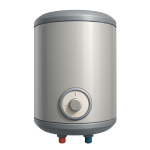
A water heater making noise in 2026 is one of the most common homeowner complaints — and one of the most fixable. While some causes are simple maintenance tasks, others involve electrical components that require careful handling. This guide ranks the four most likely causes from most to least common so you can diagnose and resolve the problem efficiently.
4 Common Causes for a Water Heater Making Noise
1Sediment Buildup
Sediment buildup is by far the most frequent reason a water heater makes noise. Over time, minerals dissolved in your water supply — primarily calcium and magnesium carbonate — precipitate out of solution and settle at the bottom of the tank as a layer of gritty scale. When the heating element or burner heats through that sediment layer, trapped pockets of water superheat and escape suddenly, producing the characteristic popping, rumbling, or kettling (a low boiling or rumbling sound similar to a kettle on the stove) noises homeowners report. Tanks in hard-water areas accumulate sediment faster and will exhibit these symptoms earlier in their service life.
Symptoms
- Loud popping, crackling, rumbling, or kettling sounds during or shortly after heating cycles
- Longer-than-usual recovery times and noticeably higher energy bills
- Discolored or slightly gritty hot water at the tap
Care Plan
- Turn off the heat source. Set an electric heater’s thermostat to OFF and flip the dedicated circuit breaker. For a gas heater, turn the gas valve knob to the PILOT position. Do not skip this step — draining an actively heating tank creates a serious scalding and pressure hazard.
- Allow the tank to cool for at least 1–2 hours. Even on the PILOT or OFF setting, a full tank retains heat for a long time. The water exiting the drain hose will still be hot; cooling reduces the burn risk.
- Turn off the cold water supply valve feeding the water heater. This is typically a gate or ball valve on the cold-water inlet pipe directly above the unit. Shutting it off before draining prevents fresh water from continuously refilling the tank and making the flush ineffective.
- Open a hot water tap somewhere in the house — a sink or bathtub faucet works well. This breaks the vacuum inside the tank and allows water to drain freely. Leave it open for the entire draining process.
- Connect a garden hose to the drain valve at the base of the tank and run the other end to a floor drain, utility sink, or outside. Wear heat-resistant gloves and confirm the hose outlet is directed away from people and pets before proceeding.
- Open the drain valve and allow the tank to empty completely. The hose will heat up along its entire length — do not grip it barehanded midway. Watch for sediment in the discharge water; cloudy, gritty, or rust-colored water confirms significant buildup.
- Flush the tank. Once empty, briefly reopen the cold water supply valve to stir up and flush out remaining sediment through the hose. Repeat until the discharge runs clear.
- Pro tip — inspect the anode rod while the tank is drained. The anode rod (a sacrificial magnesium or aluminum rod that prevents internal tank corrosion) is located on top of the heater, often under a plastic cap. If it is worn down to less than ½ inch of core wire or heavily coated in calcium deposits, replace it now. A new anode rod costs $20–$50 in parts and takes 15 minutes — and doing it during the flush saves you a second complete drain-down job later.
- Refill and restore. Close the drain valve, remove the hose, close the hot water tap at the fixture, and reopen the cold supply valve. Once the tank is full (water flows steadily from the open hot tap), restore power or relight the pilot.
- If noise persists after flushing, the sediment layer may be too consolidated to flush out, or a secondary issue such as a failing heating element (see Cause 2) may be present. At that point, call a licensed plumber to evaluate the tank.
Common Mistakes
- Do not open the drain valve before turning off the heat source — draining an actively heating tank creates a serious scalding and pressure hazard.
- Do not skip turning off the cold supply valve before opening the drain. With the supply live, fresh water flows in continuously, dramatically extending drain time and making the flush far less effective.
- Do not overlook the anode rod. A tank noisy from sediment is also likely overdue for an anode rod inspection. Missing this step while the tank is already drained means a second job in the near future.
2Failing Heating Element
Electric water heaters use one or two immersion heating elements — threaded metal rods that screw directly into the tank wall and heat the surrounding water. When the element’s surface is heavily encrusted with mineral scale, it heats unevenly and can produce a high-pitched sizzling or hissing sound. A failing element may also arc internally, creating a crackling noise. Unlike sediment noise (which tends to be low and rumbling), element noise is typically higher-pitched and occurs consistently during the heating cycle.
Symptoms
- High-pitched hissing, sizzling, or crackling during the heating cycle specifically
- Inconsistent or insufficient hot water (one element failing in a dual-element tank)
- Circuit breaker tripping when the heater calls for heat
Care Plan
- Turn off the circuit breaker for the water heater at the main panel before touching anything. Failure to do so risks electrocution — do not skip this step. Have a second adult present throughout the repair.
- Remove the access panel on the side of the heater (upper and/or lower, depending on your model) using a screwdriver. Most panels are secured by two Phillips-head screws.
- Test for voltage immediately upon opening the panel, before touching anything else. Hold a non-contact voltage tester near the wiring terminals — if it signals voltage, the breaker is not fully off or is mislabeled. Do not proceed until the tester reads no voltage. Only after confirming zero voltage should you pull back the insulation behind the panel.
- Test the element with a multimeter. Disconnect the two wires from the element terminals (note which wire goes where, or photograph them first). Set the multimeter to resistance (ohms, Ω). Touch one probe to each element terminal. Rather than expecting a specific ohm value, use the formula R = V² ÷ W to calculate the expected resistance for your element — for example, a 5,500W / 240V element should read approximately 10.5 ohms, while a 3,500W / 240V element should read approximately 16.4 ohms. A reading of zero (short circuit) or OL/infinite (open circuit) is the definitive failure indicator regardless of wattage. If you see either of those readings, the element has failed and must be replaced.
- Replace the element if it has failed. Turn off the cold water supply and drain the tank to below the element port (you do not need to drain it completely). Use an element wrench (a 1½-inch socket-style tool, available at hardware stores for $10–$15) to unscrew and remove the old element. Install the replacement element — do not apply PTFE (plumber’s) tape to the element threads. Screw-in elements seal via a rubber gasket that ships with the replacement part, not via thread sealant. Inspect the gasket, ensure it sits flat and undamaged in the groove, and hand-thread the element in before finishing with the wrench. Tighten until firmly seated and resistance clearly increases — do not overtighten, as this can crack the element flange or damage the tank fitting.
- Refill, restore power, and test. Reconnect the wires to the terminals matching your earlier notes or photo. Replace insulation and the access panel. Refill the tank before restoring power — running an electric element dry will destroy it immediately.
- If the breaker trips again after replacement, stop and call a licensed electrician — there may be a wiring fault, a failed thermostat, or an undersized circuit that requires professional diagnosis.
Common Mistakes
- Never run the water heater with the element removed or partially threaded in, even briefly — the exposed port will flood the area and the element will burn out instantly if energized dry.
- Do not apply PTFE tape to the element threads. Doing so can prevent the rubber gasket from compressing correctly, creating a slow leak at the element port that is difficult to diagnose later.
3Faulty T&P Relief Valve
The temperature and pressure (T&P) relief valve is a critical safety device mounted on the side or top of every water heater. It is designed to open automatically and release water if the internal temperature exceeds 210°F or the pressure exceeds 150 PSI — preventing a catastrophic tank rupture. When the valve’s internal seat is corroded, scaled, or worn, it may partially open and release a small, steady stream of water, producing a hissing or dripping sound. Conversely, if water pressure in your home is chronically high, the valve may cycle open and closed repeatedly, producing intermittent hissing or tapping sounds.
Symptoms
- Hissing, dripping, or trickling sounds from the valve body or the discharge pipe running from it
- Water pooling near the base of the heater or discharging from the pipe that terminates near the floor
- A valve that feels warm or hot to the touch when the heater is not in a heating cycle
Care Plan
- Turn off the water heater at the thermostat or breaker (electric) or set the gas valve to PILOT before inspecting the T&P valve. Allow the tank to cool for at least 30–60 minutes.
- Locate the T&P valve. It is a brass valve with a lever handle, typically located on the upper side of the tank, and has a discharge pipe running from it downward toward the floor.
- Critical warning before testing: If the valve is more than 3–5 years old or has never been tested, do not lift the test lever without having a replacement valve on hand. Aged or corroded valves frequently fail to reseat once opened, resulting in a continuous, uncontrolled discharge of hot water that cannot be stopped without replacing the valve.
- Perform a brief lever test (if the valve is relatively new). Place a bucket under the discharge pipe and briefly lift the lever. Water should flow freely. Release the lever; the flow should stop immediately. If it continues to drip or hiss after the lever is released, the valve is faulty.
- Check for high system pressure. If the valve is hissed or dripping but appears mechanically sound, your home’s water pressure may be exceeding 80 PSI, or you may need an expansion tank to handle thermal expansion. Use a pressure gauge on an outdoor hose bib to confirm your home’s PSI; if it’s over 80, you need a pressure-reducing valve (PRV).
- Replace the valve. Turn off the cold water supply and drain the tank until the water level is below the valve port. Use a pipe wrench to unscrew the old T&P valve counterclockwise. Apply 3–4 wraps of PTFE tape clockwise to the threads of the new valve. Screw it in by hand, then tighten with a wrench until snug. Reattach the discharge pipe.
- Refill and test. Open the cold water supply and a hot water tap in the house until the air is purged. Restore power/gas and check for leaks over the next 24 hours.
Common Mistakes
- Capping the discharge pipe. Never, under any circumstances, place a cap or plug on the end of the T&P discharge pipe to stop a leak. This turns your water heater into a potential bomb by preventing the release of dangerous pressure.
- Ignoring a hissing valve. A hissing T&P valve isn’t just a nuisance; it often indicates that your water heater is dangerously close to its pressure or temperature limits.
4Water Hammer
Water hammer is a thumping or banging noise that occurs when a water flow is suddenly shut off, causing a pressure wave to vibrate through the pipes. While it sounds like it is coming from inside the water heater, the noise is actually caused by the house piping reacting to the sudden stop of water movement. This is particularly common in 2026 homes with high-efficiency dishwashers or washing machines that use fast-acting solenoid valves to shut off water.
Symptoms
- A loud “thump” or “bang” immediately after a faucet is turned off or an appliance stops filling.
- Shaking or vibrating pipes visible near the water heater or under sinks.
- The noise occurs only when water usage starts or stops abruptly.
Care Plan
- Check for loose pipe straps. Inspect the plumbing lines near the water heater. If the pipes are not secured tightly to the wall studs or floor joists, they will bang against the structure when the pressure shifts. Tighten loose straps or add new cushioned pipe hangers.
- Restore the air chambers. Older plumbing systems have vertical “dead-leg” pipes designed to trap air and act as cushions. Over time, these can fill with water. Turn off the main water supply, open the highest and lowest faucets in the house to drain the lines completely, then turn the water back on. This traps fresh air in the chambers.
- Install water hammer arrestors. In modern systems, the most effective fix is to install a water hammer arrestor. these are small, T-shaped chambers containing a spring-loaded piston that absorbs the pressure shock. They are most effective when installed directly behind the appliance (like a washing machine) causing the noise.
- Check your home’s water pressure. If your PRV (Pressure Reducing Valve) has failed, high pressure (over 80 PSI) will make water hammer significantly worse. Use a $15 pressure gauge to check your home’s PSI; if it is high, you likely need a new PRV.
- Adjust the expansion tank. If you have an expansion tank on your water heater, ensure it is pressurized correctly (usually to match your home’s static water pressure). If the tank sounds “solid” when tapped, the internal bladder has failed and the tank must be replaced.
Common Mistakes
- Ignoring the noise. Constant water hammer can eventually weaken solder joints or threaded connections, leading to a major pipe burst behind a wall.
- Replacing the water heater. Homeowners often replace the entire heater thinking the “banging” is internal, only to find the noise continues because the issue was the house piping and high pressure.