
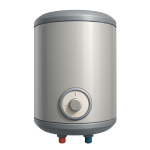
A water heater not draining can halt routine maintenance, cause sediment to accumulate unchecked, and — if you’re mid-flush — leave you with a partially drained tank and nowhere to go. Some causes are simple clogs you can clear in minutes; others require a valve replacement. This guide ranks all four causes from most to least likely so you can diagnose and fix the problem efficiently.
4 Common Causes for a Water Heater Not Draining
1Clogged Drain Valve Opening
The drain valve opening is small — typically ½ inch or less in diameter — and it sits near the bottom of the tank where sediment and mineral scale accumulate over time. Even a thin layer of hardened calcium deposits can fully block water flow while the valve body itself remains perfectly functional. This is the single most common reason a water heater stops draining and the first thing to rule out before attempting any part replacement.
Symptoms
- Drain valve handle turns freely but little or no water exits
- Water drips or flows at a trickle rather than a steady stream
- Tank has not been flushed in more than 1–2 years
Care Plan
- Shut down the unit and let it cool. Set a gas heater to “Pilot” or turn an electric unit off at the breaker. Allow the tank to cool for at least 2–3 hours — or overnight — before touching the drain valve. Confirm safe temperature by running a hot water faucet; water should feel warm, not hot.
- Attach a garden hose. Thread a standard ¾-inch garden hose onto the drain valve and route the free end to a floor drain, utility sink, or outdoors at ground level. A lower termination point improves drainage.
- Open a hot water faucet somewhere in the home. Turn on any hot water fixture — a kitchen or bathroom faucet works well — to break the vacuum that would otherwise prevent draining. Do not attempt to actuate the T&P relief valve for this purpose; it is a safety device, not a vent, and manual actuation can damage its internal seat.
- Open the drain valve and probe the opening. Slowly open the valve. If flow is absent or very slow, insert a long thin wire (a straightened coat hanger or thin screwdriver) into the valve opening and gently break up the sediment plug. Work the wire in short, careful strokes to avoid pushing the clog deeper.
- Confirm flow and flush briefly. Once water flows freely, allow it to run until it appears clearer. If flow remains blocked after probing, the valve itself may be failed — proceed to Cause 3. If you are unsure whether the valve opening is compromised versus the valve mechanism, call a licensed plumber rather than forcing the valve further.
Common Mistakes
- Skipping the hot water faucet step, which creates a vacuum lock that prevents drainage even from a fully clear valve.
- Using excessive force with the probe wire — this can deform the valve seat or push a large sediment mass deeper into the valve body, making the blockage harder to clear.
2Heavy Sediment Buildup Inside the Tank
When a water heater is not flushed annually, dissolved minerals — primarily calcium carbonate in hard-water areas — precipitate and settle to the tank floor directly in front of the drain valve opening. Over several years, this layer can grow thick enough to physically dam the valve from the inside, blocking flow even after the valve body and opening are confirmed clear. The sediment may also partially obstruct the valve as it exits, causing a slow trickle that stops and starts.
Symptoms
- Rumbling or popping sounds from the tank during heating cycles (a classic sediment indicator)
- Drain valve opening is clear but flow is very slow or intermittent
- Water that does exit is brown, gritty, or cloudy
Care Plan
- Shut down the unit and allow cooling. Turn off the heat source and let the tank cool for 2–3 hours minimum, or overnight. Test at a hot water faucet before proceeding — water should be warm, not hot. Put on heat-resistant gloves and safety glasses before continuing.
- Connect a hose and open a hot water fixture. Thread a garden hose onto the drain valve and run it to a safe drainage point at or below floor level. Open a hot water faucet at any fixture in your home to eliminate vacuum lock.
- Open the drain valve and allow partial drainage. Open the valve and drain approximately one-third of the tank volume. The drain valve must remain open any time the cold water supply is turned on during this procedure — closing the drain valve while cold water is introduced traps pressure and creates a risk of steam buildup.
- Introduce cold water to agitate sediment. With the drain valve still open, briefly turn on the cold water supply inlet (the pipe entering the top of the tank). This creates a turbulence effect inside the tank that suspends settled sediment. Watch the hose output — you will likely see brown or gritty water. Repeat this cycle two to three times, or until the discharged water runs noticeably clearer. To close out safely: turn off the cold water inlet first, then close the drain valve once water flow from the hose has slowed to a stop.
- Evaluate results and schedule regular maintenance. If flow improves significantly, the tank is functional — commit to annual flushes going forward. If sediment is so heavy that the valve repeatedly clogs or flow never reaches a steady stream, call a licensed plumber; a professional pressurized flush or descaling procedure may be necessary, and in severe cases the tank may be near end of life.
Common Mistakes
- Closing the drain valve before turning off the cold water inlet — always shut off the cold water supply first, then close the drain valve.
- Assuming the tank is clean after one flush cycle when sediment is heavily accumulated; plan for at least two to three cold-water agitation cycles before evaluating improvement.
3Failed or Seized Drain Valve
Drain valves — particularly the inexpensive plastic spigot-style valves installed on many economy-tier water heaters — degrade over years of heat cycling, mineral exposure, and disuse. The internal gate or ball mechanism can corrode in place, or the valve body can crack under torque. If the opening is clear and the flush procedure did not restore flow, the valve itself is likely the culprit and needs to be replaced.
Symptoms
- Valve handle turns but mechanism does not open (handle spins freely with no resistance)
- Visible cracks, corrosion, or mineral encrustation on the valve body
- Small continuous drip from the valve stem even when closed
Care Plan
- Shut down and cool the tank. Turn off the heat source and allow 2–3 hours of cooling, or overnight. Wear heat-resistant gloves and safety glasses. As noted in the safety guidance, do not open the T&P relief valve to vent the tank.
- Drain as much water as possible through the failed valve. Even a slow drip will reduce the volume you have to manage. Open a hot water faucet at any fixture in the home to relieve vacuum. Let the tank drain as much as it will. Note: a completely seized valve will not drain at all — if the tank cannot be partially emptied before valve removal, be prepared for significant water spillage (potentially the full tank volume) when the valve is removed. Have large buckets, towels, and a wet/dry vacuum on hand.
- Identify your replacement valve type. Most residential water heaters use a ¾-inch drain valve in one of three configurations: NPT (National Pipe Taper — the standard tapered thread used on most plumbing fittings), GHT (Garden Hose Thread — the straight thread used on garden hose connections), or a plastic spigot-style valve with a compression or barbed fitting. These thread types are not interchangeable — GHT has 11.5 threads per inch while NPT has 14 TPI at ¾ inch. The most reliable identification method is to bring the old valve in person to a hardware store, or look up the tank’s model number on the manufacturer’s specification sheet, which lists the drain valve specification.
- Remove the old valve and install the replacement. Turn the old valve counterclockwise with a wrench until it threads free. Wrap the new valve’s threads with PTFE (Teflon) tape — apply it clockwise as viewed from the threaded end, which is the same direction you will thread the valve in, so the tape tightens rather than unwraps during installation. Three clockwise wraps is sufficient for most NPT fittings. Thread the new valve in by hand first to confirm thread alignment, then tighten with a wrench — hand-tighten until snug, then turn no more than one additional quarter-turn (90°) with the wrench. Plastic drain port threads crack easily — if you feel significant resistance before the valve is fully seated, stop and recheck thread alignment rather than forcing it. A cracked tank fitting boss is an irreparable failure that requires a full tank replacement. Once the new valve is installed, close it and confirm it is in the “Off” position.
- Refill and restore. Open the cold water supply valve. Open a hot water faucet inside the house and wait until water flows in a steady, air-free stream (this may take several minutes). Only once the tank is completely full should you restore power at the breaker or relight the gas pilot.
Common Mistakes
- Attempting to replace the valve while the tank is hot. Even if the valve is blocked, removing it will release a torrent of scalding water. Always wait for the tank to cool.
- Using the wrong thread type. Forcing a Garden Hose Thread (GHT) valve into a National Pipe Taper (NPT) tank port will strip the threads and create a permanent, unfixable leak.
4Kinked or Blocked Drain Hose
Sometimes the problem isn’t the water heater at all, but the tool you are using to drain it. Standard garden hoses can easily kink, especially when they soften under the heat of the exiting water. Furthermore, if you are using an old hose, internal rubber degradation or trapped debris from a previous yard project can create a physical blockage that mimics a valve clog.
Symptoms
- The valve is confirmed open, but no water reaches the end of the hose.
- The hose feels “soft” or shows a sharp fold (kink) along its length.
- Water flows normally when the hose is removed and the valve is opened into a bucket.
Care Plan
- Straighten the hose path. Ensure the hose runs in a straight, downhill line from the water heater to the drain. Check behind the unit and around corners for “hidden” kinks.
- Shorten the run. If you are using a 50-foot hose to reach a drain only 10 feet away, the extra coils increase the chance of a blockage. Switch to a shorter, heavy-duty “contractor” grade hose which is designed to resist kinking under heat.
- Test the hose independently. Unscrew the hose from the water heater. Attach it to an outdoor spigot or laundry sink and turn on the water. If the flow is weak or non-existent, the hose is blocked internally and should be discarded.
- Check the hose washer. Inspect the rubber washer inside the female end of the hose. If it is old and swollen, it may be partially covering the opening of the drain valve when tightened, restricting flow.
- Back-flush the valve (Advanced). If the hose is clear but the valve is still sluggish, you can sometimes clear a sediment plug by “back-flushing.” Connect your hose to a different pressurized water source (like a laundry sink) and the other end to the water heater drain valve. With the tank’s cold water supply Off and a hot water tap Open upstairs, briefly turn on the pressurized water to push the sediment back into the tank, then immediately try to drain again.
Common Mistakes
- Using a cheap “light-duty” hose. These hoses are not rated for hot water; they will collapse or kink almost instantly when 120°F+ water begins to flow, stopping the drain process mid-way.
- Running the hose uphill. Gravity is your only friend when draining a non-pressurized tank. If any part of the hose sits higher than the drain valve, a “U-trap” of water will form, stopping the flow.