
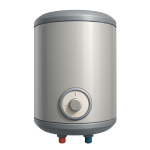
A water heater not lighting can mean anything from an extinguished pilot light that relights in two minutes to a failed gas control valve that needs a licensed technician. This 2026 guide ranks the five most common causes from most to least likely so you can diagnose and fix the issue as efficiently as possible.
5 Common Causes for a Water Heater Not Lighting
1Extinguished Pilot Light
The pilot light is the small standing flame that ignites the main burner. It can be blown out by a gust of air through the flue, a brief gas supply interruption, or simply vibration from nearby equipment. This is by far the most common reason a gas water heater stops lighting and it costs absolutely nothing to fix — the relight procedure is printed on a label on the front of nearly every unit. If a licensed technician makes a service call solely to relight a pilot, expect to pay $75–$150 for the trip charge alone, making this the most important DIY skill on this list.
Symptoms
- No hot water and the burner is completely off
- The small flame visible through the sight glass (the small observation window on the front of the unit) is absent
- The unit makes no clicking or ignition sounds
Care Plan
- Locate the gas control valve on the front of the unit and turn the knob fully to the OFF position.
- Wait a full 5 minutes for any accumulated gas to disperse. During this time, do not smoke, operate any electrical switches, or introduce any ignition source in or near the utility space.
- Before proceeding, confirm no gas odor is present. If a strong gas smell persists after 5 minutes, leave the home immediately without operating any switches or electronic devices, move well away from the structure, and call your gas utility and 911 from outside. Do not re-enter until cleared by the gas utility or fire department.
- Once the area is clear, locate the relight instructions on the label affixed to the front of your water heater. Follow those manufacturer-specific steps exactly — they typically involve turning the knob to PILOT, pressing and holding it down to open the pilot gas line, and pressing the igniter button until the pilot flame catches.
- Continue holding the knob down for 30–60 seconds after the pilot lights to allow the thermocouple to heat up and hold the valve open, then slowly release. If the pilot goes out immediately upon releasing the knob, proceed to Cause 2 (failed thermocouple). If the pilot will not light at all, proceed to Cause 3 (faulty igniter).
Common Mistakes
- Releasing the pilot knob too quickly before the thermocouple has had time to heat up — hold it down for the full 30–60 seconds even after the flame appears.
- Skipping the 5-minute wait after turning the valve to OFF, which risks attempting to light accumulated gas — never skip this step.
2Failed Thermocouple
The thermocouple is a safety sensor with its tip positioned directly in the pilot flame. Heat from the flame generates a small electrical voltage that signals the gas valve to stay open. When the thermocouple ages, accumulates carbon buildup, or bends out of position, it stops generating sufficient voltage and the gas valve closes — causing the pilot to go out every time you release the knob. This is the single most common reason a pilot lights momentarily but will not stay lit. Universal thermocouples cost $15–$35 at any hardware retailer and fit most standard atmospheric-vent tank water heaters. If you have a power vent or direct vent model, verify compatibility with your model number before purchasing.
Symptoms
- Pilot lights when the knob is held down but extinguishes immediately when the knob is released
- The unit has not produced hot water for an extended period (the thermocouple may have cooled and corroded)
- Visible carbon deposits or a bent tip on the thermocouple sensor
Care Plan
- Turn the gas control knob fully to OFF and allow the unit to cool until the thermocouple tip is cool to the touch — typically 20–30 minutes minimum — before handling. Do not rush this step; the thermocouple tip retains heat after repeated relighting attempts.
- Before proceeding, confirm no gas odor is present. If a persistent smell is detected, follow the gas leak emergency protocol described in Cause 1, Step 3.
- Locate the thermocouple — it is the thin copper tube running from a fitting on the gas control valve to the pilot assembly at the burner. Using an adjustable wrench, unthread the thermocouple nut from the gas control valve connection point (usually hand-tight plus a snug turn) and pull the opposite end free from the pilot bracket clip.
- Bring the old thermocouple to a hardware store to match the length, or order a universal replacement online. Thread the new thermocouple nut into the gas control valve connection point finger-tight, then tighten the nut an additional quarter turn with the wrench — the connection should be snug and leak-free, not overtightened to the point of stripping.
- Relight the pilot following the procedure in Cause 1. After the pilot is confirmed stable, apply soapy water or leak-detection solution to the thermocouple nut connection on the gas valve and watch for bubbles — any bubbling indicates a gas leak at that fitting and the connection must be tightened or reseated before use. If the pilot still does not stay lit after thermocouple replacement, call a licensed plumber or gas technician, as the gas control valve itself may be failing.
Common Mistakes
- Handling the thermocouple tip before it has fully cooled, risking burns — wait until it is cool to the touch.
- Overtightening the thermocouple nut on the gas valve fitting, which can crack the fitting or damage the valve — snug plus a quarter turn is the target, and always follow with a soapy-water leak check.
3Faulty Igniter Electrode or Wire
The piezo igniter electrode creates the spark that lights the pilot flame. Over time the ceramic insulator on the electrode tip can crack, the tip can become coated with mineral deposits or carbon, or the wire connecting the igniter button to the electrode can develop cracked insulation or a broken internal conductor. A failed igniter does not prevent a pilot from staying lit — it only prevents the initial spark — so a pilot that goes out and cannot be restarted often points here. Igniter assemblies and wiring harnesses cost $20–$60 depending on brand.
Symptoms
- Pressing the igniter button produces no click and no visible spark at the pilot assembly
- The igniter button depresses without resistance or does not return to its original position, indicating a failed piezo mechanism
- Spark is visible at the igniter button but not at the electrode tip near the pilot
Care Plan
- Turn the gas control knob fully to OFF. Before proceeding, confirm no gas odor is present. If a persistent smell is detected, follow the gas leak emergency protocol described in Cause 1, Step 3.
- Locate the igniter electrode — it is the ceramic-tipped probe positioned next to the pilot tube at the burner assembly. Inspect the ceramic insulator for cracks and the metal tip for heavy carbon or mineral buildup.
- If the tip is dirty but the ceramic is intact, clean the electrode tip gently with fine-grit sandpaper (220 grit) or a small wire brush. Check the gap between the electrode tip and the ground target — it should be approximately ⅛ to 3/16 inch (3–5mm), but consult your unit’s service manual for the correct specification for your model. If the gap is too wide or too narrow, gently bend the ground electrode bracket to correct it.
- Inspect the igniter wire along its full length from the button to the electrode for cracked insulation, corrosion at the connectors, or a broken conductor. If insulation damage or a break is found, the wire must be replaced — do not attempt to use an open flame lighter as a workaround when wiring damage has been identified, as damaged wiring near the gas assembly creates a flash fire risk. The lighter workaround (described next) is only appropriate when the electrode tip itself is the isolated problem and all wiring is confirmed intact.
- If the electrode tip is cracked or the wire is damaged, order a replacement igniter assembly matched to your model number. Install the new assembly, relight the pilot following the Cause 1 procedure, and confirm stable operation. If no spark is still produced after replacing the electrode and wire, the igniter button mechanism inside the gas control valve may have failed — call a licensed technician for further diagnosis.
Common Mistakes
- Using a butane lighter as a workaround without first confirming that all wiring is intact — if any insulation damage is present, an open flame near the electrode wiring creates a flash fire risk.
- Adjusting the electrode gap without consulting the manufacturer’s service manual — gap specifications vary by model, and a gap that appears incorrect may have been set correctly at the factory for that specific unit.
4Interrupted Gas Supply
If the gas supply to the water heater is interrupted — by a closed shutoff valve, an empty propane tank, a tripped excess-flow valve, or a kinked or damaged flex connector — the pilot will not light at all because there is no fuel reaching the burner. While less common than a failed thermocouple, a gas supply issue is often the culprit after home renovations, meter changes, or when moving into a new property.
Symptoms
- The pilot will not light even when using a manual lighter (long-reach match or butane lighter).
- Other gas appliances in the home (stove, furnace, fireplace) are also not working.
- A faint “hissing” sound is absent when the gas control knob is held in the PILOT position.
Care Plan
- Check other appliances. If your gas stove or furnace isn’t working, the problem is your main gas supply or a tripped meter. Call your gas utility provider.
- Inspect the dedicated shutoff valve. Locate the manual gas shutoff valve on the pipe leading to the water heater. The handle must be parallel to the pipe (ON). If it is perpendicular (OFF), turn it to ON.
- Reset the excess-flow valve (EFV). If a gas valve is opened too quickly, the EFV (a safety device inside the flex connector) may trip, thinking there is a major leak. Turn the manual shutoff valve to OFF, wait 30 seconds, and then turn it back to ON very slowly.
- Purge air from the line. If the gas was recently turned off, there may be air in the pipes. Hold the gas control knob in the PILOT position for up to 2–3 minutes to bleed the air out before attempting to click the igniter.
- Check the propane level. If you are on a propane system, check the gauge on your exterior tank. If it is below 10%, the pressure may be too low to feed the water heater pilot.
Common Mistakes
- Forgetting the main shutoff. Homeowners often spend hours troubleshooting the unit only to find a family member or contractor turned off the gas at the wall.
- Ignoring the smell of gas. If you suspect a supply issue but smell gas, do not troubleshoot. Leave the area immediately.
5Failed Gas Control Valve (Combination Thermostat)
Failed Gas Control Valve (Combination Thermostat)
The gas control valve is the “brain” of the water heater. It regulates the temperature, houses the pilot safety sensors, and controls the flow of gas to the main burner. Inside, it contains a sensitive electromagnet that holds the valve open when the thermocouple sends a signal. If this internal magnet or the mechanical gears fail, the unit will not light even if the thermocouple and igniter are brand new.
Symptoms
- The pilot will not light or stay lit despite a confirmed good thermocouple and gas supply.
- The control knob is physically stuck or extremely difficult to turn.
- The status light on modern 2026 valves is blinking a specific error code for “Internal Valve Failure” or “Inverter Fault.”
Care Plan
- Verify all other causes first. Because this part is the most expensive ($100–$500), ensure the thermocouple, igniter, and gas supply are 100% functional before condemning the valve.
- Read the blink codes. If your unit has a status LED, count the number of flashes. Cross-reference this with the sticker on the side of the tank. If it indicates a “Valve Circuit Error,” the component is dead.
- Check for moisture. If the water heater leaked recently, water may have entered the control valve housing, shorting out the internal sensors.
- Professional Replacement Only. Warning: Replacing a gas control valve involves disconnecting the main gas line, the burner assembly, and the thermocouple. In almost all jurisdictions, this is NOT a DIY task. It requires a licensed plumber or gas technician to ensure a gas-tight seal and proper manifold pressure.
- Consider Replacement. If your water heater is more than 10 years old, the cost of a new gas control valve plus professional labor ($400–$900 total) is often better spent on a new, high-efficiency 2026 water heater with a fresh warranty.
Common Mistakes
- Trying to repair the valve. Gas control valves are factory-sealed units. Do not attempt to take the valve itself apart; doing so creates a massive risk of a gas leak or explosion.
- DIY Replacement. This is the most dangerous repair on a water heater. A mistake in threading or sealing the gas line can lead to carbon monoxide poisoning or a fire.




