
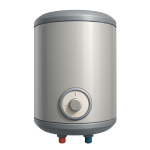
A water heater that won’t turn on is one of the more disruptive home failures — cold showers and stalled dishwashers make the urgency clear. In 2026, the good news is that most causes are diagnosable without special tools. This guide ranks the four most common culprits from most to least likely so you can work through them efficiently and avoid unnecessary repairs.
4 Common Causes for a Water Heater That Won’t Turn On
1Tripped Circuit Breaker or Blown Fuse
Electric water heaters draw significant amperage — typically 18–25 amps at 240V — and a power surge, brief overload, or a developing element fault can trip the dedicated breaker or blow a fuse before any other symptom appears. This is the simplest and most common reason an electric water heater goes completely dead. Gas water heaters are largely unaffected by this cause, though some modern units with electronic ignition depend on a small amount of household power and can be impacted by a tripped breaker.
Symptoms
- The unit shows no signs of life — no indicator lights, no heat, no sound
- The circuit breaker in the electrical panel is in the middle (tripped) position or fully flipped to OFF
- A fuse in the fuse box appears discolored or the wire inside is visibly broken
Care Plan
- Go to your electrical panel and locate the breaker labeled for the water heater. It will be a double-pole breaker — identifiable as a wide breaker that takes up two slots in the panel, often with a single handle or two handles joined together — usually rated 30 amps.
- If the breaker handle is in the middle position (tripped) or the OFF position, push it firmly all the way to OFF first, then push it firmly to ON. You should feel and hear a click.
- If your home uses a fuse box rather than a breaker panel, inspect the water heater fuses for discoloration, a broken filament wire, or burn marks. Replace a blown fuse with one of the exact same amperage rating — do not upsize.
- Return to the water heater and wait 30–60 minutes to see if hot water returns. Electric water heaters typically take 45–90 minutes to fully reheat a cold tank.
- If the breaker trips again immediately or within a short time after being reset, stop resetting it. A breaker that trips repeatedly indicates an active fault — a shorted element, a wiring problem, or a failing thermostat. At this point, call a licensed electrician or plumber rather than continuing to reset the breaker.
Common Mistakes
- Resetting a breaker more than once without investigating why it tripped. Repeatedly forcing a breaker closed on a faulted circuit can damage wiring, the breaker itself, and potentially the water heater.
- Replacing a blown fuse with a higher-amperage fuse to “stop it from blowing.” This removes the only overcurrent protection on the circuit and creates a fire hazard.
2Failed or Tripped High-Limit Thermostat
Electric water heaters have a high-limit safety thermostat — sometimes called the ECO (Energy Cut-Off) or reset thermostat — that cuts power to the heating elements if the water temperature climbs too high, typically above 170°F. This device trips in response to a runaway element, a stuck thermostat, or occasionally just a power fluctuation. When it trips, the water heater stops functioning entirely until the reset button is manually pressed. The thermostat itself can also fail outright, requiring replacement rather than a simple reset.
Symptoms
- The unit was working previously but has stopped heating with no obvious external cause
- A red reset button is visible on the upper thermostat behind the upper access panel
- The breaker has not tripped but there is no hot water
Care Plan
- Before doing anything else: Turn off the water heater’s dedicated circuit breaker at the electrical panel. Then use a non-contact voltage tester on the element terminals and thermostat wiring (accessible once the panel is removed) to confirm the circuit is de-energized. Do not rely on the breaker label alone — mislabeled panels are common, and a 240V circuit can be lethal.
- Remove the upper access panel on the side of the water heater (typically secured with two screws). Peel back the fiberglass insulation carefully — do not cut it, as cutting permanently reduces its insulating effectiveness and releases fiberglass fibers that irritate skin and lungs. Fold it back carefully and it can be reused.
- Locate the red reset button on the high-limit thermostat (the upper thermostat). Press it firmly until you feel or hear a click. Replace the insulation and access panel.
- Restore power at the breaker and wait 45–60 minutes. If hot water returns and the issue does not recur, a one-time temperature spike likely triggered the trip.
- If the reset button trips again, or if the thermostat shows physical burn marks or the button will not click, the thermostat needs to be replaced. Take a photo of the wiring before disconnecting anything, then disconnect the wires from the thermostat terminals, unclip or unscrew the thermostat from the tank, and install a matching replacement (verify voltage and temperature rating match the original). If you are not comfortable working with 240V wiring, call a licensed electrician or plumber. Labor costs vary significantly by region — in high cost-of-living areas, expect estimates at or above the top of the stated range. Get multiple quotes before committing.
Common Mistakes
- Pressing the reset button without first turning off the breaker and verifying the circuit is de-energized. The terminals inside the access panel are energized at 240V when the breaker is on.
- Pressing the reset button repeatedly without investigating why it tripped. Repeated tripping signals a real problem — usually a failing heating element or thermostat — that requires diagnosis, not just resets.
3Burned-Out Heating Element
Electric water heaters use one or two resistive heating elements submerged inside the tank. Over time — typically 8–12 years — these elements corrode, develop mineral buildup, or burn out entirely, most often due to sediment accumulation that causes the element to overheat while partially exposed. A failed element can trip the high-limit thermostat (see Cause 2), cause the breaker to trip (see Cause 1), or simply stop heating without triggering any safety device.
Symptoms
- Water gets mildly warm but never reaches the thermostat setpoint
- No hot water at all despite the breaker being on and the reset button not tripped
- A multimeter test (see Step 3) shows a shorted or open element
Care Plan
- Turn off the circuit breaker for the water heater. Use a non-contact voltage tester on the element terminals — with the access panel removed — to confirm the circuit is fully de-energized before touching any wiring. Do not skip this step on a 240V circuit.
- Remove the upper and lower access panels and fold back the insulation carefully (do not cut it — see Cause 2 for the reason). Disconnect the wires from the element terminals and set a multimeter to the resistance (ohms/Ω) setting.
- Touch the multimeter probes to the two element terminals. A reading of zero ohms indicates a shorted element. A reading of OL (open loop/infinity) indicates a broken element. Either confirms failure and the element must be replaced. A reading between roughly 10–25 ohms is typically functional, but the exact expected value depends on your element’s wattage — consult the wattage and voltage rating printed on the element face. Note that a reading in the normal range does not definitively rule out an element that fails only when hot (thermal failure under load); if all other causes have been eliminated, replacing the element is still a reasonable next step.
- Also touch one probe to an element terminal and the other probe to the metal tank or element flange. Any reading other than OL/infinity here indicates the element is grounding to the tank and must be replaced immediately.
- Caution: Water in the tank may be very hot (up to 140°F or higher). Turn off the cold water supply valve to the heater and allow the unit to cool for at least 1–2 hours after cutting power before draining. Connect a garden hose to the tank’s drain valve and run it to a floor drain or outside. Drain the tank below the level of the element you are replacing. For the lower element, this means draining most or all of the tank. For the upper element, draining the water level down approximately 1–2 feet below the upper element port is typically sufficient. Check your tank to identify element positions before you begin draining. Use an element wrench (a specialized 1-1/2 inch socket) to unscrew the old element counterclockwise. Install a new element with a fresh rubber gasket. Hand-thread it first to avoid cross-threading, then tighten with the wrench until snug. Critical: Open the cold water supply and a hot water tap in the house. Wait until water flows steadily without sputtering before restoring power.
- Replace insulation and access panels, then flip the breaker back to ON.
Common Mistakes
- Dry-firing the new element. If you turn the power back on before the tank is completely full and purged of air, the new element will burn out in less than 30 seconds.
- Using a screwdriver to remove the element. Standard tools often slip or round off the hex head of the element. Always use a dedicated water heater element wrench.
4Faulty Thermocouple or Gas Valve
For gas water heaters, the “lighting” system is the heart of the unit. The thermocouple is a safety sensor that detects the heat from the pilot flame. If the thermocouple fails or is covered in soot, it cannot signal the gas valve to stay open, and the burner will never ignite. If the pilot lights but the burner still won’t turn on, the gas control valve itself—the “brain” of the unit—may be faulty.
Symptoms
- The pilot light will not stay lit even after holding the knob down for 60 seconds.
- The pilot is lit, but the main burner never ignites when the temperature is turned up.
- On modern 2026 units, the status light on the gas valve is blinking an error code.
Care Plan
- Relight the pilot first. Follow the instructions on the tank’s label. Turn the knob to “Pilot,” press it down, and click the igniter. Hold the knob for at least 60 seconds after the flame appears. If it goes out immediately upon release, the thermocouple is the likely culprit.
- Clean the thermocouple. If the pilot is inconsistent, turn off the gas and allow the unit to cool. Use a piece of fine sandpaper to gently clean the tip of the thermocouple (the small copper probe next to the pilot). Ensure it is positioned so the flame directly hits the top 1/2 inch of the probe.
- Replace the thermocouple. If cleaning fails, unscrew the thermocouple from the gas valve and the burner bracket. Install a universal replacement (typically $15–$30). Most 2026 models use a “left-hand thread” or a specific “sealed combustion” thermocouple, so check your model number before buying.
- Check the Gas Valve. If the pilot stays lit but the burner won’t ignite, check the status LED on the gas valve. Count the blinks and refer to the chart on the side of the tank. If the code indicates an internal failure, the entire gas control valve must be replaced.
- Call a Pro for Gas Valve Replacement. Unlike a thermocouple, replacing a gas control valve involves disconnecting the main gas line and the manifold. Because of the risk of gas leaks and the requirement for manifold pressure testing, this should be performed by a licensed professional.
Common Mistakes
- Forcing the gas knob. If the dial is stuck, do not use a wrench; you could snap internal components and cause a major gas leak.
- Ignoring the blink codes. Modern gas valves are very accurate. Don’t waste money on a thermocouple if the status light is telling you the gas valve itself has an internal fault.