
Tank vs Tankless Water Heaters 2026: Capacity, Installation, and Efficiency
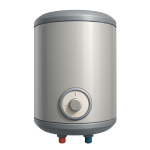
This comparison page helps resolve the biggest buyer fork in the road. Decide platform first, then compare specific models.
3 Key Factors for Tank vs Tankless Water Heaters
1Infrastructure and Installation Complexity
Why it matters
The physical requirements for tankless units are far more demanding than traditional tanks. Because tankless units must flash-heat water instantly, they require massive bursts of energy—meaning larger gas lines or significant electrical panel upgrades that can dwarf the cost of the unit itself.
Tank — Choose this if
- You want the lowest upfront installation cost with minimal changes to your plumbing.
- Your home has a standard 1/2-inch gas line or a low-amperage electrical service that cannot be easily upgraded.
- You have limited vertical wall space but plenty of floor space in a basement or utility closet.
- You want a system that works reliably even with moderate hard water without frequent professional descaling.
Tankless — Choose this if
- You have a 3/4-inch gas line or the electrical capacity for a high-draw 240V appliance.
- You are short on floor space; these units are wall-mounted and roughly the size of a suitcase.
- You are performing a major renovation where new venting (PVC for condensing units) can be easily routed.
- You want to eliminate the risk of a 50-gallon flood if the internal liner fails.
2Hot Water Delivery and Flow Rate
Why it matters
The “user experience” of hot water differs based on volume vs. flow. A tank provides a large reservoir of ready-to-use water, while a tankless unit provides an infinite stream that is limited by how many gallons it can heat per minute (GPM).
Tank — Choose this if
- You have a “high-dump” garden tub that needs to be filled quickly; tanks can deliver water faster than most residential tankless units can heat it.
- You don’t mind waiting for a refill if the tank runs dry, provided you have high pressure during the first 20 minutes.
- Your household rarely runs the dishwasher, laundry, and two showers at the exact same time.
Tankless — Choose this if
- You have back-to-back morning showers and are tired of the last person getting cold water.
- You want “endless” hot water for long showers or large families.
- You can tolerate a 5-10 second “cold water sandwich” (the brief lag while the burner ignites and heats the water flowing through the pipes).
3Efficiency and Ownership Lifecycle
Why it matters
Long-term value is a calculation of energy efficiency vs. maintenance and longevity. While tankless units are more efficient and last longer, they require more technical upkeep to reach that 20-year milestone.
Tank — Choose this if
- You prefer a “set it and forget it” appliance with a lower mechanical failure rate.
- You plan to move within 5 years and won’t recoup the high installation cost of a tankless system through energy savings.
- You want the simplest possible repair path when things go wrong; almost any plumber can fix a standard tank.
Tankless — Choose this if
- You plan to stay in your home for 10+ years to take advantage of the 20-year projected lifespan.
- You are sensitive to energy waste and want a unit that only consumes fuel when a faucet is actually turned on.
- You are comfortable performing (or paying for) an annual vinegar flush to keep the heat exchanger clear of mineral deposits.
Key Decision Factors
| Factor | Price Impact | Importance | Deal Breaker |
|---|---|---|---|
| Infrastructure and Installation Complexity | $800-$2,500 more | Critical | Yes |
| Hot Water Delivery and Flow Rate | $500-$1,200 more | High | No |
| Efficiency and Ownership Lifecycle | $300-$1,000 more | Medium | No |
Common Mistakes
- GAS LINE BOTTLE-NECK: Most tankless units require a 3/4-inch gas line to handle the massive BTU spike; using an existing 1/2-inch line will cause the unit to fail or throw error codes during peak demand.
- HARD WATER HAZARD: Tankless units are extremely sensitive to scale buildup; if you have hard water and no softener, a tankless heat exchanger can fail in under 5 years, voiding many warranties.