
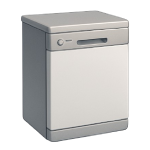
Nothing halts a modern kitchen routine like a pool of dirty water at the bottom of your machine. When you find yourself asking how to fix a clogged dishwasher, the answer is almost always found in the pathway between the tub and the sink drain. This guide ranks solutions from most likely to least likely to help you diagnose and clear the obstruction efficiently.
5 Common Causes for a Clogged Dishwasher
1Saturated Mesh Filter
This fine mesh screen is the primary defense for your drain pump. Over time, it captures grease, calcium, and tiny food scraps. Eventually, these particles form a solid, waxy film that water simply cannot penetrate.
Symptoms
- A thick layer of standing water remains after the cycle ends.
- The water looks “slimy” or has visible food floating in it.
Care Plan
- Remove the bottom rack of the dishwasher.
- Twist the cylindrical filter (usually counter-clockwise) to lift it out.
- Scrub the mesh with hot water and a soft-bristled brush until you can see through it.
- Clean the flat “coarse” filter plate surrounding the cylinder.
- Ensure the filter is locked back in place; a loose filter allows debris to clog the pump impeller (Cause 4).
Common Mistakes
- Only cleaning the large food scraps but leaving the invisible grease film on the fine mesh.
- Scrubbing too hard and tearing the mesh, which necessitates a full filter replacement.
2Grease-Clogged Drain Hose
The flexible plastic line connecting your dishwasher to the sink can accumulate a “sludge” of congealed fats and soap. This is especially common if you frequently wash dishes with cold water or use excessive detergent.
Symptoms
- The dishwasher hums during the drain cycle but the water level doesn’t drop.
- You see an “E24” or “Drain Error” on the digital panel.
Care Plan
- Locate the hose under the sink and check for any sharp kinks or flattened sections.
- Disconnect the hose at the sink or garbage disposal end (keep a bucket ready).
- Check the end of the hose for a solid plug of grease.
- Use a straightened wire or a long brush to gently break up any clogs within the first few feet of the hose.
- Reconnect and ensure the hose has a “high loop” to prevent backflow from the sink.
Common Mistakes
- Forgetting to check the connection point where the hose enters the sink plumbing; this is the most common spot for a localized clog.
3Blocked Garbage Disposal Connection
Many 2026 dishwashers drain directly into the garbage disposal. If the disposal is full of food waste or if the “knockout plug” wasn’t removed during a new installation, the dishwasher water has nowhere to go.
Symptoms
- The dishwasher only backs up after you’ve used the disposal for large amounts of food.
- Water from the sink drains into the dishwasher.
- The drainage problem started immediately after a new garbage disposal was installed.
Care Plan
- Run the garbage disposal with plenty of cold water before starting every dishwasher cycle.
- If the disposal was recently installed, disconnect the dishwasher hose and check if the plastic plug inside the inlet was hammered out.
- Clear any debris from the disposal inlet using a screwdriver or needle-nose pliers.
- Verify that the disposal itself is draining freely.
Common Mistakes
- Assuming the dishwasher is broken when the garbage disposal is simply stuffed with celery or potato peels.
- Missing the disposal inlet knockout plug during a new installation; this is one of the most common immediate post-install drain failures.
4Debris in the Drain Pump Impeller
If a piece of glass, a toothpick, or a fruit pit bypasses the filter, it can lodge directly in the spinning fins of the drain pump. This physically jams the motor, preventing it from pushing water out.
Symptoms
- You hear a rhythmic clicking or a loud grinding noise during the drain cycle.
- The pump hums and then goes silent as the thermal protector trips.
Care Plan
- Access the drain pump (usually behind the bottom kickplate).
- Remove the pump cover (if your 2026 model allows) or the entire pump.
- Use tongs to remove any glass shards or debris from the impeller fins.
- Try to manually rotate the impeller to ensure it spins freely without resistance.
- Reassemble and test with a “Cancel/Drain” cycle.
Common Mistakes
- Trying to force the pump to run while it is making a grinding noise, which can snap the impeller blades.
5Clogged Air Gap or High Loop
The air gap is the small chrome cylinder on your sink. It prevents dirty sink water from being siphoned back into your dishwasher. If the internal tubes of the air gap become restricted by a stray piece of plastic or grease, it creates backpressure that stalls the drain cycle.
Symptoms
- Water spurts out of the air gap onto the countertop during the drain cycle.
- The dishwasher drains very slowly and leaves an inch of water behind.
Care Plan
- Pop off the chrome cap of the air gap on the sink.
- Unscrew the plastic inner cap.
- Check for any food debris or “gunk” blocking the two holes inside.
- Use a bottle brush or a toothpick to clear the passages.
- Blow through a small tube into the air gap to ensure the line to the disposal is clear.
Common Mistakes
- Replacing the entire air gap when a 2-minute cleaning with a toothpick would have solved the issue.