
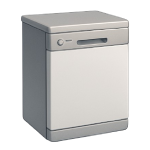
Few things are more annoying than a kitchen appliance that suddenly starts “talking” back. If you are wondering why is my dishwasher making noise, the specific sound—whether it’s a rhythmic thump or a metallic grind—is your best diagnostic tool. This guide ranks solutions from most likely to least likely to help you identify and silence the racket efficiently.
5 Common Causes for Dishwasher Noise
1Physical Obstruction (Spray Arm Impact)
This is the culprit in the vast majority of “new” noise complaints. Dishwashers use spinning arms to spray water; if a dish is too tall or has fallen through the rack, the arm will strike it every time it rotates, creating a consistent thumping or clicking sound.
Symptoms
- A rhythmic “thump-thump-thump” sound throughout the wash.
- The sound stops when you pause the cycle and starts again when you resume.
Care Plan
- Wait for the cycle to pause and open the door carefully.
- Spin the bottom spray arm by hand to see if it hits a plate or a pot handle.
- Check the middle spray arm (attached to the top rack) to see if it’s hitting tall glasses or baking sheets.
- Ensure no lightweight plastic containers have flipped over and are rattling against the sides.
- Re-arrange the load to ensure at least 2 inches of clearance for all arms.
Common Mistakes
- Assuming the motor is broken when the fix is just moving a spatula.
- Forgetting to check the very top “third rack” sprayer if your model has one.
2Hard Object in the Pump or Sump
If a piece of broken glass, a fruit pit, or a small bone gets past the filter, it will settle in the sump area. When the pump turns on, the water tosses this hard object against the plastic housing or the spinning impeller.
Symptoms
- A loud, erratic rattling or “popcorn” sound.
- The noise is most noticeable during the “scrubbing” phase of the cycle.
Care Plan
- Remove the bottom rack and the mesh filter assembly.
- Use a sponge to soak up the remaining water in the sump.
- Check the area with a flashlight for any hard debris.
- Use tongs or a shop-vac to remove the object (never use your bare hands, as it’s often broken glass).
- Spin the pump impeller (if accessible) to ensure it moves smoothly.
Common Mistakes
- Thinking the noise will “go away” on its own; hard objects can eventually snap the pump blades.
3Worn Wash Pump (Circulation Motor) Bearings
The circulation pump is the heart of the dishwasher. It uses internal bearings to spin at high speeds. When these bearings wear out due to age or a small internal leak, they produce a constant, high-pitched mechanical sound.
Symptoms
- A high-pitched squeal, whistle, or a loud, vibrating drone.
- The noise persists throughout the entire wash cycle.
Care Plan
- Listen to the pitch; if it’s a constant “electrical” drone, the motor windings may be failing.
- Access the pump under the unit (behind the kickplate).
- Check for water stains on the motor housing, which indicates a failed seal.
- If the squeal is present and the motor is hot, the bearings have failed.
- In most 2026 models, the motor and pump are a single unit and must be replaced together.
Common Mistakes
- Mistaking a loud drone for “normal” operation; modern units (2025–2026) are typically 38–45 dB or lower on quiet cycles.
4Debris in the Drain Pump
While the wash pump is responsible for cleaning, the drain pump only runs at the end of each cycle phase. If the noise only happens when water is being sucked out of the tub, the issue is located here.
Symptoms
- A loud clicking, grinding, or growling sound that only happens at the end of a cycle.
- Water remains in the tub after the noise stops.
Care Plan
- Locate the drain pump under the unit (usually near the front).
- Many 2026 models allow you to remove a small “cover” over the drain impeller from inside the tub.
- Check for a toothpick, twist-tie, or glass shards jammed in the impeller.
- If clear but still noisy, the pump motor itself may have internal mechanical damage.
- Replace the drain pump if the impeller is wobbly or the motor hums without spinning.
Common Mistakes
- Replacing the expensive wash pump when the noise was actually in the $50 drain pump.
5Faulty Water Inlet Valve (Water Hammer)
The water inlet valve opens and closes to fill the machine. If the internal diaphragm is failing or if your home’s water pressure is too high, the valve can vibrate or cause a loud “bang” in your pipes (water hammer).
Symptoms
- A vibrating “buzz” or a loud “thud” that only happens at the very start of the cycle.
- A high-pitched “whining” sound while the unit is filling.
Care Plan
- Listen at the bottom-left or bottom-right corner during the first 2 minutes of the cycle.
- If you hear a loud buzz while water enters, the valve solenoid is failing.
- On many models, the internal screen is not designed to be removed—check your manual before attempting a cleaning.
- If the valve is whining, it may be restricted by mineral scale.
- Replace the inlet valve assembly to prevent a future leak or a “no-fill” condition.
Common Mistakes
- Thinking the pipes in your wall are the problem when the vibrating valve is the true culprit.