
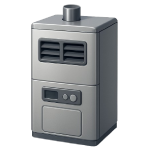
Understanding Why is my Furnace Making Noise? is the key to preventing a mid-winter breakdown. In 2026, modern furnaces are designed to be whisper-quiet; if yours is talking to you, it’s usually signaling a specific part failure. This guide ranks solutions from most likely to least likely to help you diagnose the issue efficiently.
5 Common Causes for Furnace Noises
1Airflow Restriction (Whistling)
Whistling or “whooshing” is almost always an airflow issue. When your air filter is clogged or too many vents are closed, the blower motor tries to pull air through any tiny crack it can find, creating a high-pitched whistle similar to a tea kettle.
Symptoms
- A high-pitched whistle that stops when you remove the filter.
- The noise is louder at the return air grill than at the furnace itself.
Care Plan
- Turn off the furnace and remove the air filter.
- If the filter is dark or dusty, replace it with a fresh one.
- Check all supply vents in every room; ensure at least 80% of them are fully open.
- Inspect the return air grills for furniture or curtains blocking the flow.
- If the whistle persists, check for gaps in the ductwork near the furnace and seal them with foil tape.
Common Mistakes
- Using a MERV 13+ filter in an older system, which acts like a clog even when clean.
- Closing vents in unused rooms, which increases static pressure and noise.
2Delayed Ignition (Banging/Popping)
A loud “bang” or “pop” at the moment of ignition is a red flag. This happens when the burners are dirty and the gas doesn’t light immediately. The gas cloud grows for a few seconds until it finally hits the igniter, causing a startling mini-explosion.
Symptoms
- A single loud bang right as the furnace starts its heating cycle. Warning: This is “Delayed Ignition” caused by gas buildup. If the bang is loud enough to shake the furnace cabinet, shut the system off immediately as it can crack the heat exchanger.
- Soot or “scorch” marks visible near the burner assembly.
Care Plan
- Safety First: Turn off the gas and power.
- Inspect the burners for dust, rust flakes, or spider webs.
- Use a vacuum with a soft brush attachment to clear debris from the burner faces.
- If the banging continues, a technician must adjust the gas pressure or clean the burner orifices.
- Note: If the bang happens in your walls, it’s likely just metal ducts expanding; this is harmless.
Common Mistakes
- Ignoring a startup bang; over time, these small “explosions” can crack your heat exchanger.
- Trying to adjust the gas valve without a manometer.
3Worn Blower Belt or Bearings (Squealing)
High-pitched squealing or screeching is the sound of friction. In older belt-driven furnaces, it’s a slipping rubber belt. In newer 2026 models, it’s usually the dry bearings in the blower motor or the inducer fan.
Symptoms
- A continuous high-pitched squeal while the fan is running.
- The noise gets louder or changes pitch as the fan speed increases.
Care Plan
- Shut off power and open the blower door.
- If you see a rubber belt, check it for cracks or “glazing” (shiny spots). Replace if worn.
- If your motor has small yellow or red caps, add 2–3 drops of electric motor oil (SAE 20).
- If the motor is sealed and the squeal is coming from inside the housing, the motor needs replacement.
- Check the small “inducer” motor (exhaust fan); these often squeal right before they fail.
Common Mistakes
- Using WD-40 on bearings; it’s a solvent, not a lubricant, and will destroy the motor.
- Over-tightening a replacement belt, which will ruin the bearings.
4Loose Panels or Debris (Rattling)
Rattling and vibrating are usually caused by something being physically loose. It could be an external panel, a loose screw in the ductwork, or debris that has fallen into the blower wheel (like a “squirrel cage” for a hamster).
Symptoms
- The noise sounds like a handful of pennies in a dryer.
- The rattling stops if you press your hand against the furnace cabinet.
Care Plan
- With the power on, gently press on the furnace panels. If the noise stops, tighten the screws.
- Check the blower door to ensure it is seated perfectly in its track.
- Turn off power and inspect the blower wheel for loose “balancing weights” or debris.
- Look for loose ductwork joints near the furnace and secure them with zip screws.
- If the rattle is internal and rhythmic, the blower wheel may be out of balance.
Common Mistakes
- Taping a panel down instead of tightening the screw; the heat will eventually melt the tape.
- Leaving a loose blower wheel, which can eventually vibrate itself into pieces.
5Electrical Component Failure (Humming/Buzzing)
A steady hum or buzz is usually electrical. This can be normal “transformer hum,” but a loud or new buzz often means an electrical component is under stress—either the capacitor is failing or the motor is struggling to start.
Symptoms
- A “buzzing” sound that starts as soon as the thermostat clicks but before the fan moves.
- A low hum that seems to vibrate the floorboards.
Care Plan
- Check the transformer (the small box with wires) to see if it’s mounted loosely.
- Inspect the capacitor (silver cylinder); if it is bulging at the top, it’s failing and buzzing.
- Ensure all electrical wire nuts are tight inside the junction box.
- If the hum is accompanied by a “burning” smell, shut off the breaker immediately.
- If the buzzing is coming from a smart thermostat, it may be a “C-wire” power issue.
Common Mistakes
- Ignoring an electrical buzz, which is often the final warning before a part “shorts” out.
- Touching the capacitor terminals without discharging them first.