
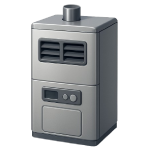
Few things are more confusing than a Furnace not blowing hot air when the 2026 winter weather hits. If your vents are blowing cold or lukewarm air while the system is running, it usually means the safety sensors have stepped in to prevent a hazard. This guide ranks solutions from most likely to least likely to help you diagnose the issue efficiently.
5 Common Causes for a Furnace Blowing Cold Air
1Clogged or Dirty Air Filter
The air filter is the lungs of your system. If it’s clogged with dust, air can’t pass through easily. This causes the heat exchanger to reach dangerous temperatures, triggering a “limit switch” that cuts the gas to the burners. The fan stays on to cool the unit, blowing cold air into your rooms.
Symptoms
- The air feels cold or only slightly warm.
- The furnace cycles on and off rapidly (short-cycling).
Care Plan
- Locate the filter slot next to the furnace.
- Pull the filter and check it against a light; if you can’t see through it, it’s blocked.
- Replace it with a new filter (ensure the arrow points toward the furnace).
- Turn the furnace off and back on at the thermostat to reset the sensors.
- Check your vents; you should feel warm air within 5–10 minutes.
Common Mistakes
- Using a high-MERV filter in a system not built for it, which restricts air as much as a dirty filter does.
- Forgetting to change the filter for more than 3 months.
2Thermostat "Fan" Setting is on "ON"
On your thermostat, the “Fan” setting has two options: ON and AUTO. If it is set to “ON,” the blower motor will run 24 hours a day, regardless of whether the furnace is actually burning gas. Between heating cycles, this feels like a cold draft.
Symptoms
- Cold air blows from the vents even when the furnace isn’t making a “burning” sound.
- The temperature in the house is correct, but the air feels chilly.
Care Plan
- Go to your thermostat or mobile app.
- Check the Fan setting.
- Switch it from “ON” to “AUTO.”
- The fan should now stop blowing air as soon as the house reaches the target temperature.
- If the fan continues to run in “AUTO,” you may have a stuck fan relay (see Cause 4).
Common Mistakes
- Thinking the “ON” setting is more efficient for air circulation; in winter, it usually just makes the house feel colder.
- Accidental toggling via a smart home routine.
3Pilot Light or Igniter Failure
If you have an older furnace with a standing pilot light, or a modern one with an electronic igniter, the gas won’t light if these components fail. No flame means no heat, and the blower will eventually blow cold air as it tries to complete its cycle.
Symptoms
- You hear the furnace trying to start, but you don’t hear the “woosh” of flames.
- The air never gets warm, even for a few seconds.
Care Plan
- For older units: Check the pilot light window. If the flame is out, follow the manufacturer’s instructions to relight it.
- For modern units: Look for the orange glow of the Hot Surface Igniter (HSI). If it doesn’t glow, it’s likely cracked.
- Clean the flame sensor with a piece of sandpaper (see our “Furnace Not Lighting” guide).
- Ensure the gas valve is turned to the “ON” position.
- If the igniter is cracked, it must be replaced.
Common Mistakes
- Trying to light a modern electronic ignition furnace with a lighter or match.
- Touching the new igniter with bare fingers (oils will cause it to break).
4Tripped High-Limit Switch
The high-limit switch protects your furnace from fire. If it trips due to overheating (often caused by Cause 1), it may get stuck in the “open” position. This prevents the burners from ever firing up again, even after the unit cools down.
Symptoms
- The furnace blower starts immediately when you call for heat, but the burners never light.
- A diagnostic LED on the furnace flashes a code for “Open Limit Switch.”
Care Plan
- Turn off the power at the furnace switch.
- Check your air filter and return vents for blockages.
- Some 2026 models have a manual reset button (red) on the switch—press it.
- If the switch trips again, do not reset it a second time; call a pro.
- Ensure the blower motor is actually spinning at the correct speed.
Common Mistakes
- Resetting the switch without fixing the airflow problem, which can lead to a cracked heat exchanger.
- Bypassing the switch with a wire (extremely dangerous).
5Leaky or Disconnected Ductwork
Sometimes the furnace is making plenty of heat, but that heat is escaping before it reaches your rooms. If a duct in the attic or crawlspace has slipped off or has a major tear, it pulls in cold unconditioned air and mixes it with the warm air.
Symptoms
- One room is freezing while others are warm.
- You can hear air blowing “inside the walls” or in the attic.
- Your energy bills have spiked significantly.
Care Plan
- Perform a visual inspection of visible ductwork in the basement or attic.
- Look for disconnected joints or large holes.
- Feel around duct joints for escaping warm air while the furnace is running.
- Use mastic sealant or foil tape to seal leaks (do not use standard cloth duct tape).
- If a duct has fallen off completely, re-attach it with a metal strap or zip-tie and seal the seam.
Common Mistakes
- Using “Duct Tape” (the silver cloth kind); it actually dries out and fails under the heat of a furnace.
- Ignoring a disconnected duct, which can waste up to 30% of your heating energy.