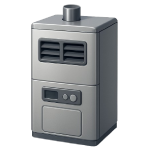
Discovering that your Furnace won’t turn on during a 2026 freeze is a high-priority emergency. While some power failures require a technician, many are caused by simple safety switches or blown fuses that a homeowner can handle. This guide ranks solutions from most likely to least likely to help you diagnose the issue efficiently.
5 Common Causes for a Furnace Failing to Start
1Blown Control Board Fuse or Tripped Breaker
Your furnace has a tiny automotive-style fuse (usually purple 3-amp or amber 5-amp) located directly on the green circuit board. If there is a power spike or if a thermostat wire touches a metal pipe, this fuse will pop to protect the expensive “brain” of the furnace.
Symptoms
- The furnace is completely dead; no lights, no sounds, and no response from the thermostat.
- The circuit breaker is “On,” but the unit has no power.
Care Plan
- Shut off the main power breaker.
- Open the furnace cabinet and locate the circuit board.
- Pull the small plastic fuse and hold it up to the light; if the metal link inside is broken, it’s blown.
- Replace it with a fuse of the exact same amperage.
- Restore power. If it blows again, call a pro to find the short circuit.
Common Mistakes
- Using a higher-amp fuse (e.g., putting a 10A where a 3A should be), which can set the circuit board on fire.
- Replacing the fuse without turning off the power first.
2The "Service Switch" is Toggled Off
Most furnaces have a “service switch” that looks exactly like a standard light switch, usually mounted on the side of the furnace or on a nearby wall. It is incredibly common for this to be accidentally flipped off while someone is moving boxes or cleaning the basement.
Symptoms
- Everything was working fine, and suddenly the unit has no power.
- No tripped breakers are found in the main panel.
Care Plan
- Locate the switch on the side of the furnace or the ceiling joist above it.
- Flip it to the “On” position (usually “Up”).
- Wait 60 seconds for the control board to reboot.
- If the switch feels “loose” or “mushy,” it may be broken and require a standard electrical replacement.
Common Mistakes
- Assuming the switch is for a light and leaving it off.
- Calling a technician for a $200 “no power” call just to have them flip a switch.
3Blower Door Safety Switch Not Engaged
For safety, furnaces have a “kill switch” located on the frame of the blower compartment. If the metal door isn’t seated perfectly, the switch isn’t pressed down, and the furnace will not receive power.
Symptoms
- The furnace stopped working right after you checked or changed the air filter.
- You can see a light on the board when the door is off, but it dies when the door is on.
Care Plan
- Remove the blower door (the bottom panel).
- Inspect the plastic “peg” or switch on the furnace frame.
- Realign the door carefully, ensuring the bottom flange is locked in the track.
- Tighten any thumb screws or latches to ensure a tight seal.
- If the switch is physically broken, it must be replaced before the unit will run.
Common Mistakes
- Using duct tape to hold the switch down; this is a safety hazard and won’t always create a steady connection.
- Forgetting that some 2026 models have two doors that both need to be closed.
4Thermostat Power or Wiring Failure
If your thermostat isn’t sending a signal, your furnace won’t turn on. In 2026, many smart thermostats require a “C-wire” for constant power; if this wire becomes loose or the thermostat’s internal fuse blows, the system goes dark.
Symptoms
- The thermostat screen is blank or says “No Power.”
- You can hear a click at the thermostat, but the furnace doesn’t respond.
Care Plan
- Replace the thermostat batteries immediately.
- Ensure the thermostat faceplate is snapped firmly onto its wall base.
- Check the “W” and “R” terminals for loose wires.
- If you suspect a bad thermostat, you can (carefully) jump the “R” and “W” wires at the furnace board; if the furnace starts, the thermostat or its wiring is the culprit.
Common Mistakes
- Assuming the thermostat is fine because it’s a “new” smart model.
- Mislabeling wires during a DIY thermostat upgrade.
5Failed Control Board (Motherboard)
The control board is the motherboard of your heating system. If it suffers a component failure—often due to age, heat, or moisture—it can no longer process the startup sequence.
Symptoms
- The diagnostic LED is off entirely, or it’s giving a “Fixed” light (no blinking) which often indicates internal failure.
- You see visible “scorch” marks or a “burnt electronics” smell on the board.
Care Plan
- Check for 120V power entering the board using a multimeter.
- Check for 24V power leaving the transformer.
- If the board has power but isn’t responding or giving diagnostic codes, it likely needs replacement.
- Look for the part number on the board (e.g., HK42FZ011) to find a 2026-compatible replacement.
- Replacing a board involves moving dozens of wires; take a photo before you start!
Common Mistakes
- Replacing the board without finding out why it died (e.g., a leaking humidifier above it).
- Buying a “universal” board that doesn’t support your specific blower motor speeds.