
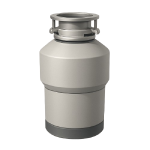
Few sounds in a modern kitchen are as recognizable—or as frustrating—as the low buzz of a garbage disposal humming but not working. This noise confirms that your unit has power, but a mechanical obstruction or internal failure is preventing the blades from spinning. This guide ranks solutions from most likely to least likely to help you diagnose the issue efficiently.
5 Common Causes for a Humming Garbage Disposal
1Physical Jam (Debris in Flywheel)
This is the culprit in nearly 90% of cases. A hard object—such as a cherry pit, olive stone, or even a small piece of silverware—has wedged itself between the rotating shredding plate and the stationary grind ring.
Symptoms
- A steady, low-pitched humming sound when the switch is flipped.
- The unit does not vibrate or spin at all.
Care Plan
- Turn off the wall switch and unplug the unit from the outlet.
- Insert a 1/4-inch Allen wrench (hex key) into the hole at the very bottom center of the unit.
- Forcefully crank the wrench back and forth until you feel the plate “break free” and spin 360 degrees.
- If you have no bottom hole, use a wooden broom handle inside the sink to pry the impellers until they move.
- Use tongs to remove the obstruction from the sink side before restoring power.
Common Mistakes
- Leaving the switch “On” while trying to unjam the unit.
- Reaching into the disposal with your hands instead of using tongs or pliers.
2Seized Motor Bearings
If the disposal hasn’t been used for a long time, or if it has a slow internal leak, the metal bearings can corrode or seize. The motor tries to turn but cannot overcome the friction of the rusted components.
Symptoms
- The humming sound is louder or higher pitched than a standard jam.
- The Allen wrench on the bottom is extremely difficult to move.
Care Plan
- Unplug the unit and try to move the flywheel with the Allen wrench.
- If it feels “gritty” or requires extreme force, the bearings are likely failing.
- You can try to spray a small amount of food-grade silicone lubricant through the bottom opening (if accessible).
- Rotate the wrench repeatedly to see if the motor “loosens up.”
- If the bearings remain seized, the motor is nearing the end of its life.
Common Mistakes
- Using WD-40 or industrial degreasers inside the unit, which can damage the rubber seals.
- Forcing the wrench so hard that you snap the internal motor shaft.
3Failed Start Capacitor
The capacitor acts like a battery to give the motor the “kick” it needs to start. If the capacitor is dead, the motor will receive power but won’t have the torque to begin rotating, resulting in a continuous hum.
Symptoms
- The flywheel spins easily with an Allen wrench, but the motor won’t start on its own.
- There is no visible debris inside the unit.
Care Plan
- Ensure the unit is unplugged.
- If the plate spins freely by hand but only hums when powered, the capacitor is likely the issue.
- Replacing a capacitor involves opening the electrical housing at the bottom of the unit.
- Check the capacitor for signs of bulging or leaking fluid.
- In most 2026 consumer models, it is often more cost-effective to replace the entire disposal than to source and solder a new capacitor.
Common Mistakes
- Assuming the motor is “dead” when the only failure is a $20 electrical component.
- Touching capacitor terminals without discharging them, which can result in a significant shock.
4Tripped Reset Button (Partial Power)
Sometimes, a disposal can hum if it is receiving just enough voltage to vibrate the motor but not enough to turn it, often due to a “soft trip” of the internal breaker.
Symptoms
- The hum is very weak and intermittent.
- The unit worked fine, stopped, and then started humming after a few minutes.
Care Plan
- Turn the wall switch to “Off.”
- Feel the bottom of the unit for the red reset button.
- Even if it doesn’t look popped out, press it firmly to ensure it’s clicked in.
- Check your GFCI outlet reset as well.
- Test the unit; if it still hums, return to Cause 1 to check for a jam.
Common Mistakes
- Pressing the reset button while the wall switch is still “On.”
- Repeatedly resetting the button without investigating the jam that caused the trip.
5Internal Seal Failure (Rust)
If the internal seals fail, water from the sink leaks directly into the motor windings and the electrical compartment. This creates an electrical “drag” or a short that prevents the motor from spinning.
Symptoms
- Water is dripping directly from the bottom of the motor housing.
- The hum is accompanied by a faint “burning” smell.
Care Plan
- Unplug the unit immediately.
- Inspect the bottom of the disposal for rust or water spots.
- If water is inside the motor housing, the unit is a total loss and is potentially dangerous.
- Do not attempt to dry out and reuse a motor that has been submerged in water.
- Replace the unit with a model featuring stainless steel components for better 2026 longevity.
Common Mistakes
- Trying to “patch” a leak at the bottom of the unit with silicone.
- Ignoring a slow drip until it causes a major electrical failure or cabinet mold.