
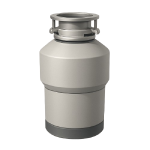
Few things are as jarring in a modern kitchen as a sudden, violent rattle coming from under the sink. If you find yourself wondering why is my garbage disposal making noise, the sound itself is usually the best clue for diagnosis. This guide ranks solutions from most likely to least likely to help you identify and silence the racket efficiently.
5 Common Causes for Garbage Disposal Noise
1Foreign Metal Object
The most common “scary” noise is a sharp, irregular clanking. This happens when a non-food item—like a coin, a rogue screw from a cabinet hinge, or a piece of silverware—slips past the splash guard and hits the spinning impellers.
Symptoms
- Loud, erratic metallic clanking or rattling.
- The sound starts the moment the unit is turned on.
Care Plan
- Turn off the wall switch and unplug the unit immediately.
- Use a bright flashlight to look down into the grinding chamber.
- Locate the object (often hidden under the rubber splash guard).
- Use long-reach needle-nose pliers or tongs to fish the object out.
- Rotate the plate manually with an Allen wrench from the bottom to ensure nothing else is trapped.
Common Mistakes
- Continuing to run the unit to “grind through” the noise; this will destroy the impellers and the grind ring.
- Using your hands to feel for the object, even with the power off.
2Loose Mounting Assembly
Over time, the high-speed vibration of the motor can loosen the three mounting bolts that hold the disposal to the sink flange. This creates a deep, vibrating drone or a “chattering” sound as the metal components rub together.
Symptoms
- The disposal shakes excessively when running.
- You notice water leaking from the top flange into the cabinet.
Care Plan
- Unplug the unit for safety.
- Check the three mounting bolts located at the very top of the disposal assembly.
- Use a screwdriver to tighten the bolts evenly until the unit is firm against the sink.
- Ensure the mounting ring is snapped securely into the “locked” position.
- Wipe the area dry and run water to ensure the vibration hasn’t compromised the seal.
Common Mistakes
- Over-tightening one bolt while leaving others loose, which can tilt the unit and cause leaks.
- Ignoring the vibration until the unit eventually falls off the mount.
3Failed Motor Bearings
If your disposal is making a consistent high-pitched squealing or “screeching” sound, the internal bearings are likely dry or rusted. In many current models, these bearings are factory-sealed, so once they begin to fail, the motor is on borrowed time.
Symptoms
- A constant, high-pitched screech that gets louder the longer the unit runs.
- The motor may feel excessively hot to the touch.
Care Plan
- Listen to the pitch; if it sounds like metal-on-metal whining, it is a bearing issue.
- Check for water dripping from the bottom of the motor (Cause 5), as this often causes bearing failure.
- Unfortunately, bearings are not a DIY-serviceable part on consumer disposals.
- If the noise is unbearable, the only permanent fix is replacing the unit.
Common Mistakes
- Spraying lubricants like WD-40 down the drain; this will not reach the sealed bearings and can ruin the rubber components.
4Broken or Loose Impeller (Swivel Lug)
The two metal “lugs” on top of the spinning plate are designed to swivel. If one becomes loose, breaks, or its pin wears out, it will wobble unevenly, creating a rhythmic “thumping” or “clack-clack-clack” sound every time the plate rotates.
Symptoms
- A consistent thumping or “clack-clack-clack” sound.
- The disposal seems to vibrate more than usual but isn’t loose at the mount.
Care Plan
- Unplug the unit and look inside with a flashlight.
- Use a wooden spoon to push the two swivel lugs; they should move freely but not feel “floppy” or detached.
- If one lug is missing or hanging by a thread, the shredding plate is compromised.
- While some high-end 2026 models allow for plate replacement, most standard units require a full replacement.
Common Mistakes
- Misdiagnosing a loose lug as a foreign object and trying to “remove” it.
5Worn Internal Seal (Grinding Sound)
A low, constant grinding or “growling” noise often points to an internal seal failure. When the seal between the water chamber and the motor fails, water enters the motor housing, causing rust and mechanical drag.
Symptoms
- A heavy, low-frequency grinding noise.
- Brown or rusty water dripping from the bottom of the disposal.
Care Plan
- Inspect the very bottom of the disposal unit for rust stains or dampness.
- If the unit is growling and leaking from the bottom, the motor is failing due to water intrusion.
- Unplug the unit immediately, as this is a significant electrical hazard.
- Do not attempt to use the unit further; replace it with a 2026 model that features improved induction motor technology and multi-layer sealing.
Common Mistakes
- Thinking the grinding is just “part of getting old” and ignoring the leak, which can lead to electrical shorts or cabinet mold.