
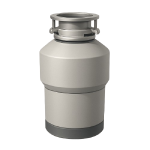
Few things disrupt a smooth kitchen workflow like a sink full of stagnant water. When you find your garbage disposal not draining, the culprit is typically a physical obstruction in the plumbing rather than a mechanical failure of the motor itself. This guide ranks solutions from most likely to least likely to help you diagnose the issue efficiently.
5 Common Causes for Garbage Disposal Not Draining
1Clogged P-Trap
The P-trap is the U-shaped pipe under your sink designed to hold water and block sewer gases. Because of its shape, it is the most common place for ground-up food waste and congealed grease to collect and form a solid plug.
Symptoms
- Water sits in the sink and drains very slowly or not at all.
- A gurgling sound coming from the drain when the unit is running.
Care Plan
- Place a bucket under the P-trap under your sink.
- Manually unscrew the large plastic slip nuts on both ends of the U-bend.
- Remove the trap and dump the water and debris into the bucket.
- Clean the inside of the pipe with a flexible brush or paper towels.
- Reassemble the trap, ensuring the washers are seated correctly to prevent leaks.
Common Mistakes
- Using chemical drain cleaners to dissolve the clog; these sitting chemicals can eat through plastic or metal.
- Over-tightening plastic slip nuts during reassembly, which can crack the fittings.
2Sludge in the Discharge Pipe
The discharge pipe is the tube that connects the disposal unit to the P-trap. Over years of use, a thick “sludge” made of soap scum and food oils can build up along the walls, narrowing the passage until it clogs completely.
Symptoms
- The sink drains partially then stops.
- Recurrent clogs even after you have cleaned the P-trap.
Care Plan
- Disconnect the discharge tube from the side of the disposal by removing the bolts or metal clamp.
- Inspect the internal opening of the disposal and the tube itself.
- Use a screwdriver or bottle brush to clear any “sludge” or hardened food waste.
- Rinse the tube thoroughly with cold water to ensure no grease re-deposits inside.
- Re-attach the tube with a fresh gasket if the old one appears flattened.
Common Mistakes
- Using hot water to rinse the tube; this liquefies grease and lets it re-harden further down the line.
- Neglecting to clean the disposal’s “port” where the pipe connects.
3Dishwasher Knockout Plug Still Intact
If you have a newly installed disposal or dishwasher and find the sink is not draining at all from the very first use, the “knockout plug” is likely the reason. Disposals have a plastic plug in the dishwasher inlet that must be removed so the dishwasher can drain.
Symptoms
- The dishwasher fills with water and won’t drain.
- Water backs up into the sink specifically when the dishwasher is running.
Care Plan
- Unplug the disposal and disconnect the dishwasher hose from the side of the unit.
- Use a screwdriver and hammer to tap the plastic plug into the disposal chamber.
- Use tongs to reach into the disposal (with power OFF) and remove the plastic disk.
- Re-attach the dishwasher hose.
- Run a test cycle to ensure water flows freely.
Common Mistakes
- Reaching into the disposal with your hands to remove the disk; always use tongs.
- Leaving the plastic disk inside the disposal, which will eventually jam the impellers.
4Fibrous Waste Wrap (Impeller Blockage)
Certain foods are “enemies” of the disposal. Fibrous items like celery, corn husks, or potato peels don’t get ground up; instead, they shred into long strings that wrap around the impellers and block the drainage holes in the grind ring.
Symptoms
- The disposal makes a duller, more muffled sound than usual.
- Water drains slowly even though the motor is spinning correctly.
Care Plan
- Ensure the power is completely off and the unit is unplugged.
- Use a flashlight to look down the drain for hair-like fibers or vegetable skins.
- Use tongs or needle-nose pliers to pull the fibrous material out.
- Use a hex wrench on the bottom of the unit to manually rotate the plate to ensure it’s clear.
- Flush the unit with a large volume of cold water to clear remaining debris.
Common Mistakes
- Using hot water while grinding fibrous food; cold water keeps the fibers brittle so they break easier.
- Putting too much fibrous waste into the unit at once without a constant flow of water.
5Main Drain Line Obstruction
If the sink remains backed up after you have cleared the P-trap and the discharge pipe, the clog is further down in the main drain line inside the wall. This usually requires a plumbing snake to reach.
Symptoms
- Both sides of a double sink are backed up.
- The P-trap is clear, but water still won’t go down at all.
Care Plan
- Remove the P-trap to access the drain pipe entering the wall.
- Feed a hand-cranked plumbing snake into the wall pipe.
- Rotate the snake as you push it through the blockage.
- Pull the snake back and repeat until you feel the resistance disappear.
- Reassemble the plumbing and test the flow with a full sink of water.
Common Mistakes
- Using an electric “power snake” without experience; these can punch through old or fragile pipes.
- Forgetting to put a bucket under the wall pipe before starting the snaking process.