
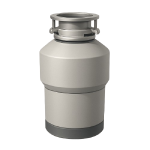
Few things are as frustrating as flipping a switch only to realize your garbage disposal won’t turn on during a busy 2026 cleanup. While a silent disposal often feels like a major failure, the problem is frequently a simple power interruption at a safety reset point. This guide ranks solutions from most likely to least likely to help you diagnose the issue efficiently.
5 Common Causes for Garbage Disposal Power Failure
1Tripped Internal Reset Button
The most common reason a disposal stops working is that its own internal circuit breaker has “popped.” This happens to protect the motor from burning out if it encounters a jam or gets too hot.
Symptoms
- The disposal is dead silent.
- The red button on the bottom of the unit is protruding slightly.
Care Plan
- Ensure the wall switch is in the “Off” position.
- Reach under the sink and find the small red button on the bottom of the disposal.
- If the button is popped out, press it back in firmly.
- If it won’t stay in, wait 5–10 minutes for the motor to cool and try again.
- Turn on the water and test the wall switch.
Common Mistakes
- Assuming the unit is “burnt out” without checking the bottom for the red button.
- Forgetting to turn off the wall switch before resetting, which can cause the motor to jump unexpectedly.
2Tripped GFCI Outlet
Today, most kitchen outlets are equipped with GFCI (Ground Fault Circuit Interrupter) protection. A tiny surge or moisture in the cabinet can trip the outlet, cutting power to the disposal before it even reaches the unit’s reset button.
Symptoms
- The disposal is silent and the red reset button on the unit is already pushed in.
- Other items plugged into the same outlet (like a dishwasher or a smart light) are also dead.
Care Plan
- Locate the outlet under the sink where the disposal is plugged in.
- Press the “Reset” button (usually the top button between the two plugs).
- If the button clicks and stays in, power should be restored.
- If the outlet immediately trips again, there may be a water leak or an internal short in the disposal.
- Check for any wetness around the plug or the back of the outlet box.
Common Mistakes
- Looking for a GFCI on the wall backsplash but ignoring the one hidden inside the dark cabinet under the sink.
- Over-stacking cleaning supplies under the sink, which can accidentally knock the plug loose or hit the reset button.
3Blown Home Circuit Breaker
If the disposal and the GFCI outlet both seem fine, the issue may be further back at the main electrical panel. Disposals pull a high amount of current and can occasionally trip a 15-amp or 20-amp breaker.
Symptoms
- The disposal is silent and multiple outlets in the kitchen have no power.
- The lights in the kitchen may have flickered when the unit stopped.
Care Plan
- Go to your home’s main electrical service panel.
- Look for a breaker labeled “Disposal” or “Kitchen” that is sitting in the middle (neutral) position.
- Flip the breaker all the way to “Off” and then back to “On.”
- If the breaker trips again instantly, you have a serious electrical short that requires a professional.
- Test the disposal to see if power is restored.
Common Mistakes
- Trying to flip a tripped breaker directly to “On” without going to the “Off” position first; it won’t reset.
- Running the disposal and a high-draw appliance (like a toaster or air fryer) on the same circuit simultaneously.
4Seized Motor or Jammed Flywheel
Sometimes a disposal “won’t turn on” because the motor is physically stuck. If a jam is severe enough, the motor might not even produce a hum before the internal reset button pops again.
Symptoms
- You hear a very faint “click” when you flip the switch, followed by silence.
- The unit worked fine until you put something hard (like a bone or pit) inside.
Care Plan
- Turn off the wall switch and unplug the unit.
- Use an Allen wrench (usually 1/4 inch) and insert it into the hole at the center of the bottom of the disposal.
- Rotate the wrench back and forth until the internal shredding plate moves freely.
- Use tongs to remove the obstruction from the sink side.
- Reset the red button (Cause 1) and try the power again.
Common Mistakes
- Attempting to force the plate to spin with the power still on.
- Using a metal fork or spoon to unjam the unit, which can damage the grind ring.
5Failed Motor or Wiring Connection
If you have verified power at the outlet and the reset buttons are all set, the internal motor or the wiring harness has likely failed. This is more common in units older than 10 years or those that have suffered from internal water leaks.
Symptoms
- There is power at the outlet (tested with a lamp), but the unit is unresponsive.
- You see visible rust or water dripping from the bottom of the motor housing.
- A strong smell of electrical ozone near the unit.
Care Plan
- Unplug the unit and remove the bottom cover plate to inspect the wiring.
- Check for loose “wire nuts” or burnt connections where the power cord enters the unit.
- If the wiring is secure and power is present, the internal motor windings are likely dead.
- Check for leaks; if water has reached the electrical compartment, the unit is unsafe and must be replaced.
- Most 2026 disposals are easier to replace than to repair internally.
Common Mistakes
- Trying to “rewire” a motor that is already leaking; water and 120V electricity are a lethal combination.
- Buying a replacement without checking if your current mount is a “Quick-Lock” style, which makes DIY installation much faster.