
Dehumidifier Buying Guide 2026: 3 Things to Know Before You Buy
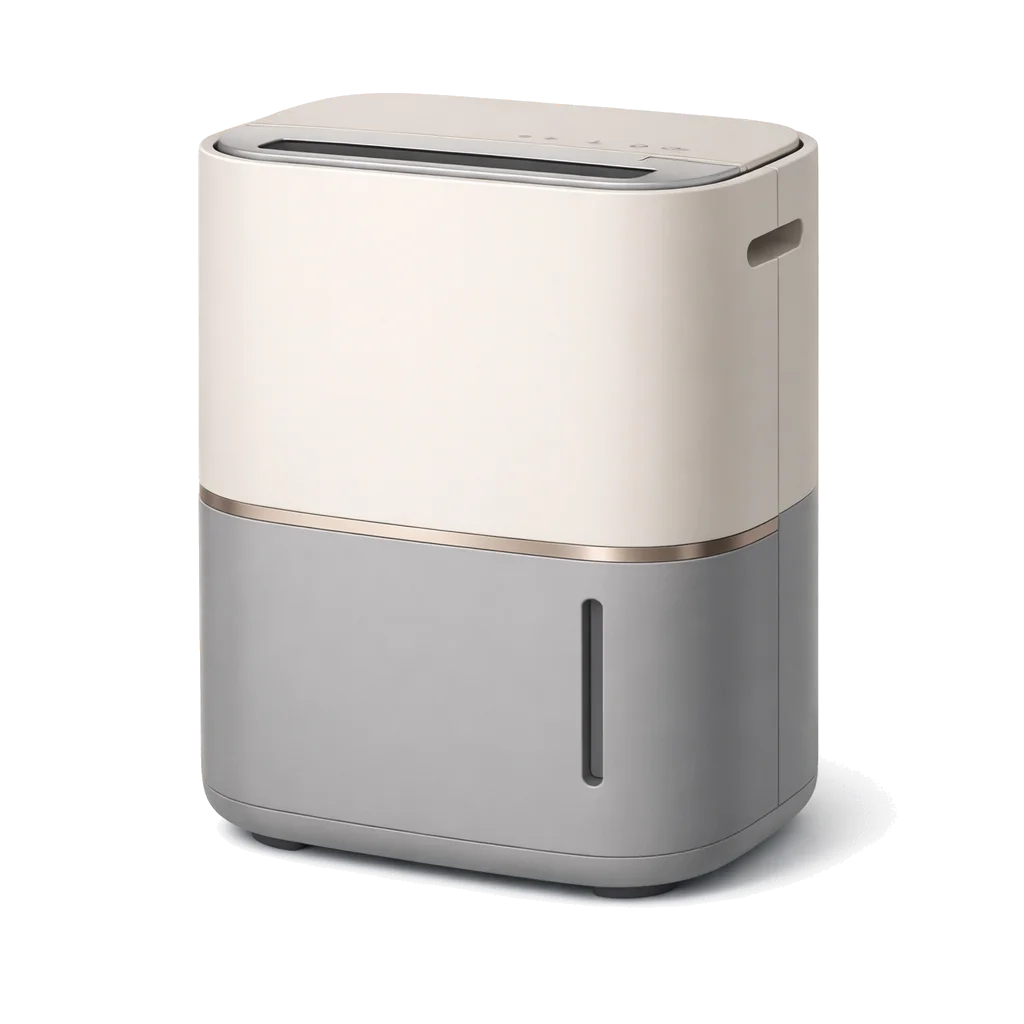
This overview page is your quick-start decision layer. Use it to prioritize what matters most, then open the dedicated best-of and comparison guides before purchase.
3 Key Factors When Buying a Dehumidifier
1Capacity and Target Humidity
Why it matters
Buying an undersized unit forces the compressor to run indefinitely, leading to high electricity costs and premature failure. To prevent mold and dust mites, you must maintain a target humidity range of 30–50% RH; units that can’t reach this threshold are ineffective.
What to look for
- 20-25 Pints: For damp small rooms (musty odors).
- 30-35 Pints: For very damp medium rooms (visible moisture on walls).
- 50 Pints: For large, wet basements (standing water or seepage).
Expert Take
Always buy one capacity size higher than your square footage suggests; a larger unit reaches the 30–50% RH ‘safe zone’ faster and spends more time in energy-saving standby mode.
2Drainage and Pump Integration
Why it matters
‘Bucket fatigue’ is the primary reason dehumidifiers are abandoned. If you lack a floor drain, you will be lifting a 20-40 lb water bucket daily. A built-in pump solves this by pushing water vertically into a sink or out a window.
What to look for
- Internal Pump: Essential for upward drainage.
- Gravity Drain: Works only if the unit is elevated above a floor drain.
- Auto-Shutoff: Standard in all models to prevent bucket overflows.
Expert Take
If using a pump, verify if the unit includes the discharge hose; proprietary hoses can be surprisingly expensive to purchase separately later.
3Operating Temperature Limits
Why it matters
Standard compressor dehumidifiers lose efficiency as temperatures drop toward 65°F. While many list a 41°F minimum cutoff, this is a safety limit to prevent damage, not a functional operating range.
What to look for
- Auto-Defrost: Cycles the fan to melt ice on the coils.
- Desiccant Models: The only effective choice for unheated spaces consistently below 60°F.
- High-Efficiency Coils: Better heat exchange in marginal temperatures.
Expert Take
In cool basements, a standard unit pulls significantly less water than its ‘Pints per Day’ rating suggests; if your space is consistently cool, a desiccant unit is often the more reliable choice.
Key Decision Factors
| Factor | Price Impact | Importance | Deal Breaker |
|---|---|---|---|
| Capacity and Target Humidity | $40-$100 more | Critical | Yes |
| Drainage and Pump Integration | $50-$80 more | High | No |
| Operating Temperature Limits | $30-$60 more | High | Yes |
Common Mistakes
- GRAVITY-ONLY DRAINS: Many units claim 'continuous drainage' but lack a pump; if your floor drain is not physically lower than the unit's outlet, water will back up into the bucket.
- PLASTIC HOSE THREADS: Inspect the drain port for reinforced or brass threads; cheap plastic threads frequently cross-thread or crack under the weight of a standard garden hose.