
Refrigerant vs Desiccant Dehumidifiers 2026: Operating Temperature, Energy, and Lifespan
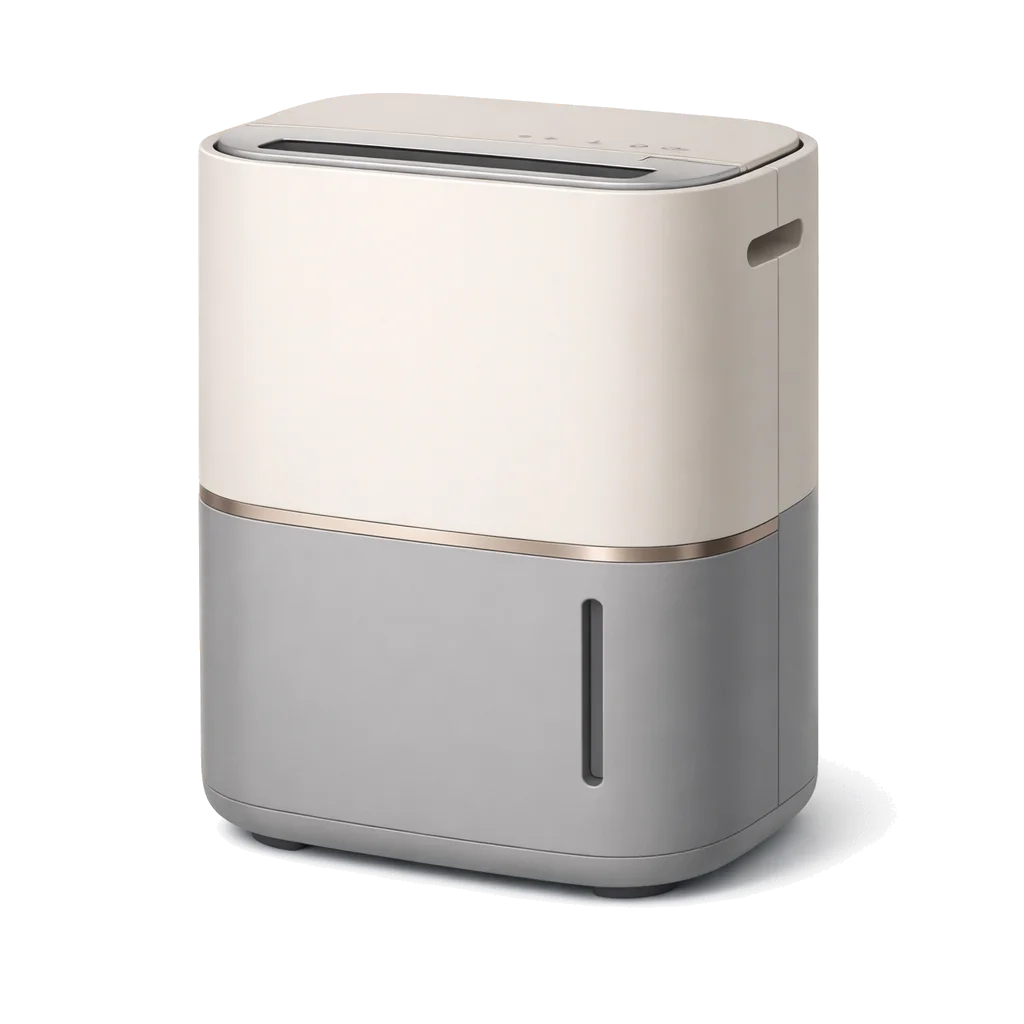
Choosing the right dehumidifier platform in 2026 is less about brand and more about the “dew point” of your space. While refrigerant models (also called compressor units) dominate the residential market, desiccant technology has become the preferred choice for specific “unheated” or deep-drying applications.
3 Key factors for Refrigerant vs Desiccant Dehumidifiers
1Temperature and Climate Suitability
Why it matters
The efficiency of moisture removal is tied to the physics of the machine. Refrigerant units must make their internal coils colder than the room air to create condensation. Desiccant units use a chemical “sponge” (typically a silica gel wheel) to pull water out of the air regardless of the temperature.
Refrigerant — Choose this if
- You primarily use the unit in rooms above 65°F (18°C), such as a main living area or a finished basement in summer.
- You want an Energy Star certified model; this certification is almost exclusively applied to refrigerant/compressor-based units.
- Your room is already warm, and you want minimal heat added back into the air.
- You only need to reach standard comfort levels (45–50% RH).
Desiccant — Choose this if
- You are dehumidifying a cold space like a garage, shed, or unheated basement below 65°F (18°C).
- You want the unit to assist in heating a chilly space; the air expelled can be 10–12°C warmer than the intake, raising ambient temperature by 3–5°C.
- You need to reach very low humidity levels (below 35% RH), which is critical for preventing mold in crawl spaces or protecting sensitive archives.
- You want a lightweight unit that is easy to move between floors without a heavy compressor.
2Energy Efficiency and Operating Costs
Why it matters
Operating costs depend on the “wattage draw” vs “extraction speed.” While a refrigerant unit might have a higher peak wattage (300–700W vs a desiccant’s 240–480W), the desiccant unit may need to run longer to remove the same amount of water in warm, humid conditions.
Refrigerant — Choose this if
- You want the lowest monthly impact on your electric bill during peak summer months.
- You have a very large open-plan space (50+ pint capacity), where compressor efficiency scales better.
- You prioritize “Auto-Restart” and “Smart Dry” modes that optimize for low energy consumption over speed.
Desiccant — Choose this if
- You are drying laundry indoors; the warm, dry air can dry clothes in 2–4 hours, often faster than a compressor model.
- You want a consistent performance profile; desiccant units don’t “slow down” as the room cools off in the evening.
- You want to utilize the “waste heat” to supplement your home’s primary heating system in the winter months.
3Maintenance, Noise, and Lifespan
Why it matters
The “experience of ownership” is defined by how often you have to interact with the machine and how much noise it makes. Because their mechanical designs are fundamentally different, their maintenance and noise profiles are distinct.
Refrigerant — Choose this if
- You don’t mind a “refrigerator-like” hum or vibration; while modern models are quieter (36–45 dB), the compressor noise is always present.
- You want a machine with a built-in pump to move water to a sink automatically.
- You are looking for a highly standardized machine that is easy for local appliance repair shops to diagnose.
Desiccant — Choose this if
- You want near-silent operation; without a compressor, the only sound is the fan (often as low as 33 dB on low speed).
- You want a low-maintenance machine; there is no refrigerant gas to leak, and the desiccant material never needs replacement.
- You want a unit with a longer expected lifespan; fewer moving parts means less wear and tear over 10+ years.
Key Decision Factors
| Factor | Price Impact | Importance | Deal Breaker |
|---|---|---|---|
| Temperature and Climate Suitability | $50-$200 more for Desiccant | Critical | Yes |
| Energy Efficiency and Operating Costs | $10-$40 monthly difference | High | No |
| Maintenance, Noise, and Lifespan | $50-$150 more in long-term repairs | Medium | No |
Common Mistakes
- COIL FROSTING: Refrigerant models used below 65°F (18°C) will build up ice on the coils, stopping moisture removal and potentially damaging the compressor over time.
- HEAT OUTPUT: Desiccant dehumidifiers raise ambient room temperature by 3–5°C (5–9°F); while helpful in winter, this can clash with your air conditioning during summer months.