
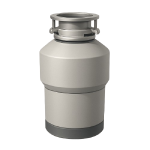
Nothing stops kitchen cleanup faster than a humming motor and a sink that won’t drain. Learning how to unjam a garbage disposal is a 2026 essential that can save you a $150 plumbing visit for what is usually a 10-minute fix. This guide ranks solutions from most likely to least likely to help you diagnose the issue efficiently.
4 Common Causes for Garbage Disposal Jams
1Hard Foreign Object
The most frequent cause for a stuck disposal is a hard object—like a cherry pit, olive stone, or even a small pebble—getting wedged between the spinning shredding plate and the stationary grind ring.
Symptoms
- The disposal hums but does not spin.
- The reset button on the bottom pops out after a few seconds of humming.
Care Plan
- Turn off the wall switch and unplug the unit from the power outlet.
- Insert a 1/4-inch Allen wrench into the hole at the center of the unit’s bottom.
- Turn the wrench back and forth until the plate breaks free and can spin 360 degrees.
- Use tongs or pliers to reach into the sink opening and remove the obstruction.
- Plug the unit back in, press the red reset button, and run with cold water.
Common Mistakes
- Leaving the power on while using the wrench, which can cause the wrench to spin violently once the jam clears.
- Reaching into the unit with fingers to find the object.
2Fibrous Waste Binding
Today, many homeowners still make the mistake of putting corn husks, celery, or artichokes down the drain. These don’t grind; they shred into long, tough strings that wrap around the impellers and seize the motor.
Symptoms
- The unit sounds muffled or “strained” before it stops spinning.
- Visible stringy material wrapped around the swivel lugs.
Care Plan
- Ensure the power is completely off and the unit is unplugged.
- Use a flashlight to identify the fibrous mass.
- Use needle-nose pliers to pull the strings out from the top.
- Use the bottom Allen wrench to ensure the plate can now move freely.
- Flush the unit with a high volume of cold water to clear remaining fibers.
Common Mistakes
- Using hot water to try and “melt” the fibers; cold water keeps them brittle so they are easier to pull out.
- Forgetting to check under the swivel lugs for hidden strings.
3Corrosion/Rust Seizure
If a disposal goes unused for several weeks or has a slow internal leak, the metal components can rust together. This creates a “soft jam” where the motor isn’t strong enough to break the rust seal.
Symptoms
- The unit hasn’t been used in a long time.
- The Allen wrench moves, but feels “gritty” or stiff.
Care Plan
- Unplug the unit for safety.
- Use the Allen wrench on the bottom to rotate the plate several full circles to grind away the surface rust.
- If the plate is severely stuck, a small amount of food-grade silicone spray through the top can help (avoid petroleum-based sprays).
- Continue rotating with the wrench until the motion is smooth.
- Run the disposal with plenty of water and a few ice cubes to “scour” the grind ring.
Common Mistakes
- Using harsh chemical rust removers, which can damage the rubber seals and lead to leaks.
- Assuming the motor is dead without trying to manually “break” the rust with a wrench.
4Overloaded Grind Chamber
Sometimes there isn’t a “foreign” object, but simply too much food at once. If the chamber is packed tight before the motor starts, the impellers don’t have the momentum to begin spinning.
Symptoms
- The sink is full of food and the disposal won’t start.
- No humming noise, or the hum starts and stops immediately.
Care Plan
- Turn off the power and unplug the unit.
- Use tongs to remove the bulk of the food waste from the chamber.
- Use a wooden broom handle from the top to nudge the shredding plate and ensure it isn’t mechanically jammed.
- Plug the unit back in and press the reset button.
- Turn on a strong flow of cold water and feed the food back in small increments.
Common Mistakes
- Feeding the disposal “batches” of food without the water running first.
- Jamming more food down the drain while the unit is already struggling.