Every Call Answered. Every Property Understood.
Voice AI that understands the people, assets, maintenance history, and service providers behind every property—so conversations lead to action, not just answers.

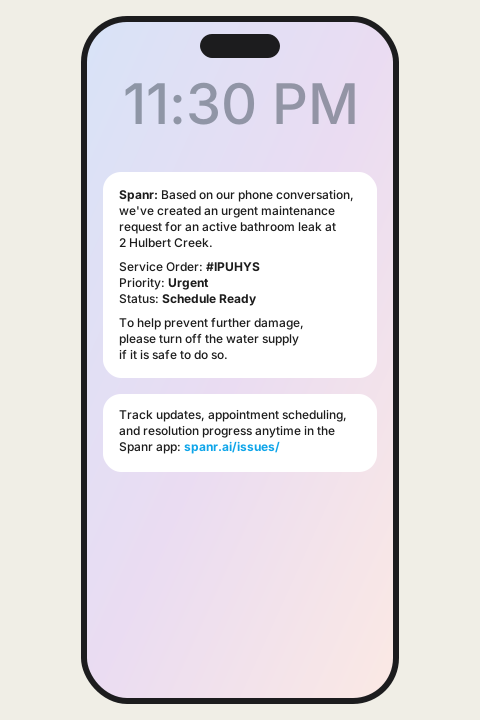
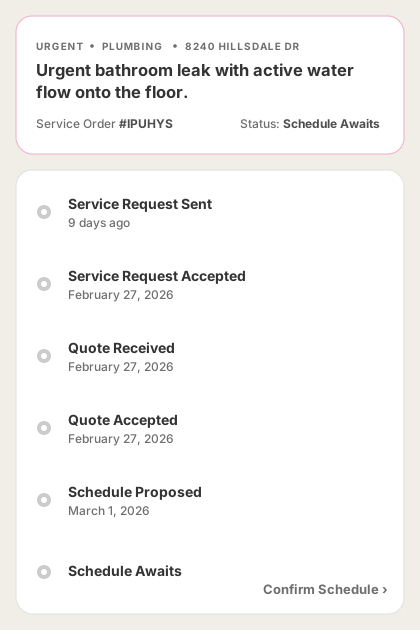
More than a phone answering service

Always available
Answer every call instantly, day or night, with natural conversations that feel like speaking to a knowledgeable team member.

Property-aware
Every conversation is grounded in the property's people, assets, history, providers, and operational context.

Action oriented
Create requests, update records, dispatch vendors, and coordinate next steps without switching systems.

Connected everywhere
Maintain a consistent experience across voice, mobile, web, and future communication channels.
Conversations that understand context
Most AI answers questions. Spanr understands the property behind the question and turns conversations into structured action.
Recognize every caller
Known callers are identified automatically using verified phone numbers. The assistant understands who is calling, which property they are associated with, and their role before the conversation begins.
Explore asset intelligence
Intelligent intake & Triage
Every conversation begins with structured intake. Voice AI captures the details, determines urgency, routes routine requests through normal workflows, and escalates emergencies when immediate action is needed.
See maintenance operations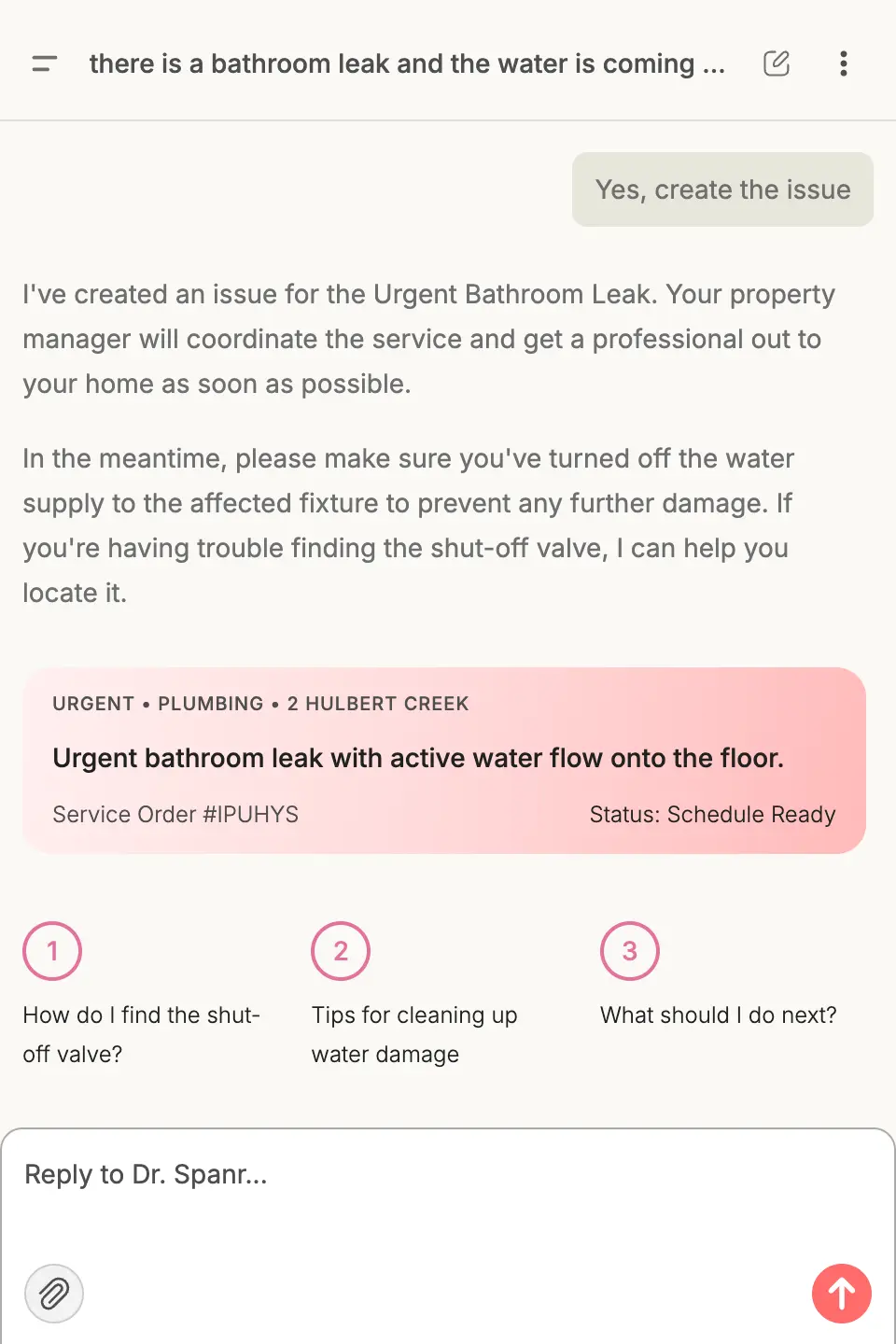
Always-On Availability
Give residents a 24/7 point of contact for property questions, updates, and support. Voice AI provides immediate assistance, captures requests, and reduces after-hours interruptions for your team.
See issue triageProperty-Aware Conversations
Every answer starts with context. Voice AI uses the property's maintenance history, active issues, inspections, warranties, and records to deliver more accurate and actionable guidance.
Explore vendor managementFAQ
How is Spanr different from a traditional answering service? 
Traditional answering services take messages and forward them to your team. Spanr understands the property's assets, maintenance history, service providers, and operational context, allowing it to troubleshoot issues, classify emergencies, create structured service requests, and coordinate next steps automatically.
How does Voice AI know which property a caller is talking about?
Voice AI recognizes known callers automatically and understands their relationship to the property before the conversation begins. It can identify associated properties, maintain context across interactions, and even switch between properties during a conversation when needed.
Will callers feel like they're talking to a phone tree?
No. Unlike traditional IVR systems that force callers through menus and button presses, Spanr supports natural conversations. Callers simply describe what they need in their own words, and the assistant responds in real time while maintaining the context of the conversation. They can interrupt naturally, ask follow-up questions, and change topics without restarting the interaction.
Does Voice AI work across multiple properties?
Yes. The assistant can recognize and switch between properties during a conversation, making it ideal for property managers, owners, and investors who oversee multiple locations.
Can Spanr reduce after-hours maintenance calls?
Yes. Residents can get help at any hour without requiring your team to answer every call. Voice AI provides 24/7 coverage for maintenance inquiries, helping callers troubleshoot common issues, check request status, and escalate emergencies while reducing routine interruptions for onsite staff.
Can the assistant create maintenance requests?
Yes. Callers can describe issues naturally and Spanr can create, update, prioritize, reopen, close, and track maintenance requests through conversation. Every interaction is captured with the context needed to support faster follow-up and resolution.
How does emergency triage work?
Voice AI identifies urgent situations such as flooding, active leaks, electrical hazards, HVAC failures, and other safety concerns during intake. Emergency issues can be prioritized immediately and routed through predefined escalation workflows so urgent situations receive prompt attention.
Can callers check the status of an existing issue?
Yes. Voice AI can provide real-time updates about active requests, upcoming appointments, recent activity, and completed work—helping reduce status inquiry calls to your team while keeping residents informed.
Will Voice AI contact vendors without our approval?
No. You retain complete control. For professionally managed properties, Voice AI never bypasses your team or automatically dispatches outside vendors. Issues are captured, categorized, and routed through your existing maintenance process, ensuring your team remains in control of vendor selection and scheduling.
How does Voice AI handle maintenance requests that require professional service?
Voice AI first gathers context and guides callers through troubleshooting when appropriate. If professional service is needed, the next step depends on how the property is operated. Professionally managed properties follow the property's existing maintenance workflow, while self-managed properties can receive provider recommendations and service coordination assistance.
Does Voice AI adapt to different property operating models?
Yes. Voice AI adapts to how each property is managed. For professionally managed properties, maintenance issues follow your existing workflows and vendor relationships. For self-managed properties, Voice AI can provide additional assistance such as recommending qualified local service providers when professional help is required.