1. We Digitized the Inspection, Not the Workflow
A property inspection looks simple from the outside: schedule it, walk the property, take pictures, generate a report. That is rarely how the operation actually works.
A move-out inspection might begin as a task in one system, get scheduled somewhere else, be assigned through another queue, performed in an inspection tool, documented with photos and notes, turned into a report, translated into maintenance work, dispatched to vendors, and followed until the unit is finally rent-ready.
Almost every step has software. The problem is everything between the steps. Property managers became the human integration layer, moving information, checking status, and making sure one system’s output became another’s input.
2. One Workflow: From Inspection Required to Property Ready
At Spanr, instead of building another point solution, we mapped the entire lifecycle into a single thread. Take that same move-out inspection:
- Create, Assign & Schedule: Start from the property and lease, set the deadline, and send it to the right person’s queue, including resident self-inspections, with no separate task manager.
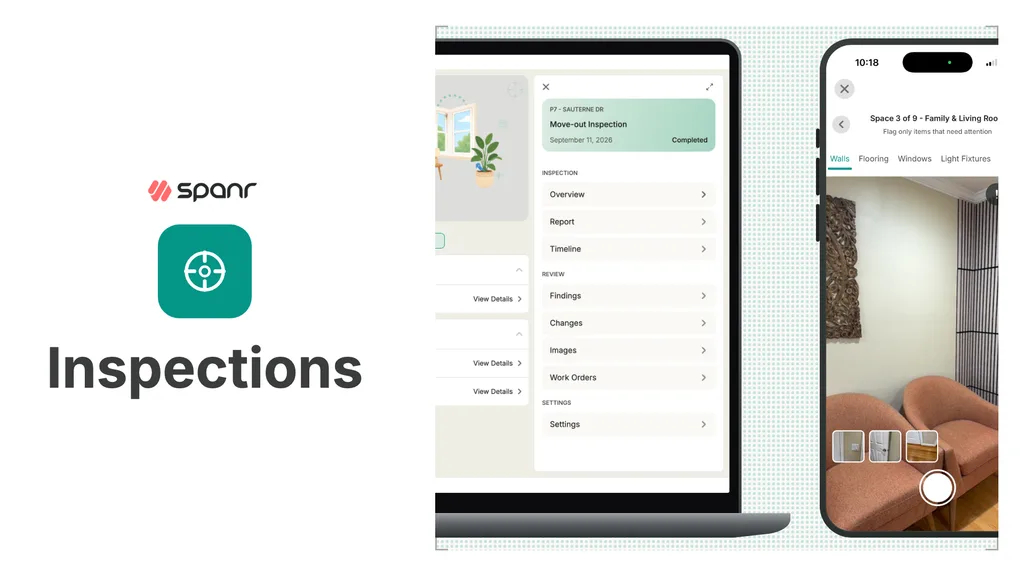
- Walkthrough & Capture: Capture photos, notes, and findings tied to the exact space and item, not scattered across camera rolls and note apps.
- Complete & Report: One tap completes the inspection and generates a shareable report from the same record, with no exporting or emailing files.
- Work Orders & Resolution: Turn findings into maintenance work without re-entering anything, and follow it through to resolution.
We built Spanr Inspections around that idea. Watch it in action:
3. AI Inside the Workflow, Not Beside It
During an inspection, the system already has the operational context: the property layout, active lease, specific room and item, photo evidence, inspector observations, and prior condition history. That lets AI work inside the process instead of just generating another paragraph of text:
- Visual & Contextual Analysis: Spanr analyzes captured images alongside the property layout and inspector notes to understand what was found.
- Notes to Structured Findings: Field notes become organized findings, condition counts, and follow-up actions instead of staying buried in free-form text.
- Work Order Enrichment: Inspection context is used to recommend corrective actions, identify the right trades, and prepare the details needed to start maintenance work.
That is the real opportunity for AI in property operations: not an assistant sitting beside the workflow, but intelligence embedded in it, carrying context from observation to action to resolution.
4. Built for the Field, and for the Long Run
Inspections happen in vacant homes, basements, parking structures, and places with unreliable connectivity. The field experience has to work even when the network doesn’t.
Spanr downloads assigned inspections to the device ahead of time. Photos and observations are saved locally first and synced in the background when connectivity returns. Only one device can edit an inspection at a time, and the inspection is preserved even if an individual photo fails to sync.
Every inspection is also built for long-term accuracy:
- Frozen Blueprint Snapshots: Preserve the property’s spaces and elements as they existed when the inspection was created.
- Side-by-Side Comparisons: Compare inspections over time, including move-in vs. move-out.
- Complete History: Revisit reports, findings, images, changes, and follow-up work in one place.
Over time, inspections stop being isolated reports and become a true history of the property’s physical condition.
From Tools to Operations
We spent the last two decades digitizing individual property-management tasks. The next phase is connecting those tasks into complete operations.
The question isn’t whether software can take photos, generate a report, or create a work order. We already know it can. The question is whether software understands that all of those things are part of the same job—and makes sure the job actually gets finished.
We built Spanr Inspections around that idea. Learn more at spanr.ai.